NVIDIA AI Servers Face a 15% Price Hike
💡Memory, not GPUs, may now determine AI server cost, availability, and cloud pricing.
⚡ 30-Second TL;DR
What Changed
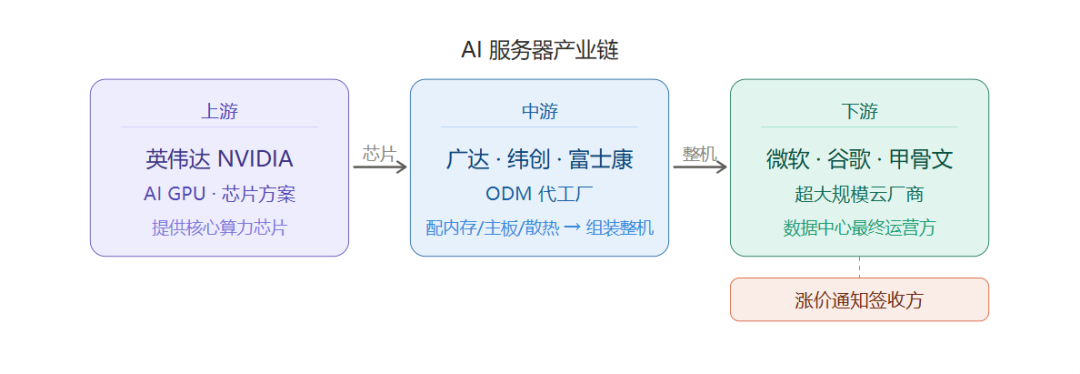
Server ODMs reportedly notified Microsoft, Google, and Oracle of price increases exceeding 15%; some GB300 and Vera Rubin systems may rise about 17%.
Why It Matters
The bottleneck in AI infrastructure is expanding from GPU availability to memory capacity and pricing. AI startups and enterprises should expect higher inference and training costs, while memory suppliers gain greater negotiating power through 2027 and potentially beyond.
What To Do Next
Recalculate your 2027 GPU-cluster TCO using a 15% server-price increase and reserve HBM-heavy capacity before committing to fixed API pricing.
Key Points
- •Server ODMs reportedly notified Microsoft, Google, and Oracle of price increases exceeding 15%; some GB300 and Vera Rubin systems may rise about 17%.
- •Traditional DRAM contract prices rose 93% to 98% quarter over quarter in Q1 2026, with further increases expected.
- •NVIDIA's Rubin platform can use up to 288GB of HBM4 per GPU, while an NVL72 rack contains more than 20TB of HBM.
- •Memory costs in Vera Rubin systems reportedly increased 435% and now account for roughly 26% of system cost.
- •Cloud providers may pass costs to compute rentals and model APIs, while server ODMs increasingly shift to customer-supplied memory.
🧠 Deep Insight
Background and context from public sources — not the original article. 12 sources cited.
🔑 Enhanced Key Takeaways
- •The current price hike follows a significant 30% increase across multiple NVIDIA product lines implemented in July 2026.
- •Construction costs for a 1-gigawatt (GW) class AI data center are projected to rise by at least $5 billion due to these hardware adjustments.
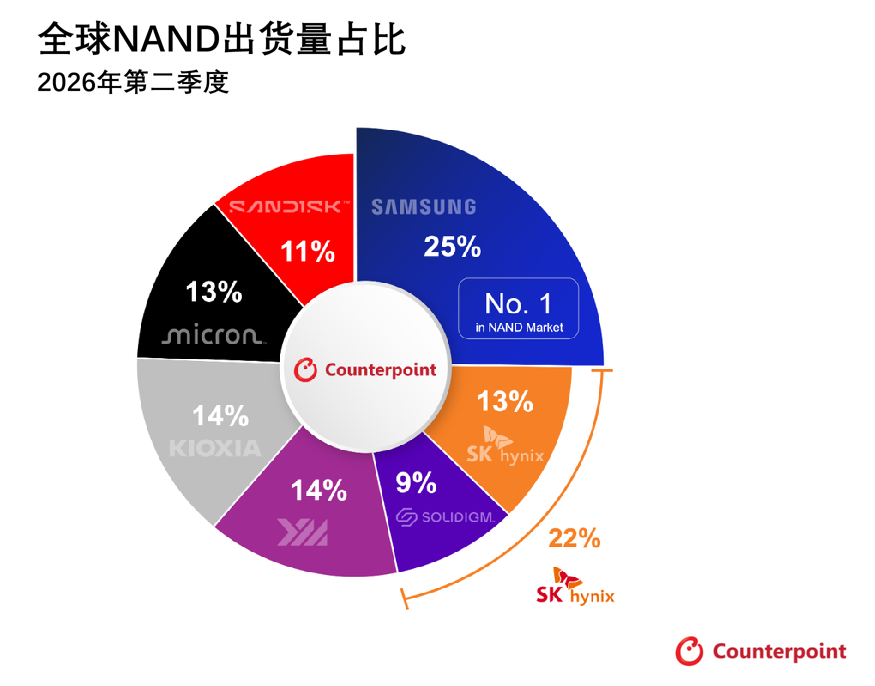
- •Memory manufacturers are currently experiencing a 'memory supercycle,' with production capacity for HBM and server DRAM sold out well in advance.
- •NVIDIA's consumer-grade RTX 50-series graphics cards have also undergone substantial price increases throughout the 2026 calendar year.
- •CIOs are shifting operational strategies to include model routing, compression, and batch processing to offset the rising infrastructure expenditure.
📊 Competitor Analysis▸ Show
| Feature | NVIDIA (Rubin/Blackwell) | AMD (Instinct MI400 Series) | Intel (Gaudi 3) |
|---|---|---|---|
| Primary Memory | HBM4 (up to 288GB) | HBM3e | HBM3e |
| Pricing Strategy | Premium/Aggressive Hikes | Competitive/Market Share Focus | Value-Oriented |
| Target Market | Hyperscale/Training | Hyperscale/Inference | Enterprise/Cloud |
🛠️ Technical Deep Dive
- Rubin architecture utilizes HBM4 memory stacks to achieve high bandwidth density required for large-scale model training.
- NVL72 rack configurations integrate over 20TB of HBM, creating a massive memory pool for distributed compute.
- Memory costs now represent approximately 26% of the total system bill of materials (BOM) for high-end AI servers.
- System architecture relies on tight integration between Grace CPUs and Rubin GPUs to minimize latency in memory-intensive workloads.
🔮 Future ImplicationsAI analysis grounded in cited sources
⏳ Timeline
📎 Sources (12)
Factual claims are grounded in the sources below. Forward-looking analysis is AI-generated interpretation.
Weekly AI Recap
Read this week's curated digest of top AI events →
👉Related Updates
AI-curated news aggregator. All content rights belong to original publishers.
Original source: 虎嗅 ↗
This is a summary, not the original. Read the source, or get the weekly briefing.
Weekly AI briefing
One email a week. Unsubscribe anytime.