Nuro Launches Tokyo Public AV Road Tests
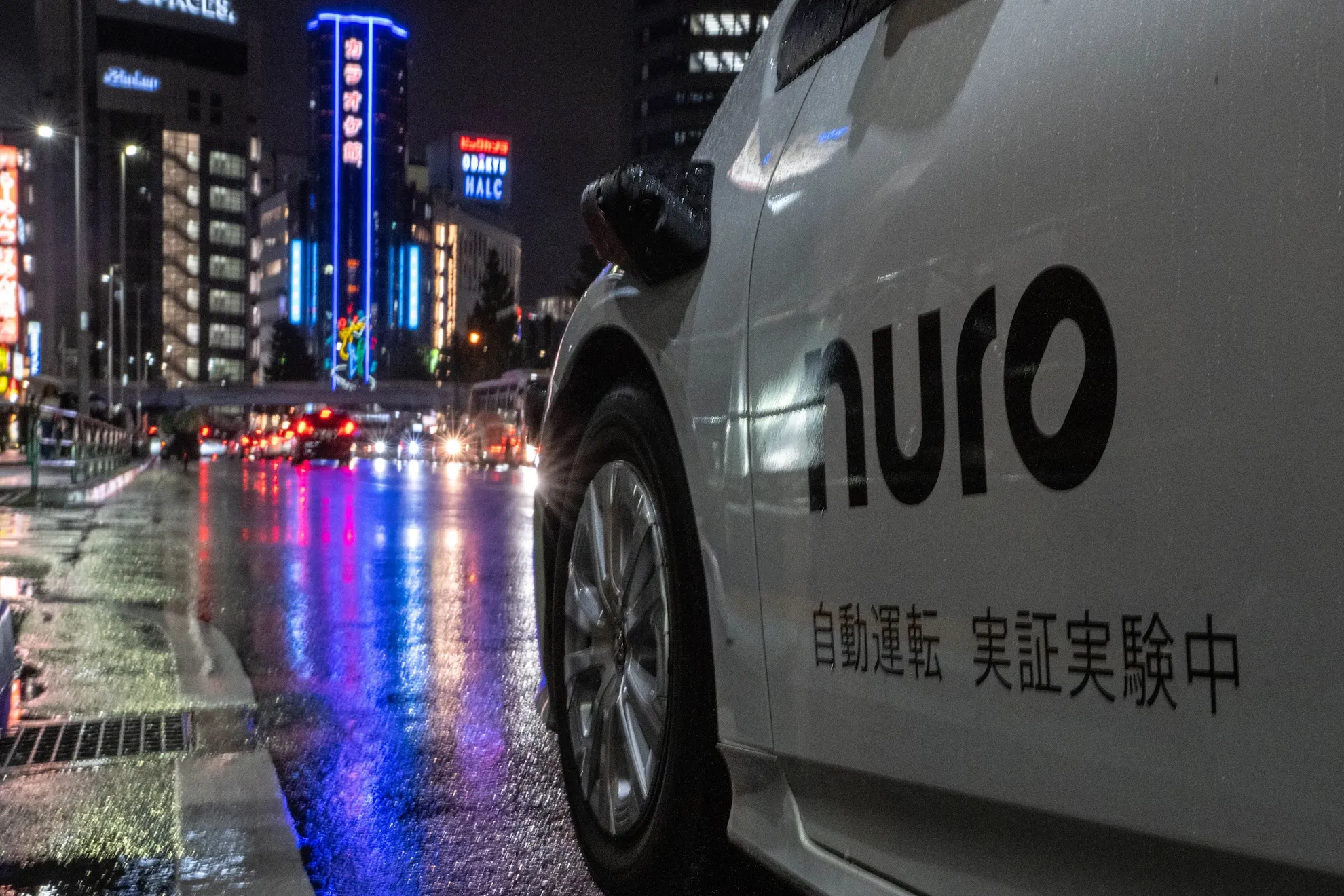
💡Nuro's Japan AV tests debut global push for autonomous delivery tech
⚡ 30-Second TL;DR
What Changed
First public AV tests outside US in Tokyo
Why It Matters
Signals Nuro's global expansion, potentially accelerating AV adoption in Asia amid regulatory progress. Offers lessons for international AV deployment strategies.
What To Do Next
Review Nuro's prior US test data on their site for AV safety benchmarking
Key Points
- •First public AV tests outside US in Tokyo
- •Uses Toyota Prius with Nuro AV software
- •Safety driver onboard for interventions
- •Backed by Nvidia, Uber, Softbank
🧠 Deep Insight
Background and context from public sources — not the original article. 6 sources cited.
🔑 Enhanced Key Takeaways
- •Nuro's autonomy stack relies on an end-to-end AI foundation model enabling 'zero-shot autonomous driving,' which navigated Tokyo roads without prior Japanese training data.[1][5]
- •Testing began last month (February 2026), following Tokyo office opening in August 2025; vehicles operate in 'shadow mode' pre-deployment and use cameras, lidar, and radar sensors.[1][2][6]
- •Japan's regulations via Road Traffic Act amendments allow staged Level 4 AV progression from supervised to driverless in mapped zones, amid low road fatality rates under 3,000 annually.[2]
🛠️ Technical Deep Dive
- •End-to-end AI foundation model supports 'zero-shot' driving, generalizing to left-side traffic, dense urban conditions, and unique Japanese signage without location-specific training.[1][5]
- •Sensor suite includes cameras, lidar, and radar on Toyota Prius; software runs in shadow mode on public roads, proposing actions compared against human drivers.[1][2]
- •Pre-road validation: closed-course testing, high-fidelity simulations for edge cases (e.g., rain-slicked lanes, cyclist interactions), before supervised autonomy.[1][2]
🔮 Future ImplicationsAI analysis grounded in cited sources
⏳ Timeline
📎 Sources (6)
Factual claims are grounded in the sources below. Forward-looking analysis is AI-generated interpretation.
- TechCrunch — Nuro Is Testing Its Autonomous Vehicle Tech on Tokyos Streets
- findarticles.com — Nuro Tests Autonomous Driving on Tokyo Streets
- techbuzz.ai — Nuro Takes Self Driving Tech to Tokyo in First Global Push
- mezha.net — Nuro Tests Autonomous
- finimize.com — Nuro Put Self Driving Cars on Tokyo Streets Without Local Training
- nuro.ai — 2025 a Year of Momentum and Milestones
Weekly AI Recap
Read this week's curated digest of top AI events →
👉Related Updates

AI-curated news aggregator. All content rights belong to original publishers.
Original source: cnBeta (Full RSS) ↗
This is a summary, not the original. Read the source, or get the weekly briefing.
Weekly AI briefing
One email a week. Unsubscribe anytime.