NTT to Triple DCs for AI Demand by 2033
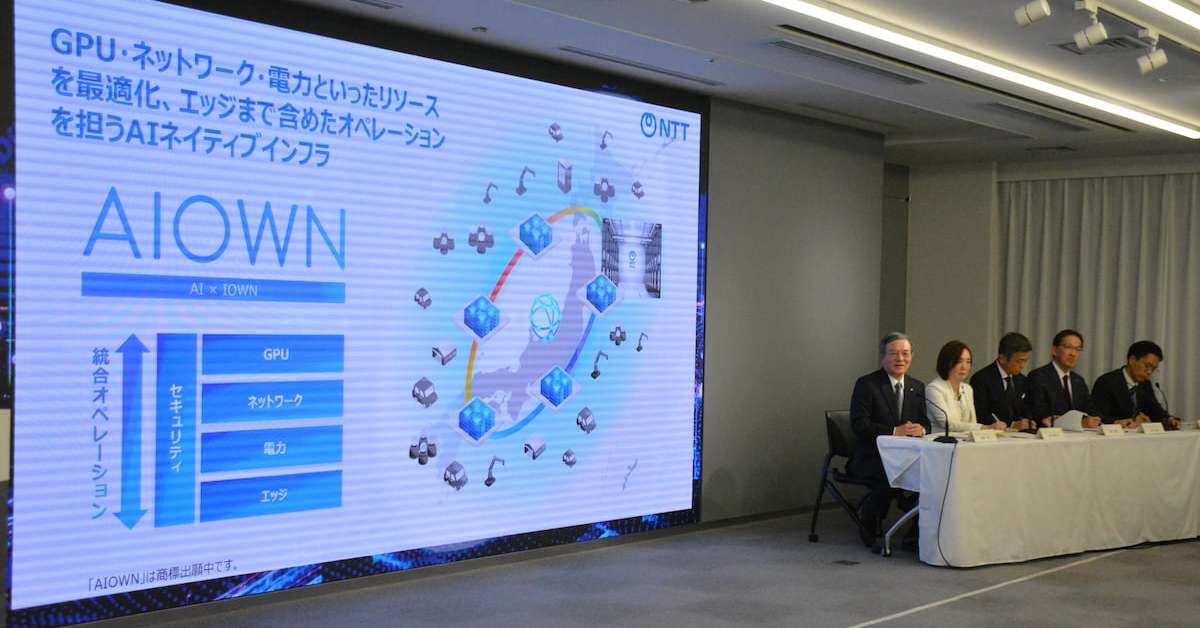
💡NTT triples DC capacity for AI inference boom—vital for Japan-based scaling
⚡ 30-Second TL;DR
What Changed
NTT to expand DC power capacity 3x+ by 2033
Why It Matters
This signals Japan's push into AI infrastructure, potentially offering more scalable, low-latency options for regional AI workloads. Enterprises running inference-heavy apps may access expanded capacity soon.
What To Do Next
Inquire with NTT about data center reservations for AI inference to secure capacity ahead of 2033 expansion.
Key Points
- •NTT to expand DC power capacity 3x+ by 2033
- •Targets rapid AI demand growth, especially inference
- •Connects latest-tech DCs with high-speed networks
- •Processes vast AI data to boost Japanese industries
🧠 Deep Insight
AI-generated analysis for this event — not the original article.
🔑 Enhanced Key Takeaways
- •NTT is leveraging its IOWN (Innovative Optical and Wireless Network) architecture to reduce power consumption in these new data centers, aiming to overcome the energy constraints typical of high-density AI compute clusters.
- •The expansion strategy includes a significant shift toward 'distributed' data center models, placing inference-heavy nodes closer to the network edge to reduce latency for real-time industrial AI applications.
- •NTT is actively seeking partnerships with major hyperscalers and domestic Japanese firms to co-invest in these facilities, aiming to mitigate the massive capital expenditure required for the 2033 target.
📊 Competitor Analysis▸ Show
| Competitor | Focus Area | Key Advantage | Pricing/Scale Strategy |
|---|---|---|---|
| Equinix | Global Interconnection | Massive global footprint | Premium pricing for low-latency proximity |
| Digital Realty | Hyperscale/Colocation | High-density power capacity | Large-scale wholesale leasing |
| KDDI | Domestic Infrastructure | Strong local telecom integration | Competitive domestic enterprise bundles |
🛠️ Technical Deep Dive
- •Implementation of IOWN's All-Photonics Network (APN) to enable low-latency, high-bandwidth data transmission between geographically dispersed data centers.
- •Utilization of liquid cooling technologies to support high-density GPU clusters (e.g., NVIDIA Blackwell or equivalent) required for large-scale inference.
- •Integration of photonics-electronics convergence devices to reduce power consumption at the chip-to-chip communication level within the server racks.
🔮 Future ImplicationsAI analysis grounded in cited sources
⏳ Timeline
Weekly AI Recap
Read this week's curated digest of top AI events →
👉Related Updates

AI-curated news aggregator. All content rights belong to original publishers.
Original source: ITmedia AI+ (日本) ↗
This is a summary, not the original. Read the source, or get the weekly briefing.
The weekly digest
One email a week. Unsubscribe anytime.