NHTSA flags autonomous vehicles for interfering with first responders
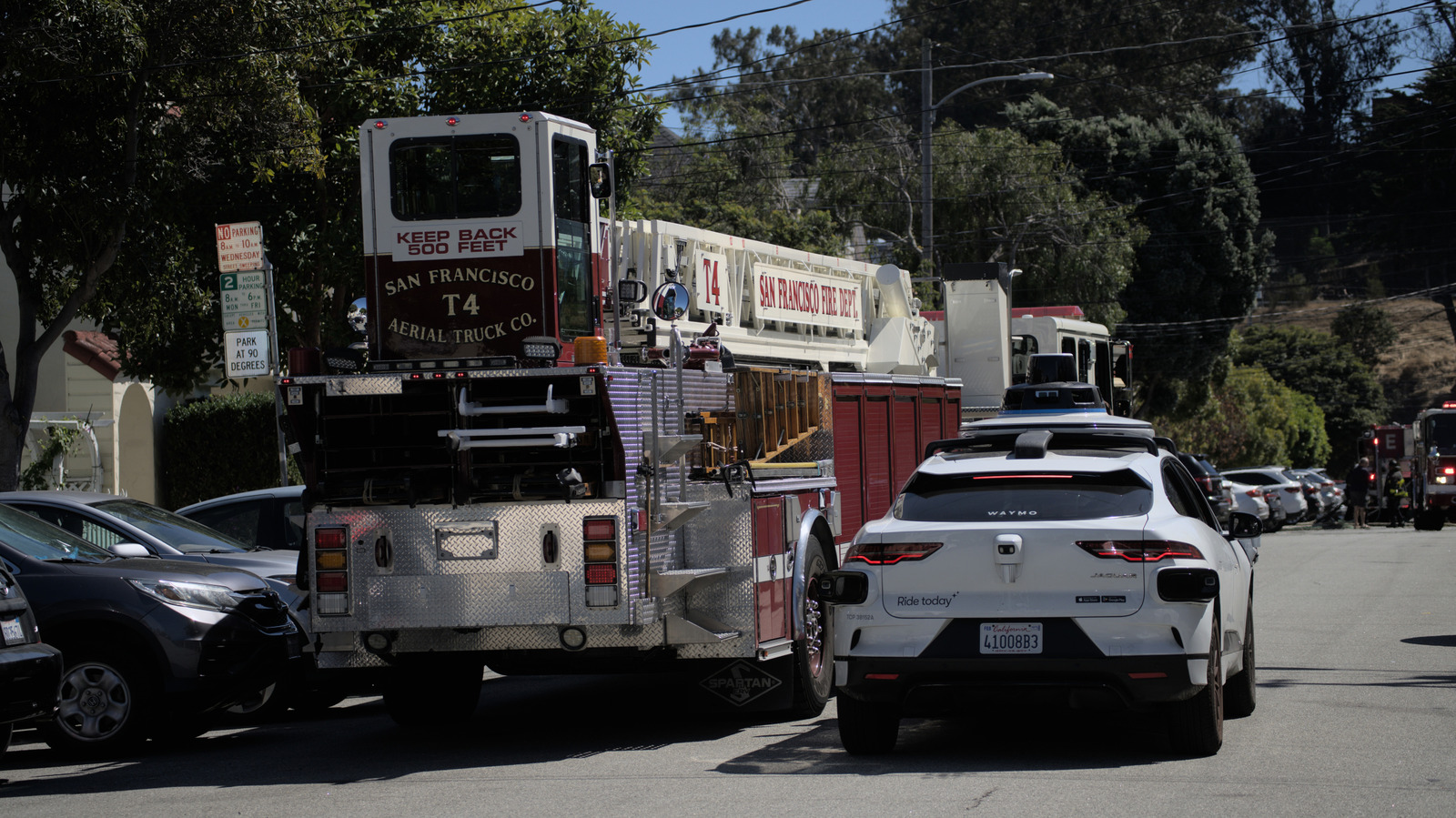
💡Regulatory crackdown on AV safety: Learn how emergency vehicle interaction is becoming a critical compliance hurdle.
⚡ 30-Second TL;DR
What Changed
NHTSA identified a consistent pattern of AVs interfering with emergency response activities.
Why It Matters
This regulatory pressure will likely force AV companies to prioritize edge-case handling for emergency vehicle detection and navigation. It may lead to stricter safety certification requirements for autonomous fleets operating in urban areas.
What To Do Next
If you are building robotics or AV perception systems, audit your training datasets to ensure they include diverse scenarios involving emergency vehicles and human traffic controllers.
Key Points
- •NHTSA identified a consistent pattern of AVs interfering with emergency response activities.
- •The agency is formally demanding that AV developers create technical solutions to address these safety risks.
- •The move signals increased regulatory scrutiny on the operational safety of driverless systems in real-world environments.
🧠 Deep Insight
AI-generated analysis for this event — not the original article.
🔑 Enhanced Key Takeaways
- •The NHTSA investigation specifically highlights incidents involving vehicles from Waymo, Cruise, and Zoox, noting that these vehicles often struggle to interpret emergency vehicle sirens and flashing light patterns.
- •Data analyzed by the agency indicates that AVs frequently enter 'frozen' states or perform unpredictable maneuvers when encountering emergency scenes, such as stopping in the middle of intersections or blocking fire station exits.
- •The agency is mandating that manufacturers provide real-time telemetry data to emergency dispatch centers to allow for remote intervention or 'clearing' of AVs from active incident zones.
- •Legislative bodies in states like California are considering new mandates that would require AVs to have a dedicated 'emergency response mode' capable of communicating directly with first responder radio frequencies.
- •The NHTSA's probe follows a series of high-profile collisions where AVs failed to yield to ambulances, leading to delayed transport times for patients in critical condition.
📊 Competitor Analysis▸ Show
| Feature | Waymo | Cruise | Zoox |
|---|---|---|---|
| Emergency Response Protocol | Remote assistance center | Automated hazard detection | V2X communication integration |
| Operational Domain | Urban/Suburban | Urban | Urban/Dense City |
| Safety Benchmark | High (Public Data) | Moderate (Recovery Phase) | Emerging |
🛠️ Technical Deep Dive
- AV perception stacks utilize Convolutional Neural Networks (CNNs) and Transformer-based architectures to classify emergency vehicles, but often fail due to 'edge case' lighting conditions and siren frequency interference.
- Sensor fusion algorithms (LiDAR, Radar, Camera) are being updated to prioritize 'emergency vehicle' object classes with higher confidence thresholds to prevent false negatives.
- Implementation of V2X (Vehicle-to-Everything) protocols is being fast-tracked to allow direct DSRC or C-V2X communication between emergency vehicles and AVs, bypassing visual/auditory perception limitations.
- Motion planning modules are being re-coded to include 'emergency yield' behaviors that override standard path-following logic when specific siren signatures are detected.
🔮 Future ImplicationsAI analysis grounded in cited sources
⏳ Timeline
Weekly AI Recap
Read this week's curated digest of top AI events →
👉Related Updates

AI-curated news aggregator. All content rights belong to original publishers.
Original source: Engadget ↗
This is a summary, not the original. Read the source, or get the weekly briefing.
The weekly digest
One email a week. Unsubscribe anytime.