Momenta's Pivot to Physical AI
💡Understand how a major autonomous driving player is pivoting its entire strategy toward Physical AI.
⚡ 30-Second TL;DR
What Changed
Momenta redefines its core business model as Physical AI
Why It Matters
This pivot highlights the growing importance of embodied AI in the autonomous vehicle sector. It suggests that pure software models are increasingly being evaluated by their physical-world performance.
What To Do Next
Evaluate your current autonomous stack for 'Physical AI' readiness by benchmarking latency in real-world sensor-to-actuator loops.
Key Points
- •Momenta redefines its core business model as Physical AI
- •Focus on bridging the gap between digital intelligence and physical execution
- •Strategic shift reflects the evolution of autonomous driving technology
🧠 Deep Insight
AI-generated analysis for this event — not the original article.
🔑 Enhanced Key Takeaways
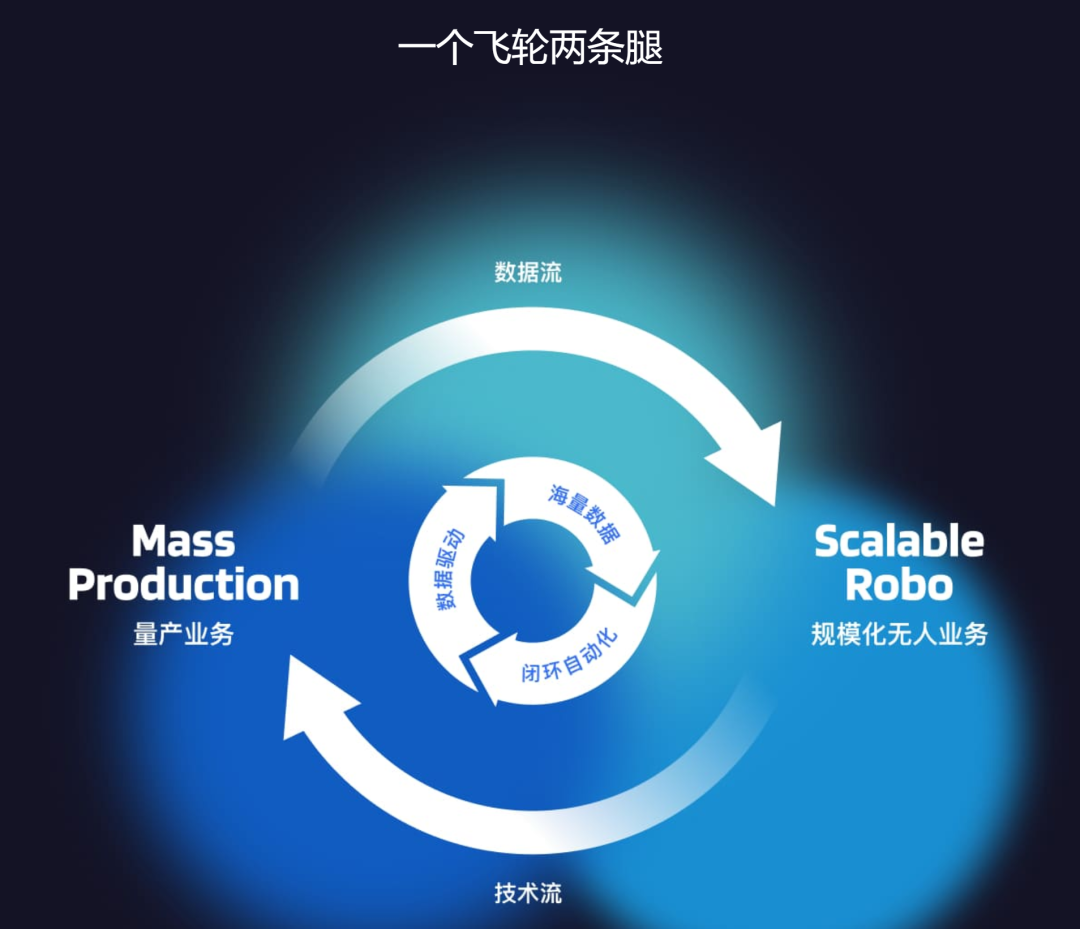
- •Momenta is leveraging its 'Flywheel' data-driven approach, originally developed for autonomous driving, to accelerate the training of general-purpose embodied AI agents.
- •The pivot includes the development of a unified foundation model architecture capable of processing multi-modal sensor data for both road vehicles and humanoid robotic platforms.
- •Momenta has secured strategic partnerships with major automotive OEMs to deploy Physical AI stacks that extend beyond L2+/L3 driving into automated factory logistics and warehouse operations.
- •The company is shifting its compute infrastructure toward large-scale simulation environments that utilize synthetic data to train agents for edge-case physical interactions.
- •Momenta's Physical AI strategy emphasizes 'World Models' that predict physical consequences of actions, moving away from traditional rule-based autonomous driving software.
📊 Competitor Analysis▸ Show
| Competitor | Focus Area | Key Differentiator | Physical AI Integration |
|---|---|---|---|
| Tesla | FSD / Optimus | Vertical integration (Hardware/Software) | High (End-to-end neural nets) |
| Waymo | Robotaxi | Safety-first, L4 focus | Moderate (Simulation-heavy) |
| NVIDIA | Isaac / Omniverse | Compute/Simulation platform | High (Platform provider) |
| Pony.ai | Autonomous Driving | L4/L2+ commercialization | Emerging (Logistics focus) |
🛠️ Technical Deep Dive
- Architecture: Transitioning from modular perception-planning-control pipelines to end-to-end transformer-based models that map sensor inputs directly to physical actuator commands.
- Simulation: Utilization of high-fidelity digital twins to generate synthetic training data, reducing reliance on real-world road miles for edge-case training.
- Multi-modal Fusion: Integration of vision, LiDAR, and IMU data into a unified latent space representation to enable spatial reasoning in unstructured environments.
- Compute: Deployment of large-scale GPU clusters for training foundation models that support cross-domain transfer learning between vehicles and robots.
🔮 Future ImplicationsAI analysis grounded in cited sources
⏳ Timeline
Weekly AI Recap
Read this week's curated digest of top AI events →
👉Related Updates


AI-curated news aggregator. All content rights belong to original publishers.
Original source: 钛媒体 ↗
This is a summary, not the original. Read the source, or get the weekly briefing.
The weekly digest
One email a week. Unsubscribe anytime.