New rock types could reduce cement carbon emissions
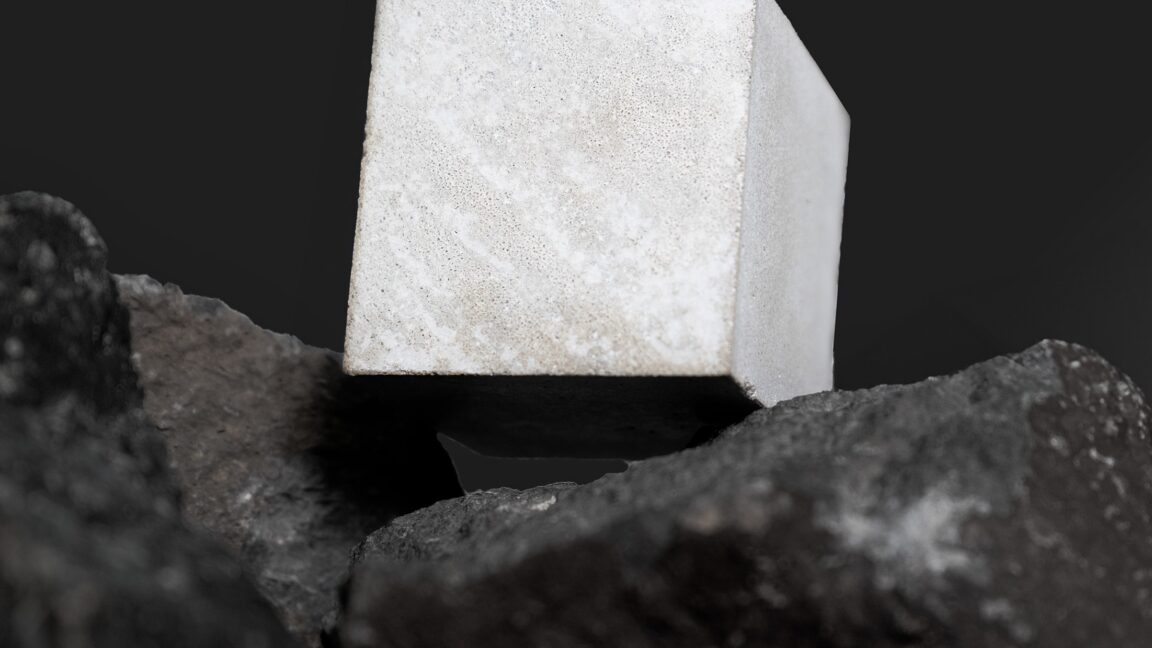
Sustainable infrastructure is critical for the future of energy-intensive AI data centers.
30-Second TL;DR
What Changed
Limestone is the primary current source for Portland cement
Why It Matters
If successful, this could fundamentally change the material science behind infrastructure, impacting the carbon accounting for large-scale AI data center construction.
What To Do Next
Monitor material science breakthroughs for sustainable data center construction materials.
Key Points
- •Limestone is the primary current source for Portland cement
- •Alternative rock compositions are being tested for lower carbon footprints
- •Potential to decarbonize the global construction material industry
Deep Insight
Background and context from public sources — not the original article. 27 sources cited.
Enhanced Key Takeaways
- •Basalt and other calcium-rich silicate rocks can replace limestone, potentially reducing CO2 emissions by over 80% and energy requirements by up to 60% by avoiding the direct CO2 release from calcination and requiring lower processing energy.
- •Limestone Calcined Clay Cement (LC3) technology, which combines clinker, calcined kaolinitic clay, and limestone, can reduce CO2 emissions by up to 40% compared to Ordinary Portland Cement (OPC) and utilizes abundant low-grade clays and waste limestone.
- •Calcium Sulfoaluminate (CSA) cement offers another low-carbon alternative, achieving up to 40% lower CO2 emissions due to lower calcination temperatures and the ability to incorporate industrial byproducts like blast furnace slag and fly ash.
- •Beyond material substitution, electrochemical processes are being developed to convert calcium carbonate into a cement clinker precursor, bypassing high-temperature limestone decomposition and potentially achieving gigaton-scale carbon reductions.
- •Some research explores using minerals like olivine, a magnesium silicate, which can be processed to yield silica as a cement substitute and magnesium carbonate as a binder, with the potential for carbon-negative concrete.
Technical Deep Dive
- Traditional Portland Cement (OPC) Production: Limestone (CaCO3) is heated to over 1,500°C in a kiln, releasing CO2 (calcination) to produce calcium oxide (CaO), which then reacts with silica (SiO2) to form calcium silicates (clinker). This process accounts for 60-70% of total CO2 emissions.
- Limestone Calcined Clay Cement (LC3):
- Composition: Typically 50% clinker, 15% non-cement grade limestone, 30% calcined kaolinitic clay, and 5% gypsum.
- Process: Calcined clay is heated between 700-950°C (significantly lower than clinker production temperatures of 1400-1500°C) and ground with clinker, gypsum, and raw limestone.
- Mechanism: LC3 works on the synergy between clinker, calcined clay, and limestone. Calcined clay reacts with hydration products of clinker, and limestone reacts with calcined clay, forming carboaluminate phases that densify the microstructure and improve strength and durability.
- CO2 Reduction: Up to 40% compared to OPC due to lower clinker content and lower energy for calcining clay.
- Calcium Sulfoaluminate (CSA) Cement:
- Composition: Clinker mainly composed of calcium sulfoaluminate (ye'elimite), dicalcium silicate, and iron solid solution minerals, mixed with supplementary materials. Raw materials include limestone, bauxite, gypsum, and can incorporate industrial byproducts like fly ash and red mud.
- Process: Calcination at lower temperatures (200-250°C lower than OPC clinker) to form ye'elimite.
- CO2 Reduction: Up to 40% lower CO2 emissions due to lower calcination temperatures and reduced lime content.
- Basalt-Derived Cement:
- Raw Material: Calcium-rich silicate rocks like basalt or gabbro instead of limestone.
- Process: Extracts calcium oxide from silicate rocks, which does not release CO2 during heating, unlike limestone (CaCO3). Can use existing technologies.
- CO2 Reduction: Over 80% reduction in associated CO2 emissions and less than 60% of the energy required compared to limestone processing.
- Electrochemical Process for Clinker Precursor:
- Mechanism: Uses an electrochemical cell to create a pH gradient, leaching calcium ions from silicates (basalt, recycled concrete, industrial waste). These ions then react with captured CO2 to produce calcium carbonate and amorphous silica, bypassing limestone decomposition.
- Goal: Carbon-negative calcium carbonate feedstock.
- Olivine-Based Cement:
- Raw Material: Magnesium silicate mineral olivine.
- Process: Crushed olivine mixed with sulfuric acid to separate silica and create magnesium sulfate. Bubbling CO2 through the mixture produces magnesium carbonate (sequestering CO2).
- Products: Silica can be used as a cement substitute, magnesium carbonate as a binder/filler.
Future ImplicationsAI analysis grounded in cited sources
Timeline
- 1756John Smeaton developed hydraulic lime, an early form of cement that could set underwater.
- 1824Joseph Aspdin patented "Portland Cement" by burning limestone and clay.
- 1960sYe'elimite, the main mineral in Calcium Sulfoaluminate (CSA) cement, was first discovered and researched.
- 2004Development of Limestone Calcined Clay Cement (LC3) began with exploration of calcined clays as a sustainable clinker replacement.
- 2020Cementos Argos plant in Rioclaro, Colombia, became the first large-scale calcined clay production facility.
- 2025-11Heidelberg Materials Trading announced the addition of Calcined Clay to its product portfolio.
Sources (27)
Factual claims are grounded in the sources below. Forward-looking analysis is AI-generated interpretation.
Weekly AI Recap
Read this week's curated digest of top AI events →
AI-curated news aggregator. All content rights belong to original publishers.
Original source: Ars Technica ↗
This is a summary, not the original. Read the source, or get the weekly briefing.
The weekly digest
One email a week. Unsubscribe anytime.