New High-Sensitivity Electronic Nose Detects Food Spoilage
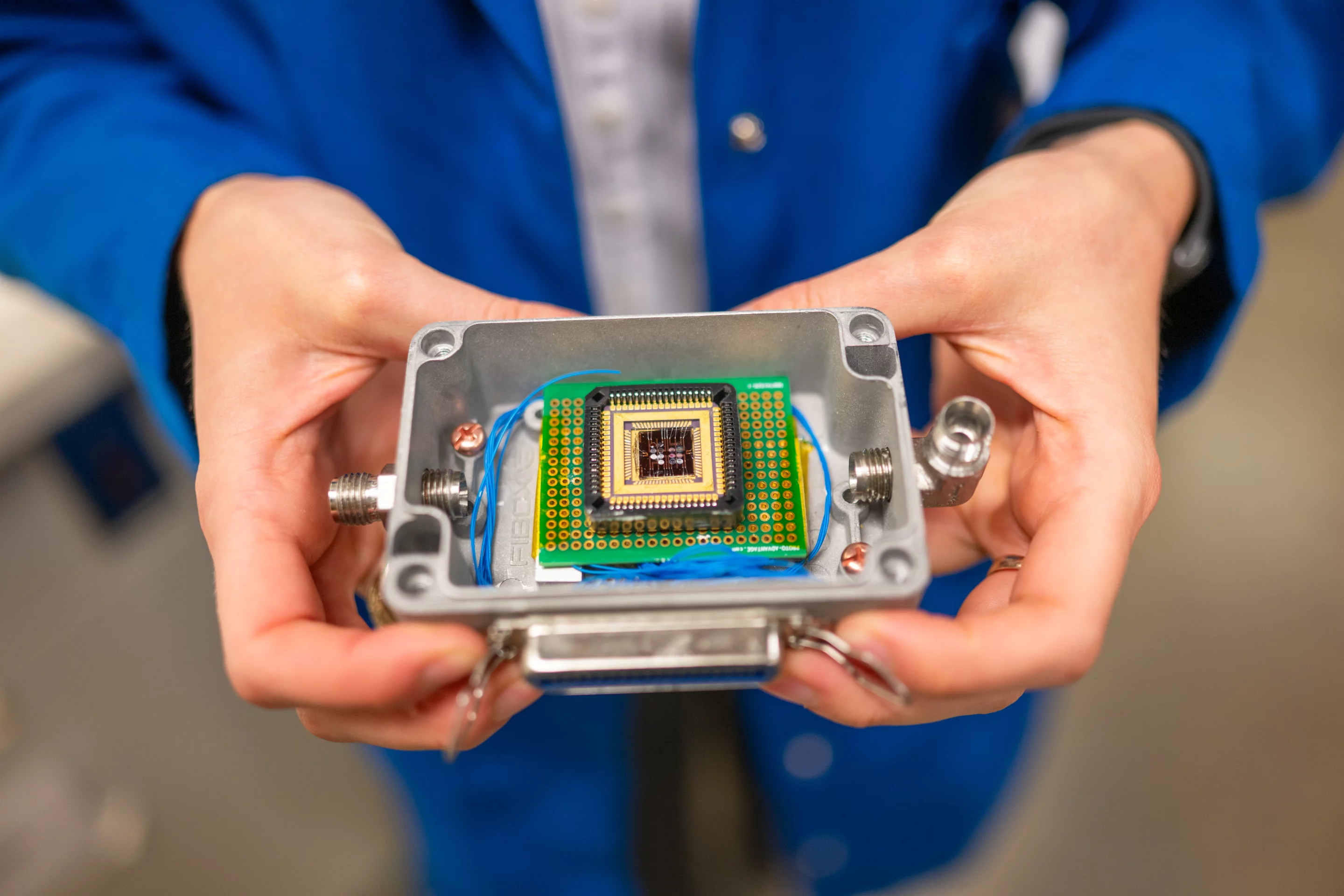
A breakthrough in sensor fusion and edge AI that enables real-time chemical analysis for smart home applications.
30-Second TL;DR
What Changed
Developed by a team at UC Berkeley led by Carla Bassil.
Why It Matters
This technology could revolutionize smart home appliances and food safety monitoring, integrating AI-driven chemical analysis into everyday consumer devices.
What To Do Next
Explore the integration of chemical sensor data with edge AI models to build predictive maintenance features for smart kitchen appliances.
Key Points
- •Developed by a team at UC Berkeley led by Carla Bassil.
- •Capable of identifying food spoilage and potential allergens.
- •Sensor sensitivity exceeds that of human olfactory capabilities.
Deep Insight
AI-generated analysis for this event — not the original article.
Enhanced Key Takeaways
- •The sensor utilizes a flexible, organic electrochemical transistor (OECT) array integrated with a machine learning-based signal processing unit.
- •The device specifically targets volatile organic compounds (VOCs) such as cadaverine and putrescine, which are primary markers of protein degradation in meat and fish.
- •The research team successfully demonstrated the sensor's ability to operate in high-humidity environments typical of domestic refrigerators without signal degradation.
- •The system is designed to be low-power, enabling integration into Internet of Things (IoT) smart home ecosystems for real-time mobile alerts.
- •The sensor architecture employs a unique 'lock-and-key' molecular recognition layer that allows for the selective detection of specific allergens like peanut proteins in trace amounts.
Competitor Analysis
- UC Berkeley E-Nose
- Parts-per-billion (ppb)
- Traditional Gas Sensors
- Parts-per-million (ppm)
- Commercial Food Scanners
- Variable
- UC Berkeley E-Nose
- High (Molecular)
- Traditional Gas Sensors
- Low (Broadband)
- Commercial Food Scanners
- Moderate
- UC Berkeley E-Nose
- Flexible/Wearable
- Traditional Gas Sensors
- Bulky/Rigid
- Commercial Food Scanners
- Handheld
- UC Berkeley E-Nose
- Low (Projected)
- Traditional Gas Sensors
- Moderate
- Commercial Food Scanners
- High
| Feature | UC Berkeley E-Nose | Traditional Gas Sensors | Commercial Food Scanners |
|---|---|---|---|
| Sensitivity | Parts-per-billion (ppb) | Parts-per-million (ppm) | Variable |
| Selectivity | High (Molecular) | Low (Broadband) | Moderate |
| Form Factor | Flexible/Wearable | Bulky/Rigid | Handheld |
| Cost | Low (Projected) | Moderate | High |
Technical Deep Dive
- Sensor Architecture: Utilizes a printed organic electrochemical transistor (OECT) array on a flexible polyimide substrate.
- Detection Mechanism: Employs functionalized gate electrodes with specific aptamers or molecularly imprinted polymers (MIPs) to bind target VOCs.
- Signal Processing: On-chip integration of a neural network classifier that differentiates between spoilage-related VOC profiles and ambient refrigerator odors.
- Power Consumption: Operates at sub-microwatt levels, suitable for long-term battery-powered deployment.
- Environmental Robustness: Features a hydrophobic encapsulation layer to prevent moisture interference while allowing gas-phase analyte diffusion.
Future ImplicationsAI analysis grounded in cited sources
Timeline
- 2024-09Initial prototype development of the flexible OECT sensor array at UC Berkeley.
- 2025-05Successful laboratory validation of VOC detection in high-humidity simulated refrigerator environments.
- 2026-04Publication of research findings in Science Advances detailing the sensor's sensitivity and selectivity.
Weekly AI Recap
Read this week's curated digest of top AI events →
Related Updates


AI-curated news aggregator. All content rights belong to original publishers.
Original source: cnBeta (Full RSS) ↗
This is a summary, not the original. Read the source, or get the weekly briefing.
The weekly digest
One email a week. Unsubscribe anytime.