New Domestic Agent Model Enters Global Top Tier

💡A new domestic Agent model claims global top-tier status with native support for Claude Code and OpenClaw.
⚡ 30-Second TL;DR
What Changed
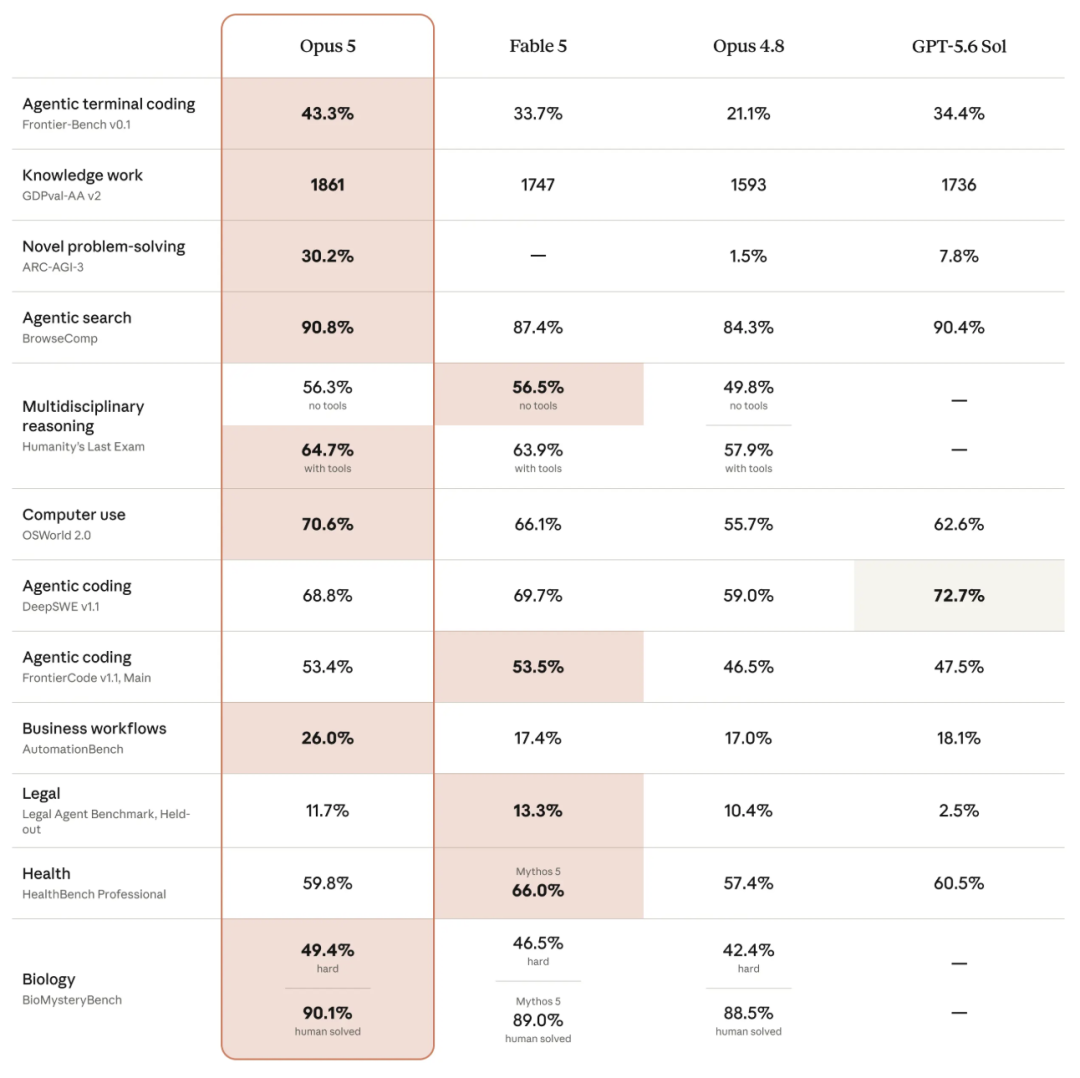
Achieved global top-tier performance benchmarks
Why It Matters
This release challenges existing global leaders in the Agentic AI space, providing developers with a new, highly compatible alternative for automation workflows.
What To Do Next
Test the model's integration with your existing Claude Code or OpenClaw workflows to evaluate its performance against current benchmarks.
Key Points
- •Achieved global top-tier performance benchmarks
- •Deeply compatible with OpenClaw, Claude Code, and Hermes
- •Currently available for free for a limited time
🧠 Deep Insight
Web-grounded analysis with 12 cited sources.
🔑 Enhanced Key Takeaways
- •The new domestic AI Agent model originates from China, with its emergence coinciding with a 'real product explosion period' for AI agents, encompassing various forms such as coding agents, personal agents, and agent operating systems.
- •Its deep compatibility with frameworks like OpenClaw (an open-source operator runtime), Claude Code (a coding-agent surface), and Hermes (a self-learning autonomous worker framework) positions it for diverse agentic workflows, enabling integration into broader AI ecosystems.
- •The model's limited-time free availability is a strategic move likely aimed at accelerating developer adoption and fostering ecosystem growth, a common tactic in the rapidly evolving AI agent market.
- •The performance of AI agents is increasingly reliant on 'harness engineering,' which involves designing control systems, context management, and verification mechanisms to ensure reliability and steerability in production environments, beyond just the underlying model's capabilities.
📊 Competitor Analysis▸ Show
| Feature/Category | New Domestic Agent Model (Unnamed) | Claude Code (Anthropic) | Hermes Agent (Nous Research) | OpenClaw (Open-source) | GPT-5.5 (OpenAI) | Gemini 3.1 Pro (Google DeepMind) |
|---|---|---|---|---|---|---|
| Type | AI Agent Model (Domestic, Global Top Tier) | Coding-agent surface/SDK | Autonomous worker framework/runtime | Open-source operator runtime | Foundation Model (Agentic) | Foundation Model (Agentic) |
| Primary Use Case | General-purpose agentic tasks, developer integration | Terminal-native coding, software development | Persistent, general-purpose personal assistant, self-learning | Configurable operator runtime, marketplace workflows | General-purpose reasoning, coding, agentic tasks | General-purpose reasoning, multimodal, agentic tasks |
| Compatibility/Integration | Deeply compatible with OpenClaw, Claude Code, Hermes | Built on Claude Opus 4.7, integrates with VS Code/JetBrains, MCP support | Model-agnostic, integrates with 19+ messaging channels, MCP support | Model-agnostic, integrates with 50+ messaging apps, MCP support | Integrated into OpenAI's ecosystem, strong coding capabilities | Integrated into Google's ecosystem, strong multimodal capabilities |
| Key Differentiator | Global top-tier performance, limited-time free access (domestic origin) | High code quality metrics, strong SWE-bench performance (87.6% with Opus 4.7) | Self-learning skills, persistent memory, rapid adoption (140k+ GitHub stars by May 2026) | High GitHub stars (347k+ by April 2026), extensive messaging integrations | Leading performance on Terminal-Bench 2.0 (82.7%), strong general reasoning | Strong on general-purpose reasoning benchmarks (ARC-AGI-2: 77.1%), multimodal |
| Pricing Model | Free for a limited time | Subscription/API ($20-$200/month, API $5/$25 per 1M tokens for Opus 4.7) | Open-source (MIT license) | Open-source | API-based, various tiers | Free tier available (Google AI Studio), Google One AI Premium |
🔮 Future ImplicationsAI analysis grounded in cited sources
⏳ Timeline
📎 Sources (12)
Factual claims are grounded in the sources below. Forward-looking analysis is AI-generated interpretation.
Weekly AI Recap
Read this week's curated digest of top AI events →
👉Related Updates


AI-curated news aggregator. All content rights belong to original publishers.
Original source: 量子位 ↗