NEC CEO Outlines Three Conditions for AI Industry Success
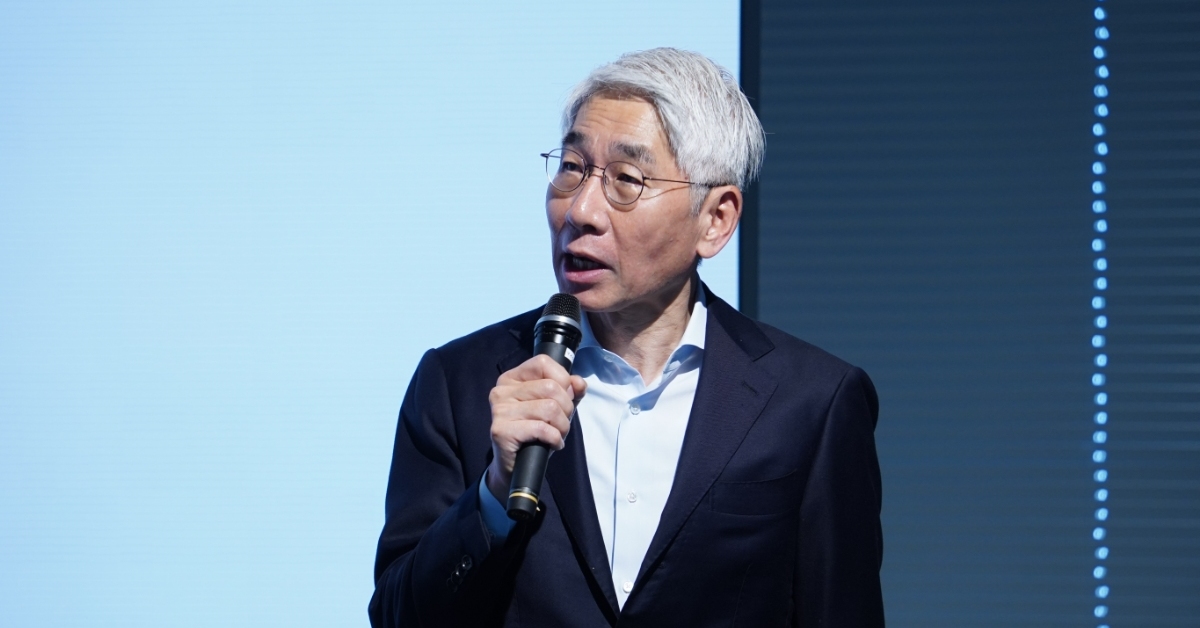
Understand how major legacy enterprise tech firms are restructuring their strategy for the AI era.
30-Second TL;DR
What Changed
NEC identifies the current era as an 'AI Industrial Revolution'.
Why It Matters
NEC's strategic shift highlights the increasing pressure on legacy enterprise tech firms to integrate AI at the core of their business models to remain competitive.
What To Do Next
Review NEC's latest integrated report or investor relations materials to understand their specific AI implementation roadmap for enterprise clients.
Key Points
- •NEC identifies the current era as an 'AI Industrial Revolution'.
- •The CEO established a strategic framework consisting of three specific conditions for corporate success.
- •The company is pivoting its core business strategy to prioritize AI-driven industrial transformation.
Deep Insight
Background and context from public sources — not the original article. 20 sources cited.
Enhanced Key Takeaways
- •NEC's strategy prioritizes "sovereign AI" solutions, such as 'cotomi,' to reduce dependence on hyperscalers and secure contracts with governments and enterprises that require localized data control and high reliability in sectors like healthcare, telecommunications, and transportation.
- •The company is undergoing a significant transformation from a hardware-centric provider to a software-led global infrastructure partner, emphasizing software-defined social infrastructure, scaling Open RAN 5G, and integrating strategic acquisitions like Avaloq to bolster its digital government and finance offerings.
- •NEC's Mid-term Management Plan 2025 and the newly formulated Mid-term Management Plan 2030 are centered on creating social value through AI and network integration, with financial targets including a consolidated revenue of 3.5 trillion yen for fiscal year 2026 and a projected 9% operating profit margin by the end of fiscal year 2025.
- •NEC is implementing "NEC BluStellar" as a value creation model to deliver its digital transformation (DX) expertise, aiming to become an "AI-native company" by embedding AI into its internal operations and leveraging this internal mastery of advanced technologies, referred to as "Client Zero," before offering them to customers.
- •The company has developed proprietary generative AI services, including Large Language Models (LLMs) optimized for Japanese proficiency and lightweight models, along with a "NEC Generative AI Framework" and "NEC Generative AI Appliance Server" to provide secure on-premises and cloud environments, targeting 50 billion yen in sales from these businesses over the next three years.
Technical Deep Dive
- AI Computing Platform: NEC is developing a Vector Engine accelerator and the Frovedia statistical machine learning framework to meet the high computing demands of AI, supporting both statistical machine learning and deep learning.
- Generative AI Capabilities: Offers proprietary LLMs characterized by high Japanese proficiency and a lightweight model size, capable of running on standard GPU servers. It also provides the "NEC Generative AI Framework" software and the "NEC Generative AI Appliance Server" hardware platform for secure on-premises deployments.
- AI Technologies (NEC the WISE): This suite of advanced AI technologies focuses on Visualization, Analysis, and Prescription, encompassing RAPID machine learning (deep learning), world-leading facial recognition, rare event discovery, system invariant analysis, predictive analytics automation, and Explainable AI (XAI).
- AI Platforms: Key platforms include "NEC cotomi" (a sovereign AI offering), technologies for efficient and accelerated LLM inference, an Agent Execution Platform, and tools to enhance LLM reliability, such as hallucination mitigation, graph-based relational learning, and AI Orchestration Technology.
- Digital Twin Technology: NEC is focused on digital twin technology to enable co-creation and real-time adaptation to changes in the real world, integrating information across various industries to forecast future scenarios.
- AI Research Supercomputer: NEC completed the full operation of Japan's largest AI research supercomputer by March 2023, designed to significantly reduce AI learning times and support extensive research by hundreds of AI scientists.
Future ImplicationsAI analysis grounded in cited sources
Timeline
- 1899-07-17Founded as Nippon Electric Company, Limited.
- 1953Introduced Japan's first computer, the NEAC-1101.
- 2009-12NEC's facial recognition technology ranked highest globally in NIST Face Recognition Vendor Test Program.
- 2023-03Full operation of Japan's largest AI research supercomputer by NEC.
- 2023-07-07Launched "NEC Generative AI Service" in Japan, including proprietary LLMs and a framework for business use.
- 2026-04-23NEC announced a strategic collaboration with Anthropic focused on Enterprise AI.
- 2026-05-12NEC formulated the "Mid-term Management Plan 2030," covering fiscal years 2026 to 2030.
Sources (20)
Factual claims are grounded in the sources below. Forward-looking analysis is AI-generated interpretation.
Weekly AI Recap
Read this week's curated digest of top AI events →
Related Updates
AI-curated news aggregator. All content rights belong to original publishers.
Original source: ITmedia AI+ (日本) ↗
This is a summary, not the original. Read the source, or get the weekly briefing.
The weekly digest
One email a week. Unsubscribe anytime.