Nayuta Space Plans 12,500 Satellite AI Computing Constellation
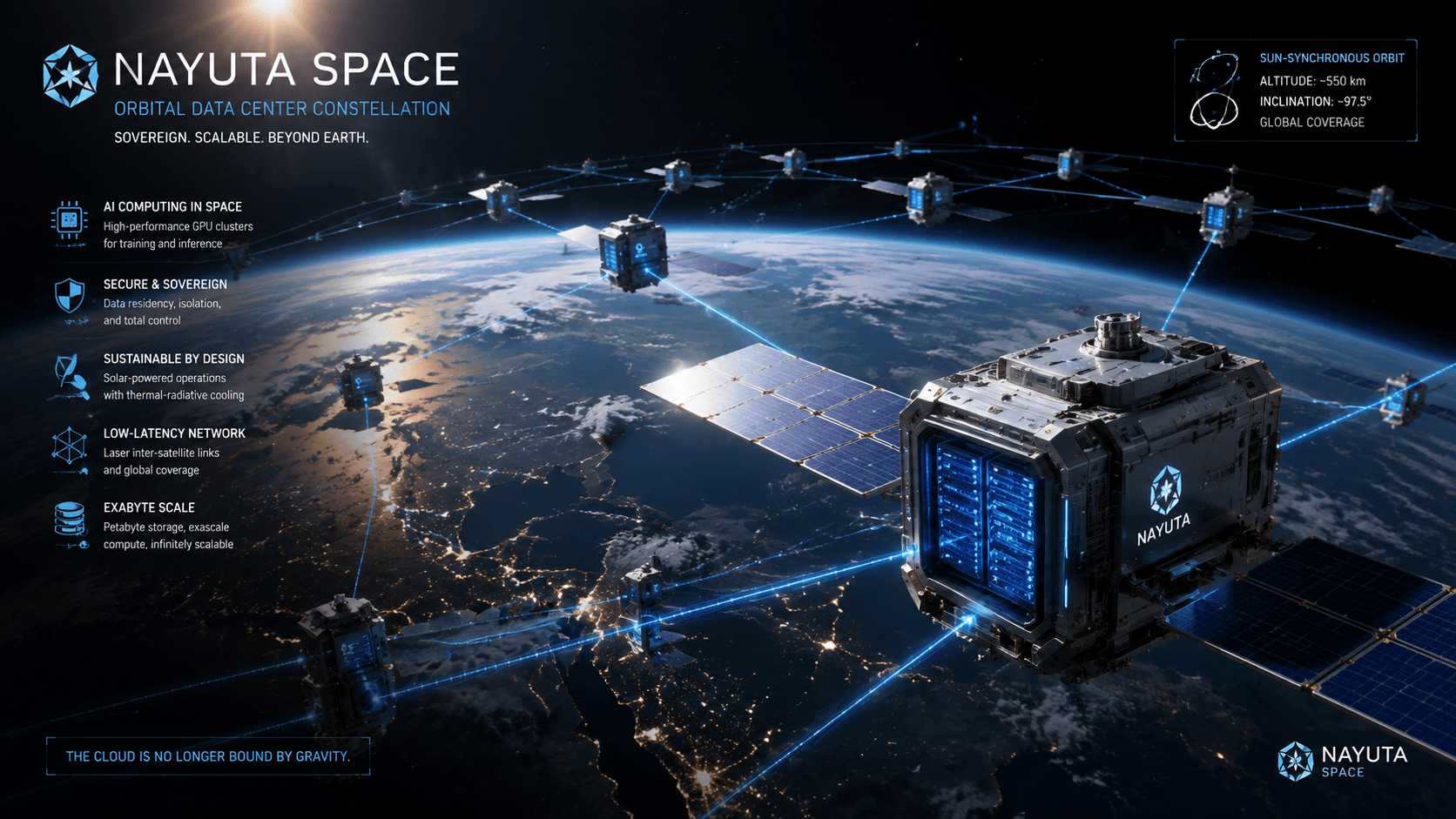
💡Explore the future of decentralized AI infrastructure with a massive 12,500-satellite orbital computing network.
⚡ 30-Second TL;DR
What Changed
Deployment of 12,500 AI compute satellites in sun-synchronous orbit
Why It Matters
This initiative could revolutionize edge AI by providing low-latency, space-based compute resources for global data processing. It signals a shift toward decentralized, extraterrestrial AI infrastructure.
What To Do Next
Monitor the development of space-based edge computing APIs to prepare for potential low-latency global AI deployment scenarios.
Key Points
- •Deployment of 12,500 AI compute satellites in sun-synchronous orbit
- •Development of an orbital data center infrastructure for edge AI
- •Integration of aerodynamic rocket recovery to reduce launch costs
🧠 Deep Insight
AI-generated analysis for this event — not the original article.
🔑 Enhanced Key Takeaways
- •Nayuta Space is leveraging a proprietary 'Aero-Capture' propulsion system designed to extend satellite lifespan by minimizing fuel consumption during orbital maintenance.
- •The Alaya project incorporates a decentralized mesh networking protocol, allowing satellites to perform inter-satellite link (ISL) data processing without routing traffic through ground stations.
- •The company has secured strategic partnerships with regional semiconductor manufacturers to produce radiation-hardened AI inference chips specifically optimized for the Alaya constellation's thermal constraints.
- •Nayuta Space's aerodynamic rocket recovery technology utilizes a grid-fin stabilization mechanism that reportedly reduces refurbishment time between launches by 40% compared to traditional vertical landing systems.
- •The constellation is designed to provide real-time edge computing services for autonomous maritime and aviation navigation, targeting latency-sensitive applications that require sub-50ms response times.
📊 Competitor Analysis▸ Show
| Feature | Nayuta Space (Alaya) | Starlink (Direct-to-Cell) | AST SpaceMobile |
|---|---|---|---|
| Primary Focus | Orbital AI Computing | Global Broadband | Cellular Connectivity |
| Compute Capability | High (On-board Edge AI) | Low (Bent-pipe) | Low (Bent-pipe) |
| Launch Strategy | Aerodynamic Recovery | Reusable Falcon 9 | Third-party Launch |
| Target Latency | <50ms (Edge) | 25-100ms | 50-150ms |
🛠️ Technical Deep Dive
- Satellite Architecture: Modular bus design featuring liquid-cooled heat sinks to manage the thermal load of high-performance AI inference processors.
- Compute Stack: Custom-designed NPU (Neural Processing Unit) architecture optimized for INT8 and FP16 precision, supporting real-time computer vision and signal processing.
- Network Topology: Dynamic mesh network utilizing optical inter-satellite links (OISL) with a throughput capacity of 100 Gbps per link.
- Propulsion: Electric propulsion system utilizing krypton propellant for station-keeping and de-orbiting maneuvers.
- Recovery System: Aerodynamic grid-fin control surfaces integrated into the first-stage booster to enable high-precision atmospheric reentry and soft landing.
🔮 Future ImplicationsAI analysis grounded in cited sources
⏳ Timeline
Weekly AI Recap
Read this week's curated digest of top AI events →
👉Related Updates
AI-curated news aggregator. All content rights belong to original publishers.
Original source: Pandaily ↗
This is a summary, not the original. Read the source, or get the weekly briefing.
Weekly AI briefing
One email a week. Unsubscribe anytime.