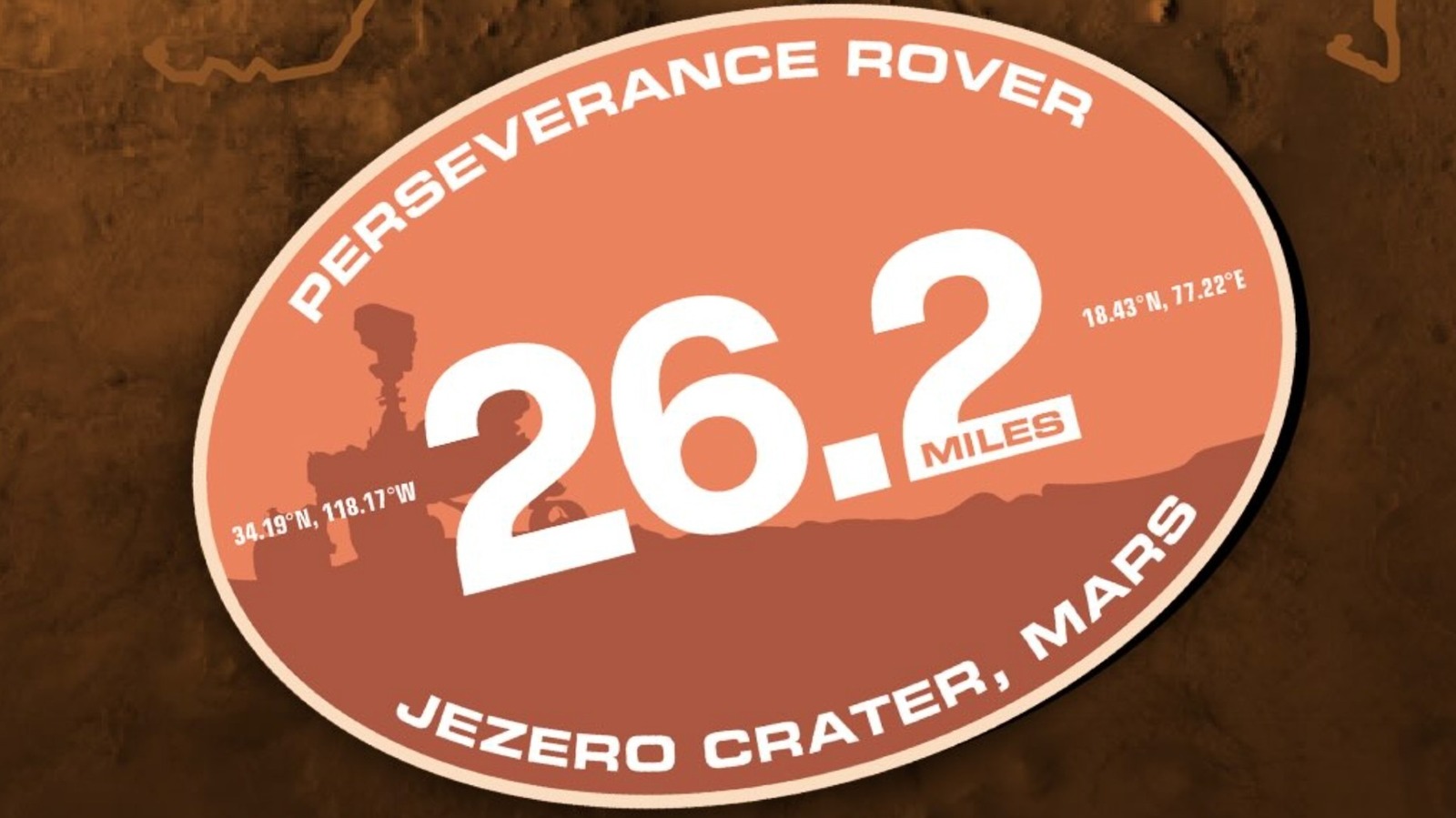
NASA's Perseverance rover completes marathon distance on Mars
Learn how autonomous robotics handle long-term navigation in extreme, high-latency environments.
30-Second TL;DR
What Changed
Perseverance rover reached the 42.195-kilometer (26.2-mile) milestone.
Why It Matters
This achievement highlights the success of long-duration autonomous robotics in extreme, remote environments. It provides valuable data for future mission planning and autonomous navigation algorithms.
What To Do Next
Review NASA's open-source autonomous navigation datasets to understand how pathfinding algorithms handle high-latency, unstructured environments.
Key Points
- •Perseverance rover reached the 42.195-kilometer (26.2-mile) milestone.
- •The distance was covered over a five-year operational period on Mars.
- •Demonstrates the long-term durability and autonomous navigation capabilities of the rover.
Deep Insight
AI-generated analysis for this event — not the original article.
Enhanced Key Takeaways
- •The rover achieved this distance while traversing the complex terrain of the Jezero Crater, specifically navigating the ancient river delta to collect geological samples.
- •Perseverance utilizes the AutoNav (Autonomous Navigation) system, which allows it to calculate paths around obstacles in real-time without waiting for ground control commands.
- •This marathon milestone includes the distance covered during the rover's primary mission and its extended mission phases focused on astrobiology and sample caching.
- •The rover's mobility system features six independently driven wheels with titanium spokes, which have shown remarkable resilience despite the abrasive Martian regolith.
- •Data from this long-distance trek is being used to refine path-planning algorithms for future Mars missions, including the planned Mars Sample Return campaign.
Technical Deep Dive
- Mobility System: Six-wheel rocker-bogie suspension system designed for traversing uneven terrain.
- Navigation: AutoNav system utilizing the Vision Compute Element (VCE) to process terrain imagery and perform pathfinding autonomously.
- Power Source: Multi-Mission Radioisotope Thermoelectric Generator (MMRTG) providing consistent electrical power regardless of dust accumulation or solar conditions.
- Locomotion Speed: Maximum speed of approximately 0.16 km/h (0.1 mph), though average speeds are significantly lower due to autonomous navigation processing and safety protocols.
Future ImplicationsAI analysis grounded in cited sources
Timeline
- 2021-02Perseverance rover successfully lands in Jezero Crater on Mars.
- 2021-03Perseverance completes its first test drive on the Martian surface.
- 2022-04Rover begins its ascent of the ancient river delta to search for signs of past life.
- 2023-09Perseverance completes the collection of its first set of diverse geological samples for future return.
- 2026-06Perseverance officially surpasses the 42.195-kilometer marathon distance milestone.
Weekly AI Recap
Read this week's curated digest of top AI events →
Related Updates

AI-curated news aggregator. All content rights belong to original publishers.
Original source: Engadget ↗
This is a summary, not the original. Read the source, or get the weekly briefing.
The weekly digest
One email a week. Unsubscribe anytime.