NASA May Send Mars Rover Tech to the Moon
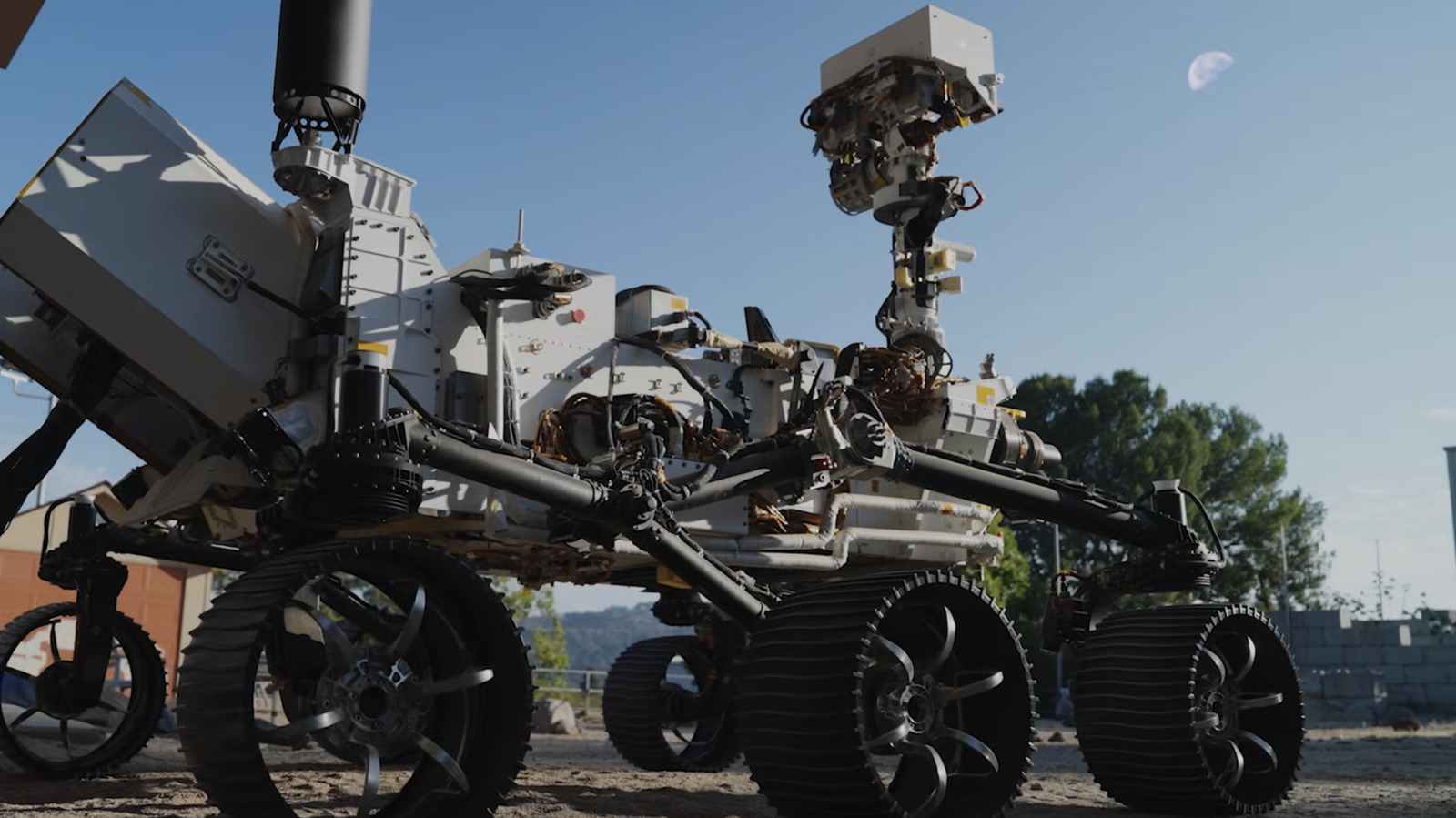
NASA's planned technology reuse offers a practical case study in adapting autonomous systems across worlds.
30-Second TL;DR
What Changed
Existing Mars rover technology may be adapted for lunar missions
Why It Matters
Repurposing rover technology could reduce development risk and accelerate lunar exploration. For AI and robotics teams, the effort highlights how autonomous systems can be adapted across challenging environments.
What To Do Next
Review your rover or robot navigation stack for assumptions tied to a single terrain or operating environment.
Key Points
- •Existing Mars rover technology may be adapted for lunar missions
- •NASA wants to study more areas across the moon
- •The proposal focuses on reusing proven exploration technology
Deep Insight
AI-generated analysis for this event — not the original article.
Enhanced Key Takeaways
- •NASA's initiative leverages the Multi-Mission Radioisotope Thermoelectric Generator (MMRTG) architecture, originally flight-proven on the Curiosity and Perseverance rovers, to provide reliable power in the lunar night.
- •The adaptation focuses on the 'AutoNav' autonomous navigation software suite, which allows rovers to calculate paths in real-time without waiting for Earth-based command cycles.
- •Engineers are specifically modifying the rocker-bogie suspension system to handle the unique abrasive properties of lunar regolith, which differs significantly from Martian soil composition.
- •This strategy is part of the broader Lunar Surface Innovation Initiative (LSII), aimed at reducing the cost and development time of lunar surface assets by utilizing high-TRL (Technology Readiness Level) hardware.
- •The mission concept includes integrating advanced radiation-hardened computing modules derived from the Mars 2020 mission to withstand the Moon's lack of a protective atmosphere.
Technical Deep Dive
- Suspension: Adaptation of the rocker-bogie mechanism to accommodate lunar regolith's high silica content and electrostatic properties.
- Power: Integration of MMRTG units to maintain thermal and electrical stability during the 14-day lunar night.
- Navigation: Implementation of the AutoNav system utilizing stereo vision and hazard detection algorithms ported from the Perseverance rover.
- Computing: Utilization of the RAD750 radiation-hardened processor architecture to manage autonomous operations in high-radiation lunar environments.
- Mobility: Modification of wheel tread patterns to optimize traction on lunar basaltic plains versus Martian sedimentary terrain.
Future ImplicationsAI analysis grounded in cited sources
Timeline
- 2012-08Curiosity rover successfully lands on Mars, proving the rocker-bogie and AutoNav systems.
- 2020-07Perseverance rover launches with upgraded autonomous navigation and sensor suites.
- 2023-05NASA formally announces the Lunar Surface Innovation Initiative (LSII) to accelerate surface technology.
- 2025-11NASA completes initial feasibility studies on porting Mars rover mobility systems to lunar landers.
Weekly AI Recap
Read this week's curated digest of top AI events →
Related Updates

AI-curated news aggregator. All content rights belong to original publishers.
Original source: Engadget ↗
This is a summary, not the original. Read the source, or get the weekly briefing.
The weekly digest
One email a week. Unsubscribe anytime.