NASA Mars Helicopter Rotor Breaks Sound Barrier
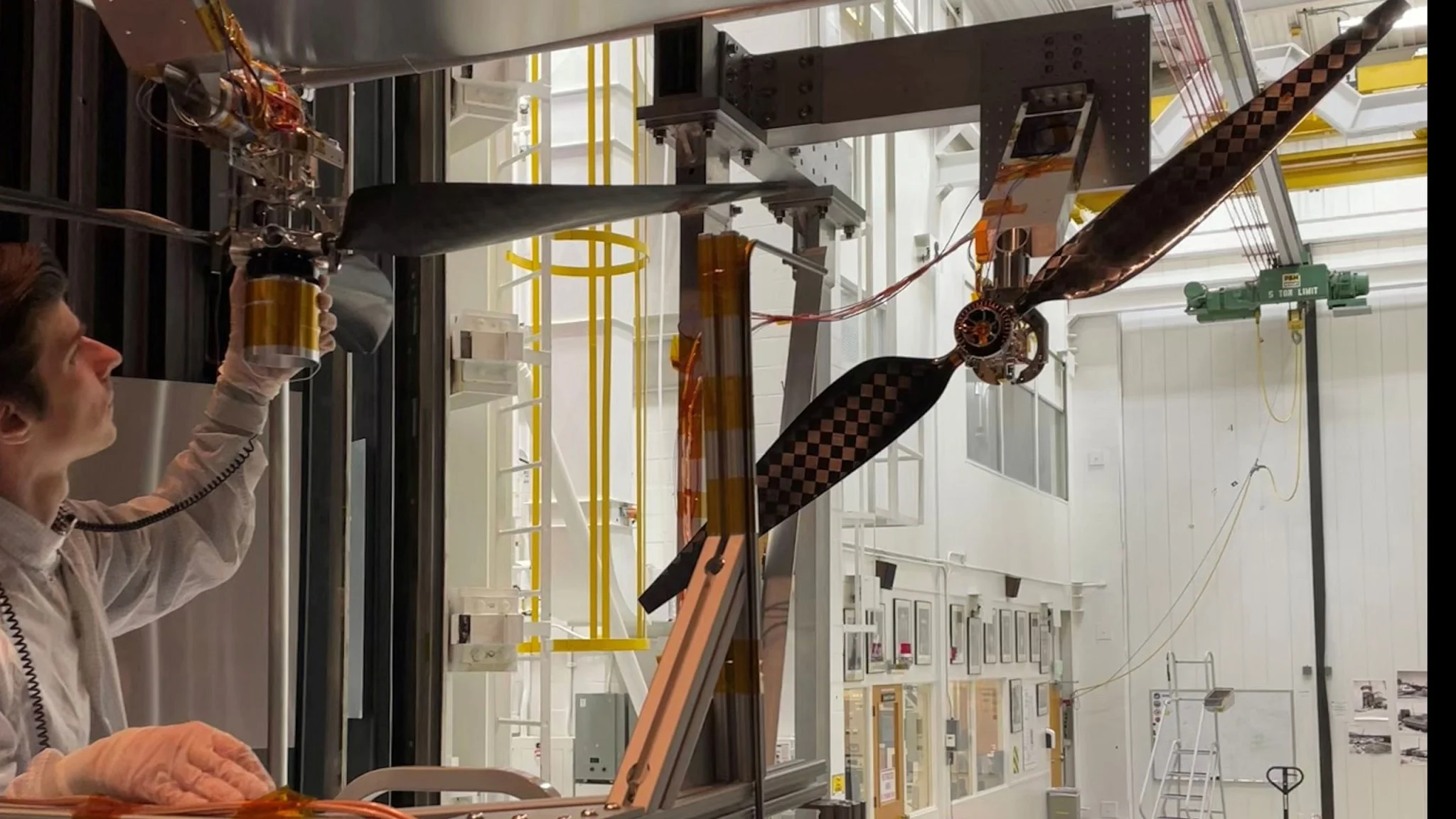
💡NASA’s rotor breakthrough could reshape autonomous aerial robotics for Mars and other extreme environments.
⚡ 30-Second TL;DR
What Changed
The rotor tips briefly exceeded the speed of sound during controlled testing.
Why It Matters
The result could expand the design space for autonomous aerial robots operating in extremely thin atmospheres. For AI and robotics teams, improved flight efficiency may enable more capable onboard perception, navigation, and scientific-data collection on planetary missions.
What To Do Next
Review NASA’s published rotor-test data when available and use it to benchmark low-density-atmosphere flight simulations for autonomous aerial robots.
Key Points
- •The rotor tips briefly exceeded the speed of sound during controlled testing.
- •Testing took place inside JPL’s 25-foot space simulator.
- •The simulator reproduced Mars-like thin, cold carbon-dioxide atmospheric conditions.
- •NASA completed 137 tests and reported a 30% lift improvement.
Weekly AI Recap
Read this week's curated digest of top AI events →
👉Related Updates

AI-curated news aggregator. All content rights belong to original publishers.
Original source: cnBeta (Full RSS) ↗
This is a summary, not the original. Read the source, or get the weekly briefing.
Weekly AI briefing
One email a week. Unsubscribe anytime.