NASA Launches $700M Mars Internet Infrastructure Bid
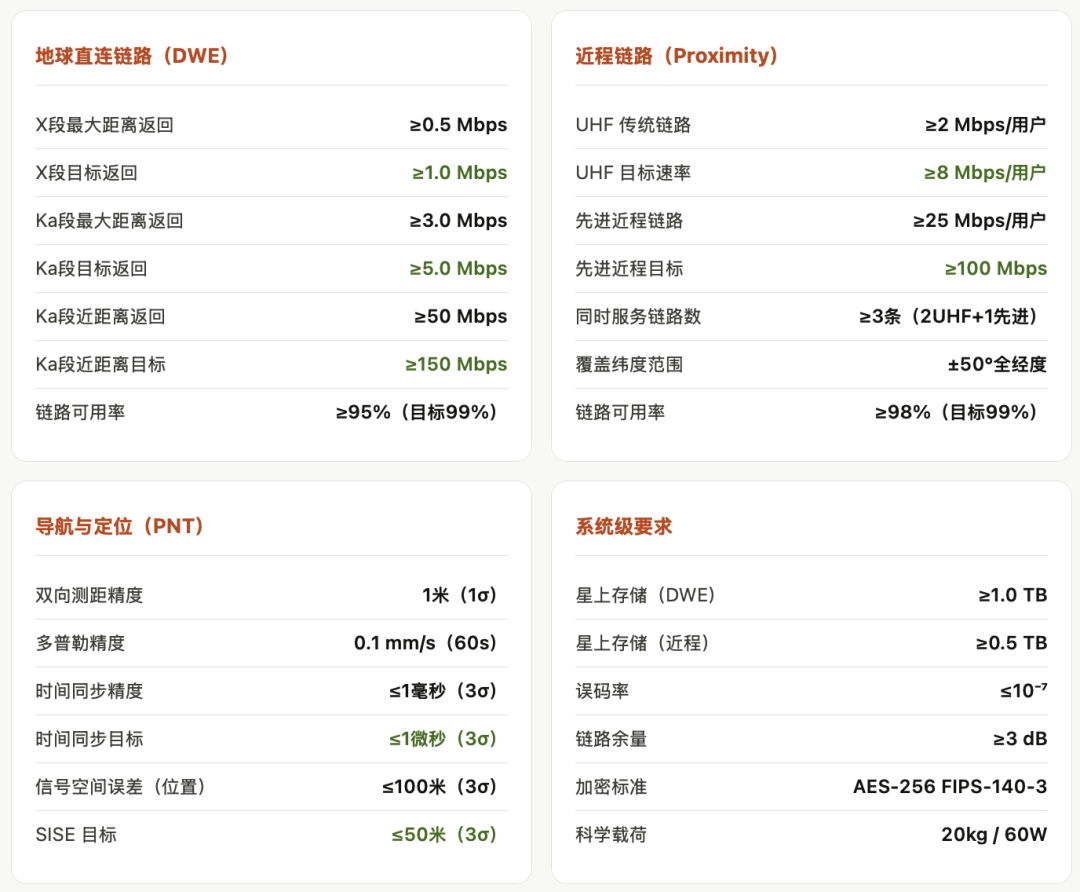
💡A $700M deep-space infrastructure project defining the future of inter-planetary communication and edge computing.
⚡ 30-Second TL;DR
What Changed
NASA seeks commercial partners to design, launch, and operate high-performance Mars relay orbiters.
Why It Matters
This project establishes the critical 'nervous system' for future human Mars missions, setting a precedent for commercializing deep-space infrastructure.
What To Do Next
If you are in aerospace systems engineering, review the RFP on SAM.gov to understand the interface requirements for SpaceWire and 1553B bus integration.
Key Points
- •NASA seeks commercial partners to design, launch, and operate high-performance Mars relay orbiters.
- •The contract is a $700 million fixed-price agreement with a strict delivery deadline of December 2028.
- •Satellites must support in-orbit software reprogramming and adaptive data rates from 3Mbps to 150Mbps.
- •NASA will provide government-furnished Electra UHF transceivers to reduce technical risk for contractors.
🧠 Deep Insight
Web-grounded analysis with 19 cited sources.
🔑 Enhanced Key Takeaways
- •The existing Mars relay infrastructure, primarily consisting of NASA's Mars Reconnaissance Orbiter (MRO) and MAVEN, along with ESA's Trace Gas Orbiter, is aging and operating well past its design life, necessitating an urgent replacement to support future missions.
- •The $700 million fixed-price contract for the Mars Telecommunications Network (MTN) is a restricted competition, limited to eight specific U.S. commercial providers: Blue Origin, L3Harris, Lockheed Martin, Northrop Grumman, Rocket Lab, SpaceX, Quantum Space, and Whittinghill Aerospace, all of whom participated in NASA-funded Mars Sample Return design studies in fiscal years 2024 or 2025.
- •NASA's issuance of a Request for Proposal (RFP) with a short 30-day response window highlights the agency's critical need to quickly establish a modern relay layer at Mars before the current orbiters fail, which could isolate billion-dollar surface missions.
- •The MTN is a foundational component of NASA's broader 'Moon to Mars' strategy, aiming to extend continuous network services beyond Earth to both lunar and Martian environments, supporting future surface, orbital, and human exploration.
🛠️ Technical Deep Dive
- The Electra UHF transceiver, provided by NASA as government-furnished equipment, is a software-defined radio (SDR) capable of operating in the 390-450 MHz band.
- Its modular design typically includes a Receiver/Modulator (RFM), a Baseband Processor Module (BPM), and a Power Amplifier-Power Supply Module (P/A-PSM), with some versions also featuring a Filtering and Switching Unit (FSU).
- The software-defined architecture allows for extensive in-flight reprogramming of signal processing capabilities, enabling adaptation to unique mission requirements post-launch.
- Electra supports both full-duplex and half-duplex operations and incorporates the Consultative Committee for Space Data Systems (CCSDS) Proximity-1 Protocol for error-free communication and automatic link establishment.
- Beyond data relay, the Electra transceivers provide crucial navigation capabilities, including two-way Doppler ranging and a precision timing reference for synchronizing spacecraft and in-situ assets.
- The Electra Lite version, designed for missions with stringent mass and energy constraints, maintains core functionality and reprogrammability, with transmit data rates up to 12 Mbps and receive rates of 1, 6, or 12 Mbps.
🔮 Future ImplicationsAI analysis grounded in cited sources
⏳ Timeline
📎 Sources (19)
Factual claims are grounded in the sources below. Forward-looking analysis is AI-generated interpretation.
- Google Search Source
- Google Search Source
- Google Search Source
- Google Search Source
- Google Search Source
- Google Search Source
- Google Search Source
- Google Search Source
- Google Search Source
- Google Search Source
- Google Search Source
- Google Search Source
- Google Search Source
- Google Search Source
- Google Search Source
- Google Search Source
- Google Search Source
- Google Search Source
- Google Search Source
Weekly AI Recap
Read this week's curated digest of top AI events →
👉Related Updates

AI-curated news aggregator. All content rights belong to original publishers.
Original source: 虎嗅 ↗