Narwal Founder: Robot Vacuums to Get 'Hands' in 2 Years

💡Insight into the future of embodied AI and physical task automation in consumer robotics.
⚡ 30-Second TL;DR
What Changed
Narwal is actively researching the integration of robotic manipulators into consumer vacuum cleaners.
Why It Matters
This highlights the industry's pivot toward embodied AI in the consumer sector, moving beyond simple SLAM navigation to dexterous manipulation.
What To Do Next
Monitor advancements in low-cost robotic arm kinematics and tactile sensing APIs for integration into consumer-grade hardware.
Key Points
- •Narwal is actively researching the integration of robotic manipulators into consumer vacuum cleaners.
- •The next generation of home robotics will focus on physical task execution rather than just cleaning floors.
- •The timeline for this hardware-software integration is estimated at approximately two years.
🧠 Deep Insight
Background and context from public sources — not the original article. 25 sources cited.
🔑 Enhanced Key Takeaways
- •Narwal secured US$100 million in a Series E funding round in April 2025, led by Tencent Holdings and the state-backed Beijing Robot Industry Development Investment Fund, specifically earmarked for developing its first "embodied-intelligence product for households" featuring robotic arms.
- •Narwal's founder, Zhang Junbin, envisions the upcoming embodied AI product with robotic arms as an "iPhone moment" for home robotics, signifying a leap from current robot cleaners (likened to iPods) to devices capable of "three-dimensional spatial recognition and autonomous decision-making."
- •Narwal has been actively researching embodied intelligence since 2021, having already implemented "double eye" vision recognition technology, which uses dual front-facing cameras to enable its Xiaoyao 001 series to select cleaning strategies and avoid obstacles based on detected dirt and objects.
- •The global embodied AI market, encompassing smart home robotics, was valued at USD 5092.5 million in 2025 and is projected to reach USD 58901.8 million by 2033, growing at a compound annual growth rate (CAGR) of 35.8% between 2026 and 2033, highlighting a significant industry trend towards advanced robotic capabilities.
📊 Competitor Analysis▸ Show
Competitor Analysis: Robot Vacuums with Manipulators
| Feature / Company | Narwal (Future Product) | Roborock Saros Z70 | Dreame X60 Pro Ultra Complete / Cyber 10 Ultra |
|---|---|---|---|
| Status | Predicted within 2 years (by 2028) | Launched January 2025 | X60 Pro Ultra Complete launched May 2026; Cyber 10 Ultra mentioned at CES 2026 |
| Manipulator Type | One or more robotic arms | Foldable five-axis mechanical arm | Dual-joint robotic arm (X60 Pro Ultra Complete); Robotic arm (Cyber 10 Ultra) |
| Primary Function of Arm | Cleaning areas above the floor, general household tasks | Obstacle recognition and removal (e.g., socks, sandals, tissues) | Extend side brush/mopping pad for edge cleaning (X60 Pro Ultra Complete); Autonomous tool-utility (Cyber 10 Ultra) |
| Object Recognition | Three-dimensional spatial recognition and autonomous decision-making | Recognizes socks, sandals, crumpled tissues, towels (more items planned) | AI OmniSight System with dual 120-degree cameras, recognizes over 320 objects |
| Weight Limit (Arm) | Not specified | Under 300 grams (approx. 0.66 lbs) | 500 grams (approx. 1.1 lbs) (Cyber 10 Ultra) |
| Navigation/AI | Embodied intelligence, dual RGB cameras, LiDAR SLAM 4.0 (current models) | Precise mapping, superior coverage, enhanced object recognition | AI OmniSight System, smart mapping technology |
| Current Narwal Products | Narwal Flow, Freo Z Ultra, Freo X series (advanced robot vacuums/mops with AI obstacle avoidance, self-washing/drying docks, tangle-free brushes) | Roborock Saros 10R (high-end vacuum/mop combo, no arm) | Dreame X50 Ultra, Aqua10 Ultra Roller (flagship robot vacuums/mops) |
🛠️ Technical Deep Dive
- Narwal's current advanced models, such as the Narwal Flow, utilize a SLAM 4.0 system that integrates dual RGB cameras and LiDAR technology to construct a 3D map of the home environment. This enables precise navigation, obstacle recognition, and adaptive cleaning performance.
- The company has developed a "double eye" vision recognition technology, first applied in its Xiaoyao 001 series in 2021, which employs two front-facing cameras to mimic human eyesight. This system allows robots to discern different types of dirt and obstacles, thereby selecting appropriate cleaning strategies and enhancing avoidance capabilities.
- Competitor Roborock's Saros Z70 features a foldable five-axis mechanical arm equipped with precision sensors, a camera, and an LED light. These components work in conjunction to accurately determine an item's positioning and weight, preventing the arm from attempting to lift objects exceeding its 300-gram capacity.
- Dreame's X60 Pro Ultra Complete incorporates a dual-joint robotic arm and an AI OmniSight System, which leverages two 120-degree cameras for comprehensive object recognition.
- Key technical challenges for integrating manipulators into home robots include dealing with varied and complex surface types (e.g., curvy, porous, dirty), the need for custom end-of-arm tooling to handle diverse objects, and the energy inefficiency and potential for contamination associated with compressed air systems often used in vacuum grippers.
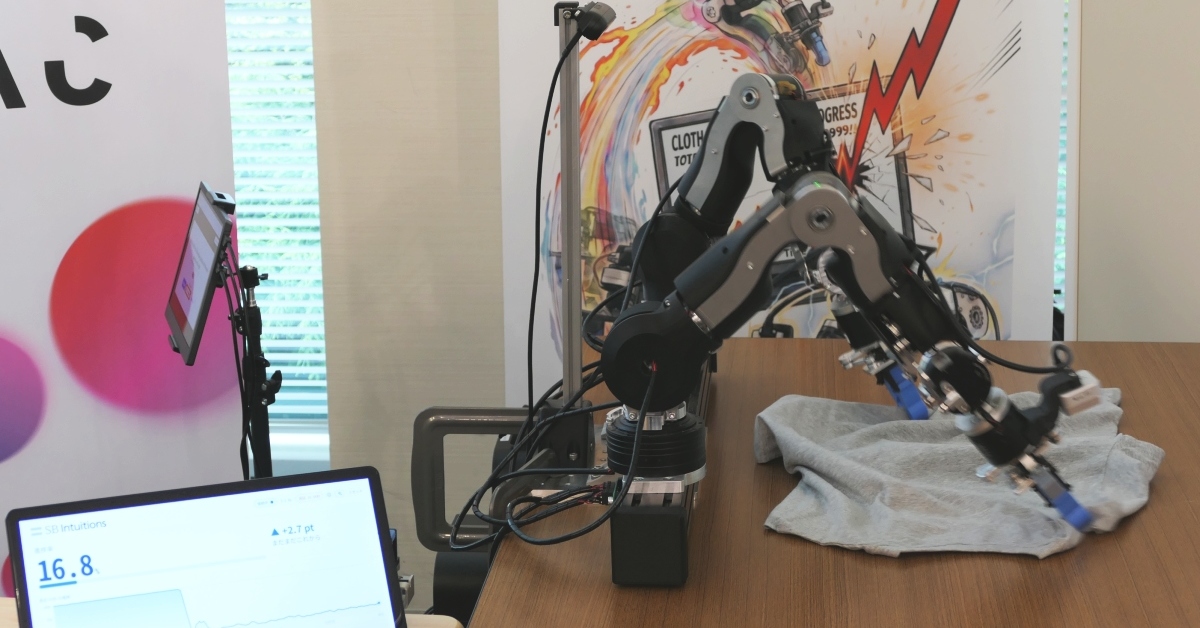
- Furthermore, real-world manipulation tasks in dynamic human environments demand that robots meet stringent real-time constraints, recognize and interact with unique or deformable objects (like cloth or liquids), and effectively utilize mobile manipulation capabilities.
🔮 Future ImplicationsAI analysis grounded in cited sources
⏳ Timeline
📎 Sources (25)
Factual claims are grounded in the sources below. Forward-looking analysis is AI-generated interpretation.
- thestar.com.my
- scmp.com
- asiaautomate.com
- congruencemarketinsights.com
- fastcompany.com
- roborock.com
- youtube.com
- gbnews.com
- mashable.com
- thesmarthomehookup.com
- narwal.com
- vacuumwars.com
- adelaidetechguy.com.au
- vacuumwars.com
- rtings.com
- zdnet.com
- robotiq.com
- mit.edu
- tracxn.com
- narwal.com
- narwal.com
- channelnews.com.au
- caproasia.com
- narwal.com
- kr-asia.com
Weekly AI Recap
Read this week's curated digest of top AI events →
👉Related Updates

AI-curated news aggregator. All content rights belong to original publishers.
Original source: Ifanr (爱范儿) ↗
This is a summary, not the original. Read the source, or get the weekly briefing.
The weekly digest
One email a week. Unsubscribe anytime.