Musk Buys PV Gear for Space AI Power Surge

💡Musk/Nvidia space AI shift crushes power limits – PV boom for infra builders.
⚡ 30-Second TL;DR
What Changed
SpaceX orders HJT equipment from top Chinese firm, ships May 1st week.
Why It Matters
Drives HJT PV demand for space AI infra, solves terrestrial power bottlenecks. Positions China PV firms in Musk/Nvidia ecosystems, trillions in market potential.
What To Do Next
Contact HJT PV suppliers like those serving SpaceX for AI data center solar prototypes.
Key Points
- •SpaceX orders HJT equipment from top Chinese firm, ships May 1st week.
- •Musk: Space cheapest for AI; power crisis to pile up idle chips by year-end.
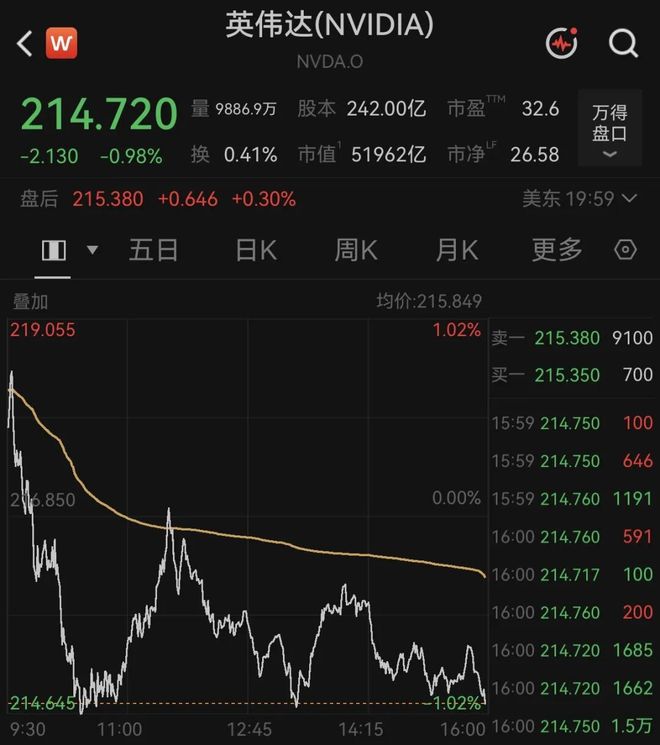
- •Nvidia space platform deploys data center AI to orbit; Beijing plans GW-scale.
🧠 Deep Insight
Background and context from public sources — not the original article. 7 sources cited.
🔑 Enhanced Key Takeaways
- •The 'top Chinese firm' identified in the procurement is Suzhou Maxwell Technologies (迈为股份), which reportedly secured a ~$500 million contract to provide HJT (Heterojunction) production lines, accounting for over 70% of SpaceX's initial orbital PV equipment needs.
- •Nvidia's newly unveiled 'Space-1 Vera Rubin Module' is specifically engineered for orbital data centers (ODCs), delivering 25x the AI inference performance of an H100 GPU by utilizing a specialized architecture optimized for the vacuum's passive radiative cooling.
- •The economic viability of space-based AI is anchored in a 5x energy efficiency gain; without atmospheric attenuation or day-night cycles, a single HJT panel in orbit generates five times the total energy of its terrestrial counterpart, reducing OpEx to near-zero post-deployment.
- •SpaceX's 100GW goal is supported by a strategic merger with xAI (February 2026) to create a vertically integrated 'Silicon-to-Orbit' pipeline, aiming to bypass terrestrial grid bottlenecks that are projected to cap AI growth by 2027.
📊 Competitor Analysis▸ Show
| Feature | SpaceX (Starshield/xAI) | Nvidia (Space-1 Platform) | China (ADA Space/GW-Project) |
|---|---|---|---|
| Primary Goal | Vertical integration of power + compute | Hardware/Software ecosystem for ODCs | Sovereign energy + GW-scale transmission |
| Key Hardware | Custom HJT Solar + xAI Grok Clusters | Vera Rubin Space Module / IGX Thor | 1km-wide Solar Arrays / GaAs Cells |
| Launch Strategy | Starship ($100/lb target) | Multi-partner (Axiom, Starcloud) | Long March 9 / Heavy Lift |
| Power Scale | 100GW (Manufacturing Goal) | Edge-optimized (kW to MW) | GW-scale (Single Station) |
| Market Focus | Proprietary AI Training/Inference | Commercial Satellite AI-as-a-Service | National Energy Security |
🛠️ Technical Deep Dive
The shift to space-based AI compute relies on several critical technical breakthroughs:
- Ultra-thin HJT Cells: SpaceX is utilizing HJT (Heterojunction) cells thinned to <50 microns, providing the flexibility and high power-to-weight ratio required for massive solar wing deployment.
- Passive Radiative Cooling: Orbital data centers utilize the 3K (-270°C) background of space. Servers are designed with high-emissivity radiator panels pointed away from the sun, eliminating the need for the millions of gallons of water required by terrestrial centers.
- Radiation Hardening: The Nvidia Vera Rubin module employs redundant logic and specialized shielding to mitigate Single Event Upsets (SEUs) caused by cosmic rays, which are 100x more frequent in LEO than on Earth.
- Laser Interconnects: High-speed optical cross-links (similar to Starlink Gen 2) allow orbital clusters to function as a single distributed supercomputer, minimizing the latency of data backhaul to Earth.
🔮 Future ImplicationsAI analysis grounded in cited sources
⏳ Timeline
📎 Sources (7)
Factual claims are grounded in the sources below. Forward-looking analysis is AI-generated interpretation.
Weekly AI Recap
Read this week's curated digest of top AI events →
👉Related Updates
AI-curated news aggregator. All content rights belong to original publishers.
Original source: 虎嗅 ↗
This is a summary, not the original. Read the source, or get the weekly briefing.
Weekly AI briefing
One email a week. Unsubscribe anytime.