Musk Bets SpaceX Will Dominate AI Data Centers
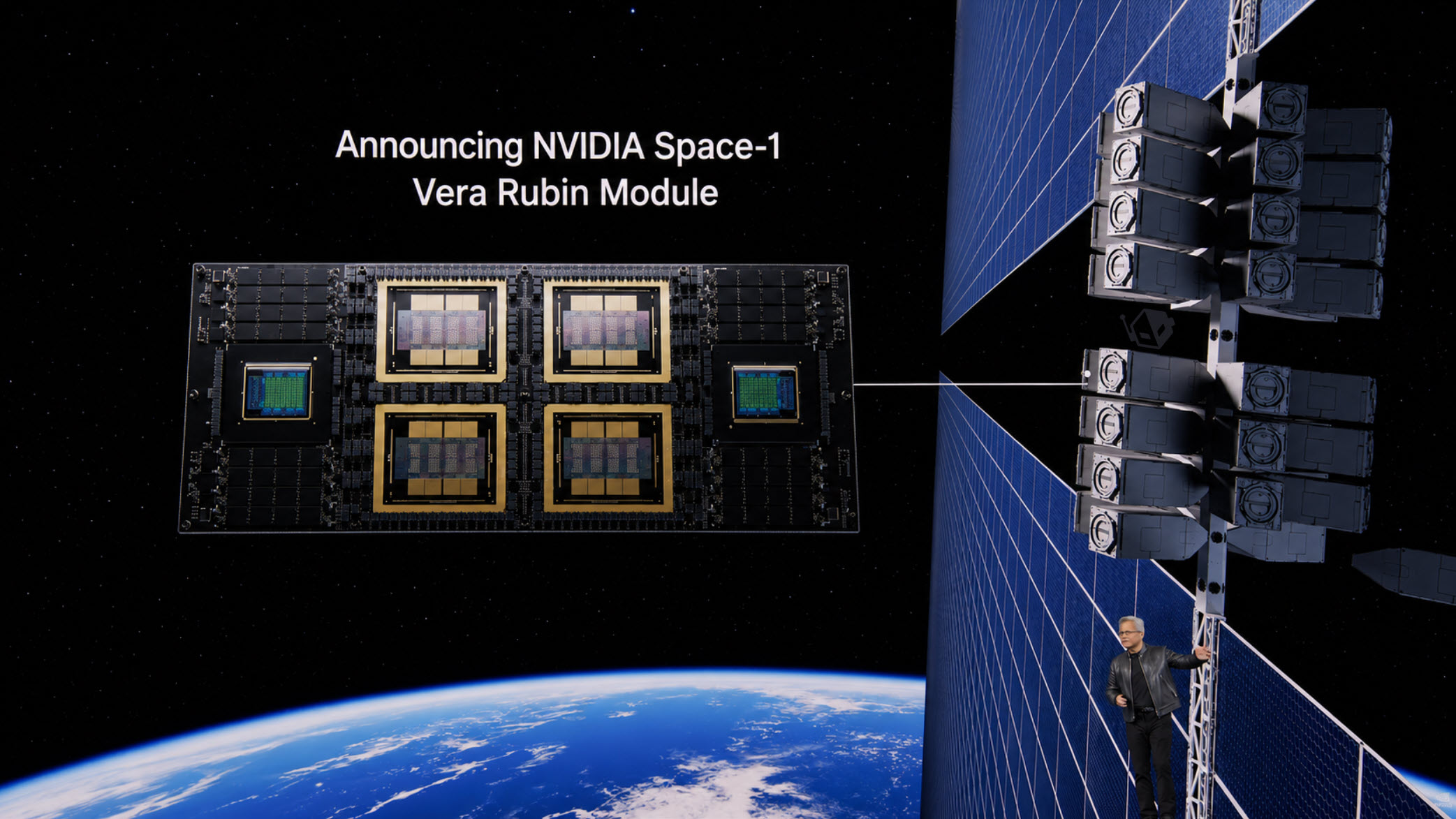
SpaceX is pouring nearly $16B into AI infrastructure and challenging conventional data-center leaders.
30-Second TL;DR
What Changed
SpaceX reportedly spent nearly $16 billion on AI infrastructure in the second quarter.
Why It Matters
SpaceX's strategy could intensify competition for GPUs, power, networking, and data-center engineering talent. If its aerospace capabilities translate effectively, the move could pressure established cloud and data-center operators, though Musk's claim remains an unverified competitive forecast.
What To Do Next
Use your cloud provider's GPU cost calculator to model power, capacity, and utilization requirements before expanding an in-house AI cluster.
Key Points
- •SpaceX reportedly spent nearly $16 billion on AI infrastructure in the second quarter.
- •Musk believes reusable-rocket and satellite engineering skills transfer to AI data-center construction.
- •He described SpaceX's competitive advantage as comparable to the New York Yankees facing a youth baseball team.
- •The comments were made during SpaceX's first post-listing quarterly earnings call.
Deep Insight
AI-generated analysis for this event — not the original article.
Enhanced Key Takeaways
- •SpaceX's pivot toward AI infrastructure is reportedly tied to the development of 'Project Northstar,' a proprietary high-density cooling and power management system derived from Falcon 9 thermal protection technology.
- •The $16 billion Q2 expenditure is largely attributed to the acquisition of massive GPU clusters and the rapid conversion of former Starship manufacturing facilities into modular data center hubs.
- •Market analysts suggest SpaceX is leveraging its Starlink satellite constellation to provide low-latency, satellite-linked backhaul for edge AI data centers in remote locations where traditional fiber is unavailable.
- •The post-listing earnings call revealed that SpaceX is positioning its data centers as 'sovereign AI clouds' for government and defense contracts, emphasizing physical security and orbital-grade hardware durability.
- •Regulatory filings indicate that SpaceX has applied for specialized energy permits to deploy small modular reactors (SMRs) at its data center sites to bypass grid constraints.
Competitor Analysis
- SpaceX (Project Northstar)
- Orbital-grade thermal/power tech
- AWS / Azure / GCP
- Massive existing scale/ecosystem
- CoreWeave
- GPU-specialized agility
- SpaceX (Project Northstar)
- Modular/Remote/SMR-powered
- AWS / Azure / GCP
- Global hyperscale regions
- CoreWeave
- High-performance GPU clusters
- SpaceX (Project Northstar)
- Defense/Gov/Remote Edge
- AWS / Azure / GCP
- Enterprise/General Cloud
- CoreWeave
- AI Startups/Research Labs
| Feature | SpaceX (Project Northstar) | AWS / Azure / GCP | CoreWeave |
|---|---|---|---|
| Primary Advantage | Orbital-grade thermal/power tech | Massive existing scale/ecosystem | GPU-specialized agility |
| Infrastructure | Modular/Remote/SMR-powered | Global hyperscale regions | High-performance GPU clusters |
| Target Market | Defense/Gov/Remote Edge | Enterprise/General Cloud | AI Startups/Research Labs |
Technical Deep Dive
- Utilization of phase-change cooling materials originally designed for atmospheric reentry to manage heat dissipation in high-density AI server racks.
- Implementation of a proprietary 'Star-Fabric' interconnect that mimics satellite constellation mesh networking to reduce latency between GPU nodes.
- Deployment of hardened, radiation-shielded server enclosures designed to maintain operational integrity in extreme environmental conditions.
- Integration of autonomous power-load balancing algorithms derived from Starship's flight control software to optimize energy consumption across data center clusters.
Future ImplicationsAI analysis grounded in cited sources
Timeline
- 2024-05SpaceX begins internal research into applying aerospace thermal management to server cooling.
- 2025-02SpaceX announces the formation of a dedicated AI Infrastructure division.
- 2026-03SpaceX completes its initial public offering (IPO), listing on the NYSE.
- 2026-07SpaceX reports $16 billion in AI infrastructure spending during its first post-listing earnings call.
Weekly AI Recap
Read this week's curated digest of top AI events →
Related Updates
AI-curated news aggregator. All content rights belong to original publishers.
Original source: cnBeta (Full RSS) ↗
This is a summary, not the original. Read the source, or get the weekly briefing.
The weekly digest
One email a week. Unsubscribe anytime.