Musk Announces Terafab 2nm Fab for Space AI
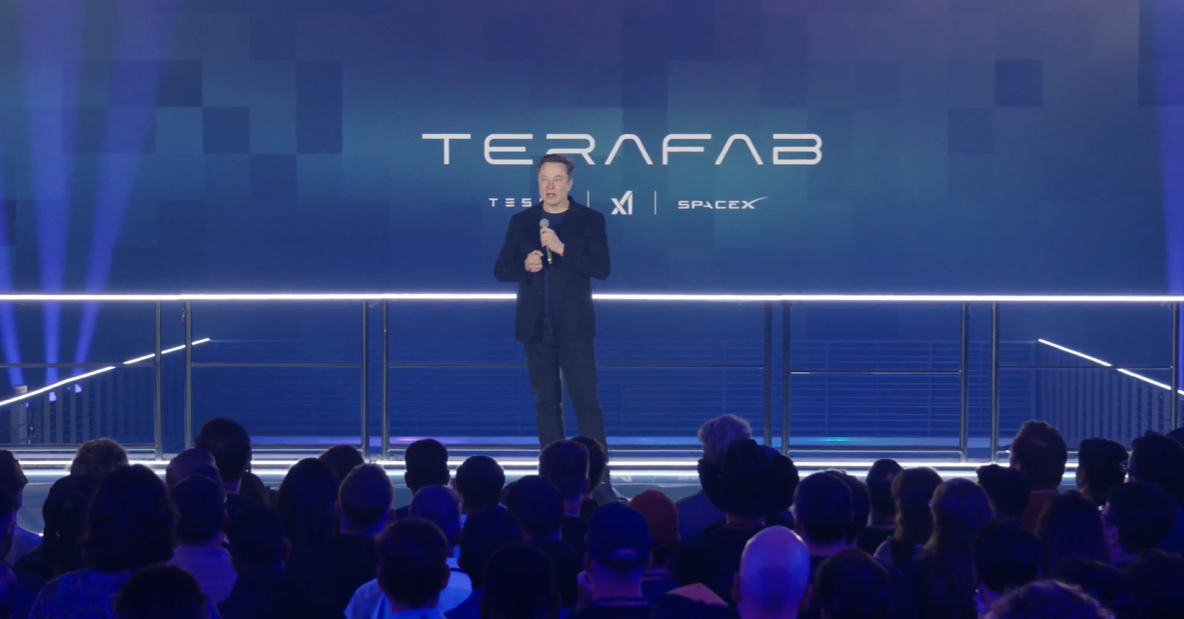
💡Musk's 2nm fab plans space AI compute shift—key for scalable infra
⚡ 30-Second TL;DR
What Changed
Texas-based Terafab factory uses 2nm process
Why It Matters
Terafab could disrupt AI hardware supply chains with advanced 2nm chips tailored for robotics and space. Musk's space compute vision may enable unprecedented AI scaling beyond Earth limits, benefiting xAI and Tesla ecosystems.
What To Do Next
Track Musk's X posts for Terafab chip specs to evaluate for AI robot hardware prototypes.
Key Points
- •Texas-based Terafab factory uses 2nm process
- •Integrates full chip production from logic to packaging
- •Chips target humanoid robots, AV, and AI satellites
- •Future: majority of compute resources in space
🧠 Deep Insight
Background and context from public sources — not the original article. 5 sources cited.
🔑 Enhanced Key Takeaways
- •Terafab is a $20–$25 billion joint venture between Tesla, SpaceX, and xAI, designed to consolidate design, lithography, fabrication, memory, and packaging under one roof to enable rapid iteration loops.
- •The facility targets an unprecedented production scale of 1 million wafer starts per month at full capacity, which Musk claims would represent approximately 70% of TSMC's current global output.
- •The project aims for a total compute output of 1 terawatt annually, with 80% of this capacity specifically allocated for space-based orbital AI satellites, leveraging higher solar irradiance and vacuum-based heat rejection in orbit.
🛠️ Technical Deep Dive
- •Process Node: 2-nanometer (2nm) technology.
- •Production Capacity: Initial target of 100,000 wafer starts per month, scaling to 1 million.
- •Chip Types: Two primary categories: inference chips (e.g., AI5) for Tesla vehicles and Optimus robots, and D3 chips custom-hardened for space environments.
- •Integration: Full vertical integration including logic, memory, packaging, testing, and lithography mask production in a single facility.
- •Performance Targets: AI5 chip projected to offer 40x–50x more compute and 9x more memory than the current AI4 chip.
🔮 Future ImplicationsAI analysis grounded in cited sources
⏳ Timeline
📎 Sources (5)
Factual claims are grounded in the sources below. Forward-looking analysis is AI-generated interpretation.
Weekly AI Recap
Read this week's curated digest of top AI events →
👉Related Updates
AI-curated news aggregator. All content rights belong to original publishers.
Original source: ITmedia AI+ (日本) ↗
This is a summary, not the original. Read the source, or get the weekly briefing.
Weekly AI briefing
One email a week. Unsubscribe anytime.