Musk and Altman AI Rivalry Intensifies Amid IPO Race
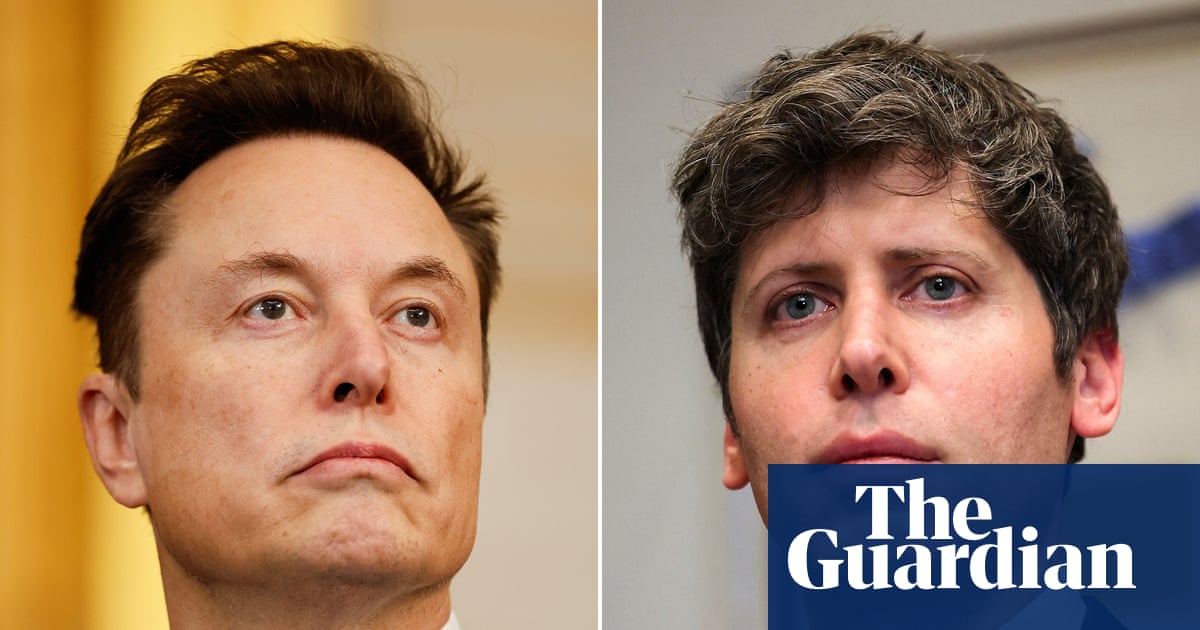
Understand how the IPO race between SpaceX and OpenAI is shifting the AI landscape and capital flow.
30-Second TL;DR
What Changed
SpaceX is planning a $1.75 trillion stock market debut.
Why It Matters
The potential IPOs of these AI-adjacent giants will likely reshape capital allocation in the AI sector, forcing smaller startups to compete for dwindling venture capital.
What To Do Next
Monitor the financial disclosures of these companies to identify shifts in AI infrastructure spending and R&D priorities.
Key Points
- •SpaceX is planning a $1.75 trillion stock market debut.
- •Meta is mandating internal job transfers to prioritize AI development.
- •Nvidia reported revenue growth exceeding Wall Street expectations due to AI demand.
- •OpenAI has achieved a breakthrough in solving an 80-year-old mathematics problem.
Deep Insight
Background and context from public sources — not the original article. 36 sources cited.
Enhanced Key Takeaways
- •SpaceX's anticipated IPO, expected around June 12, 2026, aims to raise between $40 billion and $80 billion, potentially valuing the company at $1.75 trillion to $2 trillion, which would make it the largest IPO in history.
- •OpenAI is also laying the groundwork for a public listing in the fourth quarter of 2026, with a target valuation exceeding $1 trillion, despite internal projections indicating losses of $14 billion in 2026.
- •Elon Musk's AI venture, xAI, founded in March 2023, merged with SpaceX in February 2026, contributing an approximate $80 billion to the combined entity's $1.25 trillion valuation. xAI also acquired X (formerly Twitter) in March 2025 for $33 billion.
- •Nvidia reported record Q1 fiscal 2026 revenue of $81.62 billion, tripling its profit year-over-year, primarily driven by the surging demand for AI training and inference hardware. The company also announced an $80 billion stock repurchase program and a 25-fold increase in its quarterly dividend.
- •OpenAI achieved a significant milestone in May 2026, with a general-purpose reasoning model successfully disproving a long-standing conjecture in discrete geometry, known as the planar unit distance problem, originally posed by Paul Erdős in 1946.
Competitor Analysis
- OpenAI (GPT-4/5)
- Mixture-of-Experts (MoE) Transformer (GPT-4: ~1.8T parameters, 16 experts, 2 active per pass; GPT-5: capability-focused)
- xAI (Grok 4)
- Decoder-only Transformer, MoE design (Grok-1: 314B parameters, 2 of 8 experts active per token)
- Meta (Llama 3)
- Optimized Transformer architecture (Largest model: 405B parameters, 126 layers)
- OpenAI (GPT-4/5)
- Multimodal (text & image input), advanced reasoning, dynamic mode switching (GPT-5)
- xAI (Grok 4)
- Real-time access to X (Twitter) firehose, looser content moderation, "truth-seeking" stance
- Meta (Llama 3)
- Open-weight models, multilingual support, Grouped Query Attention (GQA) for efficiency
- OpenAI (GPT-4/5)
- Not fully disclosed, but implies massive compute for 1.8T+ parameters
- xAI (Grok 4)
- Colossus supercomputer (100,000+ NVIDIA H100 GPUs)
- Meta (Llama 3)
- Meta's Grand Teton AI servers with H100 GPUs, 4D parallelism across 16,000 GPUs
- OpenAI (GPT-4/5)
- Up to 128,000 tokens (GPT-4 Turbo)
- xAI (Grok 4)
- Up to 2,000,000 tokens (Grok 4.1 Fast)
- Meta (Llama 3)
- Up to 128,000 tokens
- OpenAI (GPT-4/5)
- GPT-5: 94.6% on AIME 2025 (math), 74.9% on SWE-bench Verified (coding)
- xAI (Grok 4)
- Grok 4 (2025): Closed most benchmark gaps with GPT-4o, Claude 3.7 Sonnet, Gemini 2.5 Pro
- Meta (Llama 3)
- Rivals top models like GPT-4 in benchmark tests
| Feature/Model | OpenAI (GPT-4/5) | xAI (Grok 4) | Meta (Llama 3) |
|---|---|---|---|
| Architecture | Mixture-of-Experts (MoE) Transformer (GPT-4: ~1.8T parameters, 16 experts, 2 active per pass; GPT-5: capability-focused) | Decoder-only Transformer, MoE design (Grok-1: 314B parameters, 2 of 8 experts active per token) | Optimized Transformer architecture (Largest model: 405B parameters, 126 layers) |
| Key Differentiators | Multimodal (text & image input), advanced reasoning, dynamic mode switching (GPT-5) | Real-time access to X (Twitter) firehose, looser content moderation, "truth-seeking" stance | Open-weight models, multilingual support, Grouped Query Attention (GQA) for efficiency |
| Training Infrastructure | Not fully disclosed, but implies massive compute for 1.8T+ parameters | Colossus supercomputer (100,000+ NVIDIA H100 GPUs) | Meta's Grand Teton AI servers with H100 GPUs, 4D parallelism across 16,000 GPUs |
| Context Window | Up to 128,000 tokens (GPT-4 Turbo) | Up to 2,000,000 tokens (Grok 4.1 Fast) | Up to 128,000 tokens |
| Performance (Benchmarks) | GPT-5: 94.6% on AIME 2025 (math), 74.9% on SWE-bench Verified (coding) | Grok 4 (2025): Closed most benchmark gaps with GPT-4o, Claude 3.7 Sonnet, Gemini 2.5 Pro | Rivals top models like GPT-4 in benchmark tests |
Technical Deep Dive
- OpenAI GPT-4/5: GPT-4 utilizes a Mixture-of-Experts (MoE) architecture, reportedly featuring approximately 1.8 trillion parameters distributed across 120 layers. It employs 16 expert networks, with two experts routed per forward pass to manage computational costs. The model supports multimodal inputs, accepting both text and images, and offers an extended context window of up to 128,000 tokens. GPT-5, released in August 2025, emphasizes enhanced capabilities over raw parameter count, demonstrating strong performance in mathematical reasoning (94.6% on AIME 2025) and coding (74.9% on SWE-bench Verified). It incorporates a real-time router for dynamic switching between a fast mode for simple queries and a 'thinking' mode for complex reasoning.
- Meta Llama 3: Llama 3 is built upon an optimized dense Transformer architecture. The largest model in the series boasts 405 billion parameters across 126 layers, with 16,384 dimensions and 128 attention heads. Key architectural features include pre-normalization (RMSNorm), SwiGLU activations, and Rotary Positional Embeddings (RoPE). It also incorporates Grouped Query Attention (GQA) for models with 70 billion parameters or more, enhancing efficiency during inference. Llama 3 uses a tokenizer with an expanded vocabulary of 128,000 tokens and was trained on sequences of 8,192 tokens.
- xAI Grok: Grok models are based on a decoder-only Transformer architecture, with Grok-1 being a 314-billion-parameter Mixture-of-Experts (MoE) model where only two of eight experts are active per token. Subsequent versions, such as Grok 3 and Grok 4, continue to leverage MoE designs and are trained on xAI's Colossus supercomputer, which utilizes over 100,000 NVIDIA H100 GPUs. A distinctive feature is Grok's real-time access to the X (formerly Twitter) firehose, enabling it to incorporate current information. Grok 4, refined through 2026, includes features like a 'Think' mode for chain-of-thought reasoning and a 'DeepSearch' agent mode for multi-hop web research, with context windows extending up to 2,000,000 tokens in some variants.
Future ImplicationsAI analysis grounded in cited sources
Timeline
- 2015-12OpenAI founded as a non-profit by Elon Musk, Sam Altman, and others.
- 2018-02Elon Musk resigns from OpenAI's board of directors due to potential conflicts of interest with Tesla's AI efforts.
- 2023-03Elon Musk founds xAI with the mission to understand the true nature of the universe.
- 2025-03xAI acquires X (formerly Twitter) in an all-stock deal valued at $33 billion.
- 2026-02xAI merges with SpaceX, valuing the combined entity at $1.25 trillion.
- 2026-05OpenAI's general-purpose reasoning model disproves an 80-year-old mathematics conjecture by Paul Erdős.
Sources (36)
Factual claims are grounded in the sources below. Forward-looking analysis is AI-generated interpretation.
Weekly AI Recap
Read this week's curated digest of top AI events →
Related Updates

AI-curated news aggregator. All content rights belong to original publishers.
Original source: The Guardian Technology ↗
This is a summary, not the original. Read the source, or get the weekly briefing.
The weekly digest
One email a week. Unsubscribe anytime.