Musk-Altman trial reveals AI industry power dynamics
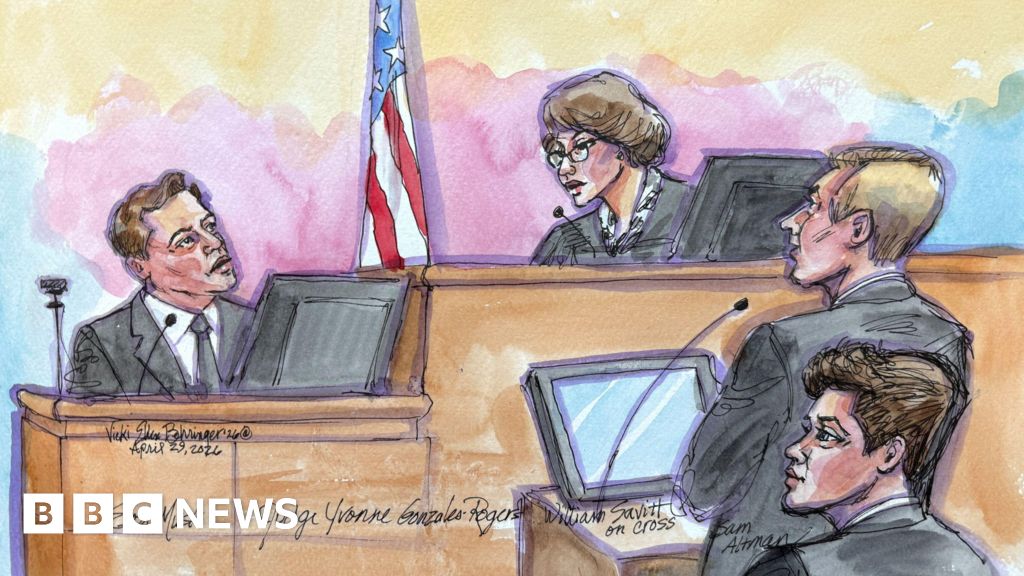
Gain insight into the power struggles and governance issues shaping the future of the AI industry.
30-Second TL;DR
What Changed
The trial exposes internal tensions regarding OpenAI's transition from non-profit to for-profit.
Why It Matters
This trial may lead to increased regulatory scrutiny regarding the governance and transparency of AI organizations. It forces industry leaders to reconsider how they balance commercial interests with original mission statements.
What To Do Next
Review your organization's governance documentation and mission alignment to ensure long-term stability amidst industry volatility.
Key Points
- •The trial exposes internal tensions regarding OpenAI's transition from non-profit to for-profit.
- •It highlights the clash of philosophies between key industry figures like Musk and Altman.
- •The proceedings provide transparency into the governance structures of major AI labs.
Deep Insight
Background and context from public sources — not the original article. 16 sources cited.
Enhanced Key Takeaways
- •The lawsuit filed by Elon Musk against OpenAI and Sam Altman was ultimately dismissed on May 18, 2026, due to the statute of limitations, rather than on the merits of Musk's claims regarding a breach of the founding agreement.
- •Musk had sought substantial damages, reportedly up to $150 billion, and the removal of Sam Altman and Greg Brockman from leadership, with the aim of reverting OpenAI to its original non-profit mission.
- •OpenAI's defense successfully argued that Musk was aware of the company's plans to pursue a for-profit structure as early as 2017, which contributed to the lawsuit being filed outside the three-year statutory limit.
- •The trial underscored the immense capital requirements for developing advanced AI, with OpenAI leaders stating that billions of dollars per year are needed, making a purely non-profit model unsustainable for competing with other major AI players.
- •OpenAI completed a significant restructuring in October 2025, converting its for-profit entity into a Public Benefit Corporation (PBC) while the original non-profit retained control and a substantial equity stake, a move approved by the Delaware and California Attorneys General.
Future ImplicationsAI analysis grounded in cited sources
Timeline
- 2015-12OpenAI founded as a non-profit with initial funding commitments from Elon Musk, Sam Altman, and others.
- 2018-02Elon Musk departs from OpenAI's board, citing potential conflicts of interest and disagreements over control.
- 2019-03OpenAI transitions to a 'capped' for-profit model (OpenAI LP) to secure more capital for advanced AI research.
- 2023-11Sam Altman is briefly removed and then reinstated as CEO, revealing internal tensions within the non-profit board and the influence of key stakeholders.
- 2024-02Elon Musk files a lawsuit against OpenAI, Sam Altman, and Greg Brockman, alleging a breach of the company's founding agreement.
- 2025-10OpenAI completes its restructuring to a Public Benefit Corporation (PBC), with the non-profit retaining control and a significant equity stake, following approval from state attorneys general.
- 2026-05-18A jury dismisses Elon Musk's lawsuit against OpenAI and Sam Altman, finding that the claims were filed outside the statute of limitations.
Sources (16)
Factual claims are grounded in the sources below. Forward-looking analysis is AI-generated interpretation.
Weekly AI Recap
Read this week's curated digest of top AI events →
Related Updates


AI-curated news aggregator. All content rights belong to original publishers.
Original source: BBC Technology ↗
This is a summary, not the original. Read the source, or get the weekly briefing.
The weekly digest
One email a week. Unsubscribe anytime.