Multi-color 3D printing speed boosted by 5x
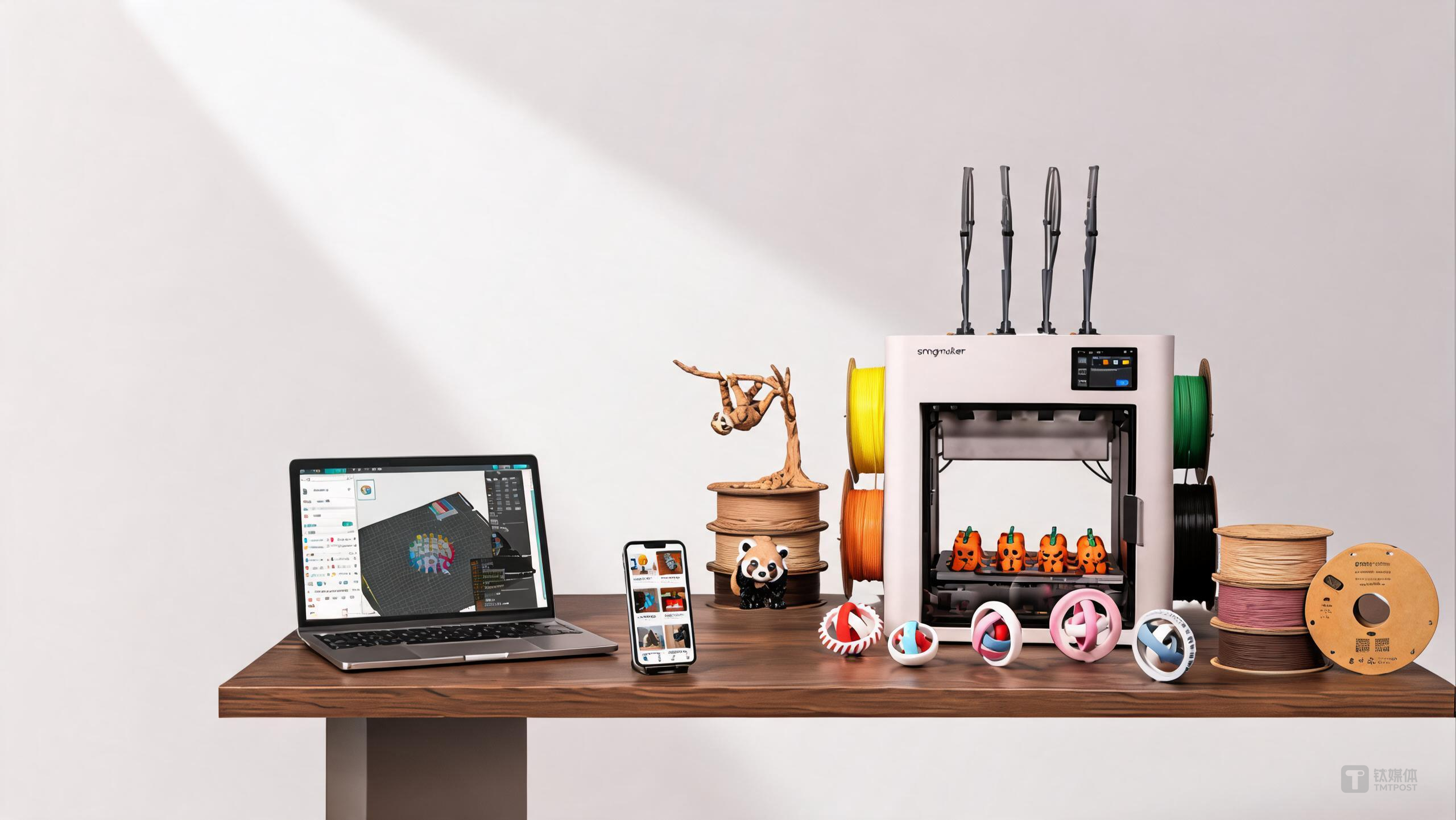
💡Major funding in 3D printing signals a shift toward faster, high-quality consumer hardware for rapid prototyping.
⚡ 30-Second TL;DR
What Changed
Multi-color 3D printing speed increased by 500%
Why It Matters
This advancement lowers the barrier for creators to produce complex, multi-colored prototypes, potentially accelerating the adoption of desktop manufacturing.
What To Do Next
Evaluate how high-speed multi-material printing can integrate into your rapid prototyping pipeline for hardware development.
Key Points
- •Multi-color 3D printing speed increased by 500%
- •Significant capital injection into the consumer 3D printing sector
- •Shift towards integrated color printing to improve user workflow
🧠 Deep Insight
AI-generated analysis for this event — not the original article.
🔑 Enhanced Key Takeaways
- •The breakthrough utilizes a proprietary high-flow multi-material nozzle system that reduces filament purge waste by up to 60% compared to traditional AMS (Automatic Material System) units.
- •The funding round was led by major venture capital firms focusing on industrial-grade automation being downscaled for the prosumer market.
- •The technology integrates a new AI-driven slicing algorithm that optimizes toolpath transitions to minimize color-mixing artifacts during high-speed movements.
- •This speed increase is achieved through a combination of active vibration compensation and a redesigned extruder gear ratio that handles rapid material switching without clogging.
- •The company plans to open-source specific API hooks for their multi-color management software to encourage third-party slicer compatibility.
📊 Competitor Analysis▸ Show
| Feature | This Innovation | Bambu Lab (AMS) | Prusa (MMU3) |
|---|---|---|---|
| Speed Multiplier | 5x Baseline | 1x (Baseline) | 0.8x (Slower) |
| Waste Reduction | High (60% reduction) | Low (High purge) | Moderate |
| Switching Mechanism | Integrated High-Flow | External Hub | External Buffer |
🛠️ Technical Deep Dive
- Utilizes a dual-stage thermal chamber to maintain filament viscosity during rapid color transitions.
- Implements a closed-loop feedback system using high-frequency encoders to detect and correct filament slippage in real-time.
- Employs a lightweight print head assembly with carbon-fiber reinforced components to reduce inertia during high-acceleration color swaps.
- Features a predictive pressure advance model that adjusts extrusion rates dynamically based on the specific material properties of the loaded colors.
🔮 Future ImplicationsAI analysis grounded in cited sources
⏳ Timeline
Weekly AI Recap
Read this week's curated digest of top AI events →
👉Related Updates


AI-curated news aggregator. All content rights belong to original publishers.
Original source: 钛媒体 ↗
This is a summary, not the original. Read the source, or get the weekly briefing.
Weekly AI briefing
One email a week. Unsubscribe anytime.