Moore Threads Nears Profit as AI Demand Surges
China’s GPU challenger is nearing adjusted profitability—but its cloud concentration and CUDA migration costs remain cri
30-Second TL;DR
What Changed
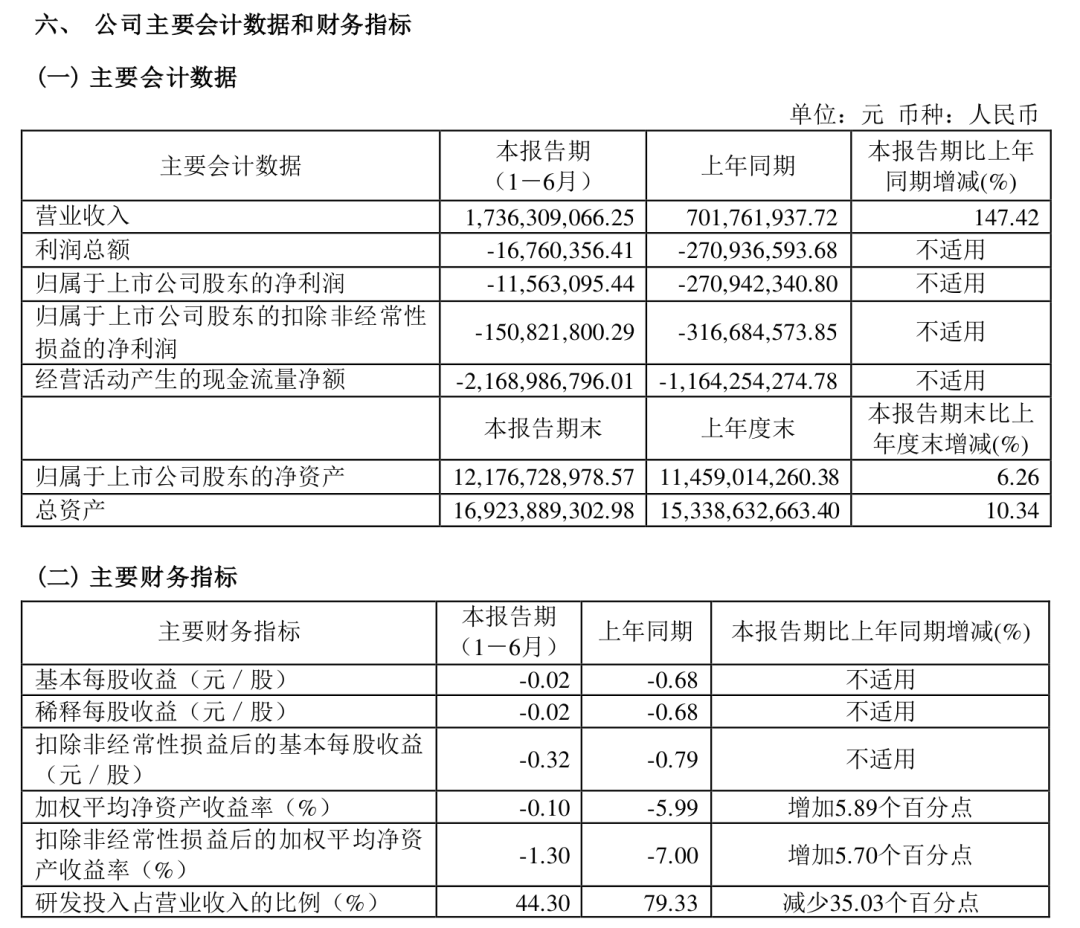
Cloud products generated RMB 1.69 billion, or 97.5% of first-half revenue.
Why It Matters
Moore Threads demonstrates that Chinese GPU vendors can gain meaningful data-center revenue, but profitability depends on sustaining demand while containing R&D and hardware-component costs. High customer concentration and project-based deliveries create execution and quarterly-revenue risks for infrastructure buyers.
What To Do Next
Benchmark Moore Threads MUSA and MUSIFY on your existing CUDA workloads before considering a production migration, measuring kernel compatibility, performance, and porting effort.
Key Points
- •Cloud products generated RMB 1.69 billion, or 97.5% of first-half revenue.
- •The company posted an adjusted profit but still recorded a RMB 150 million non-GAAP loss.
- •Gross margin fell to 56.9% as lower-margin cluster and integrated-machine projects expanded.
- •R&D spending reached RMB 770 million, equal to 44.3% of revenue, with 1,019 R&D employees.
- •Inventory and prepayments totaled nearly RMB 4.9 billion as Moore Threads secured supply-chain capacity.
Deep Insight
AI-generated analysis for this event — not the original article.
Enhanced Key Takeaways
- •Moore Threads has been actively navigating US export controls, which have significantly restricted its access to advanced manufacturing nodes, forcing a reliance on domestic foundry partnerships.
- •The company's 'MUSA' architecture is specifically optimized for large-scale AI training and inference, aiming to provide a CUDA-compatible ecosystem to lower migration barriers for Chinese developers.
- •Moore Threads has faced significant scrutiny regarding its 'integrated-machine' business model, which some analysts suggest is a strategy to bundle hardware with software services to inflate revenue figures.
- •The company has successfully completed multiple high-profile funding rounds, backed by prominent Chinese venture capital firms and state-backed investment funds, despite the challenging geopolitical climate.
- •Moore Threads has been expanding its footprint in the autonomous driving and digital twin sectors, diversifying its application beyond pure cloud-based LLM training.
Competitor Analysis
- Moore Threads (MUSA)
- General Purpose GPU
- Huawei (Ascend)
- AI Training/Inference
- Biren Technology
- High-Performance AI
- Cambricon
- AI Inference/Training
- Moore Threads (MUSA)
- MUSA (CUDA-compatible)
- Huawei (Ascend)
- CANN (Proprietary)
- Biren Technology
- BIRENSUPA
- Cambricon
- MLU (Proprietary)
- Moore Threads (MUSA)
- Emerging/Cloud-focused
- Huawei (Ascend)
- Dominant/State-backed
- Biren Technology
- High-end/Performance
- Cambricon
- Established/Public
- Moore Threads (MUSA)
- Domestic Foundries
- Huawei (Ascend)
- Domestic Foundries
- Biren Technology
- Domestic Foundries
- Cambricon
- Domestic Foundries
| Feature | Moore Threads (MUSA) | Huawei (Ascend) | Biren Technology | Cambricon |
|---|---|---|---|---|
| Primary Focus | General Purpose GPU | AI Training/Inference | High-Performance AI | AI Inference/Training |
| Ecosystem | MUSA (CUDA-compatible) | CANN (Proprietary) | BIRENSUPA | MLU (Proprietary) |
| Market Position | Emerging/Cloud-focused | Dominant/State-backed | High-end/Performance | Established/Public |
| Manufacturing | Domestic Foundries | Domestic Foundries | Domestic Foundries | Domestic Foundries |
Technical Deep Dive
- Architecture: MUSA (Moore Unified System Architecture) designed for programmable parallel computing.
- Software Stack: MUSIFY toolchain enables translation of CUDA code to MUSA instructions to support existing AI frameworks like PyTorch and TensorFlow.
- Hardware Focus: MTT S-series GPUs utilize multi-core designs to handle FP32/FP16/INT8 precision workloads required for generative AI.
- Integration: Focus on cluster-level interconnects to scale performance across thousands of GPUs for large model training.
Future ImplicationsAI analysis grounded in cited sources
Timeline
- 2020-10Moore Threads is founded by former NVIDIA executive Zhang Jianzhong.
- 2022-03Company releases its first-generation MUSA-based GPU, the MTT S60.
- 2023-10Moore Threads is added to the US Entity List, restricting access to advanced US semiconductor technology.
- 2024-05Company completes a significant financing round to bolster R&D for AI cluster capabilities.
- 2026-06Moore Threads reports H1 2026 revenue of RMB 1.74 billion and announces Hong Kong listing plans.
Weekly AI Recap
Read this week's curated digest of top AI events →
AI-curated news aggregator. All content rights belong to original publishers.
Original source: 虎嗅 ↗
This is a summary, not the original. Read the source, or get the weekly briefing.
The weekly digest
One email a week. Unsubscribe anytime.