Moore Threads Shows China’s GPU Commercial Path
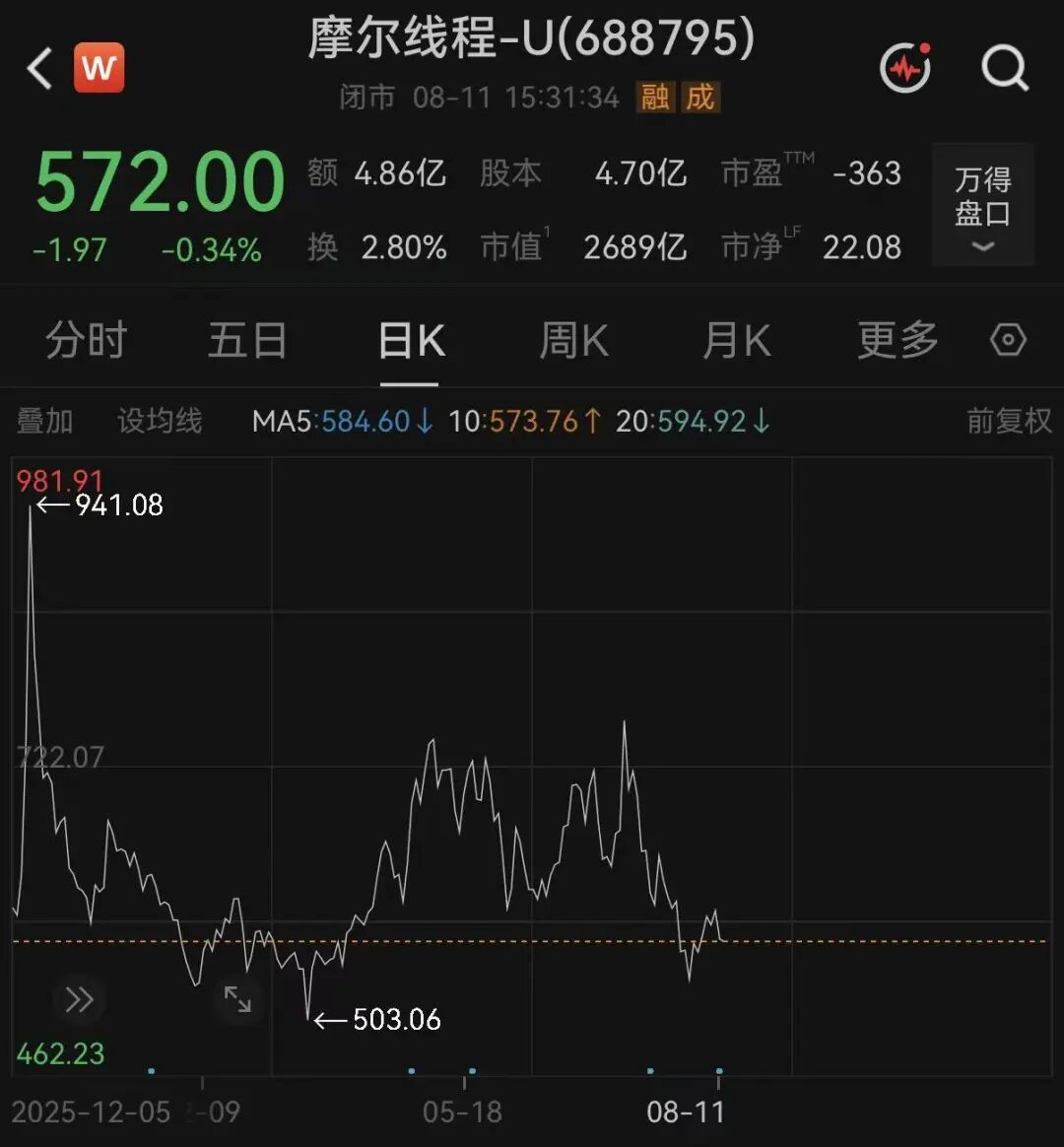
💡Revenue growth and narrower losses offer a real-world test of China’s domestic GPU commercialization.
⚡ 30-Second TL;DR
What Changed
Moore Threads’ half-year revenue doubled.
Why It Matters
Improving financial performance could strengthen confidence in China’s domestic GPU supply chain. For AI builders, broader GPU alternatives may eventually improve procurement resilience, though software compatibility and performance still require validation.
What To Do Next
Run a representative inference workload on a Moore Threads GPU and verify PyTorch compatibility, compiler support, memory usage, and throughput before procurement.
Key Points
- •Moore Threads’ half-year revenue doubled.
- •Gross margin improved while net losses narrowed substantially.
- •The company is becoming a visible example of domestic GPU commercialization.
🧠 Deep Insight
AI-generated analysis for this event.
🔑 Enhanced Key Takeaways
- •Moore Threads has successfully completed its IPO filing process on the Shanghai Stock Exchange's STAR Market as of mid-2026, signaling a shift toward public market scrutiny.
- •The company's revenue growth is primarily driven by the rapid adoption of its 'MUSA' architecture in domestic AI training clusters and government-backed cloud computing projects.
- •Moore Threads has secured strategic partnerships with major Chinese server OEMs, allowing its GPUs to be integrated into standardized AI infrastructure stacks.
- •The narrowed net loss is attributed to a strategic pivot away from consumer-grade gaming GPUs toward high-margin enterprise AI inference and training accelerators.
- •The company has expanded its software ecosystem, 'MUSA-CUDALab,' to improve compatibility with existing CUDA-based AI models, lowering the barrier for enterprise migration.
📊 Competitor Analysis▸ Show
| Feature | Moore Threads (MTT S4000) | Biren Technology (BR100) | Huawei (Ascend 910B) |
|---|---|---|---|
| Architecture | MUSA | BIRENSUPA | Da Vinci |
| Target Market | Enterprise AI/Cloud | High-end AI Training | Data Center/AI Cluster |
| Software Stack | MUSA-CUDALab | BIRENSUPA SDK | CANN |
| Status | Commercialized | Commercialized | Mass Deployment |
🛠️ Technical Deep Dive
- Architecture: MUSA (Moore Threads Unified System Architecture) is a proprietary full-function GPU architecture designed for both graphics rendering and AI computing.
- Memory: Utilizes high-bandwidth memory (HBM) configurations in flagship models like the S4000 to support large language model (LLM) training.
- Software Compatibility: The MUSA-CUDALab toolchain provides a translation layer designed to port CUDA-based applications to the MUSA platform with minimal code changes.
- Precision Support: Hardware-level acceleration for FP32, FP16, and BF16 data formats, optimized for transformer-based model architectures.
🔮 Future ImplicationsAI analysis grounded in cited sources
⏳ Timeline
Weekly AI Recap
Read this week's curated digest of top AI events →
👉Related Updates

AI-curated news aggregator. All content rights belong to original publishers.
Original source: 钛媒体 ↗