China’s State-Backed BCI Push Gains Momentum
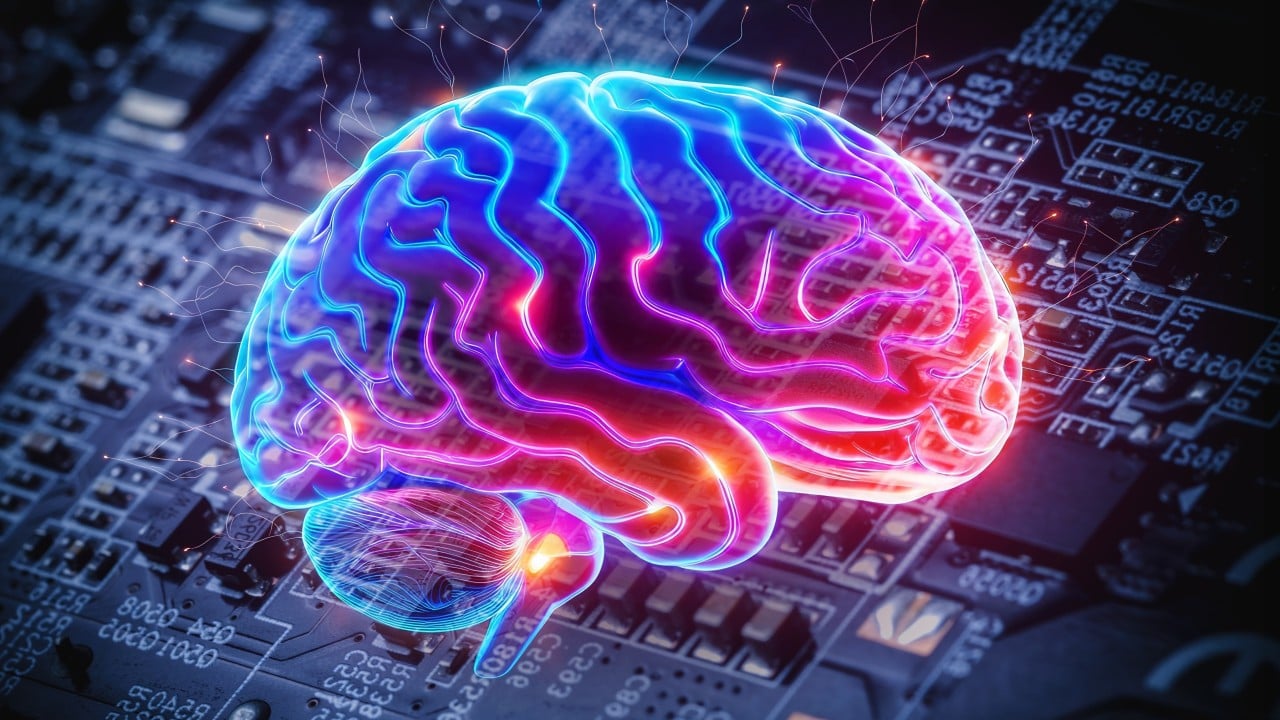
💡China is aligning finance, insurance, and government support to accelerate the BCI industry.
⚡ 30-Second TL;DR
What Changed
Chinese authorities have launched multiple BCI-related initiatives within a few days.
Why It Matters
Greater state-backed funding and institutional support could help Chinese BCI companies move faster through research, clinical validation, and commercialization. AI practitioners may see new opportunities in neural signal processing, medical datasets, and human-computer interaction, alongside significant safety and regulatory challenges.
What To Do Next
Set up alerts for China’s BCI policy, funding, and clinical-trial announcements before evaluating partnerships or datasets in neural-signal AI.
Key Points
- •Chinese authorities have launched multiple BCI-related initiatives within a few days.
- •State insurance companies and investment banks are becoming involved in the emerging sector.
- •Local government participation suggests a coordinated national strategy rather than isolated startup activity.
- •The effort could accelerate applications for treating chronic health conditions through implanted interfaces.
🧠 Deep Insight
AI-generated analysis for this event.
🔑 Enhanced Key Takeaways
- •The Chinese Ministry of Industry and Information Technology (MIIT) has officially designated BCI as a 'future industry' priority, integrating it into the 15th Five-Year Plan framework for strategic emerging technologies.
- •New regulatory sandboxes have been established in Shanghai and Beijing to expedite clinical trial approvals for non-invasive and minimally invasive BCI devices, bypassing traditional multi-year bureaucratic delays.
- •State-backed investment vehicles, including the China Integrated Circuit Industry Investment Fund, are shifting capital toward domestic neuro-chip manufacturing to reduce reliance on foreign high-bandwidth neural signal processors.
- •Leading Chinese research institutions, such as Tsinghua University, have recently achieved breakthroughs in high-density flexible electrode arrays that claim to surpass the signal-to-noise ratio of current international commercial standards.
- •The government is mandating the development of a national 'Neural Data Security Standard' to govern the collection, storage, and ethical usage of brain-derived data, positioning it as a matter of national security.
📊 Competitor Analysis▸ Show
| Feature | China State-Backed BCI | Neuralink (US) | Synchron (US) |
|---|---|---|---|
| Primary Focus | National Infrastructure/Clinical | Consumer/Clinical | Endovascular/Clinical |
| Regulatory Path | State-Accelerated/Sandbox | FDA Breakthrough Device | FDA Breakthrough Device |
| Tech Approach | Flexible/High-Density | High-Bandwidth/Robotic | Stentrode/Minimally Invasive |
| Funding Model | State-Led/Sovereign Wealth | Private/Venture Capital | Private/Venture Capital |
🛠️ Technical Deep Dive
- Utilization of high-density CMOS-based neural probes designed for long-term biocompatibility and reduced glial scarring.
- Implementation of on-chip signal processing architectures that perform real-time spike sorting and data compression to minimize power consumption.
- Development of wireless power transfer systems using inductive coupling optimized for deep-brain implantation.
- Integration of proprietary machine learning decoders specifically trained on large-scale datasets of Chinese-language neural patterns to improve speech-to-text accuracy.
🔮 Future ImplicationsAI analysis grounded in cited sources
⏳ Timeline
Weekly AI Recap
Read this week's curated digest of top AI events →
👉Related Updates
AI-curated news aggregator. All content rights belong to original publishers.
Original source: SCMP Technology ↗