Moonshot AI: Kimi Focuses on Model Innovation over Delivery
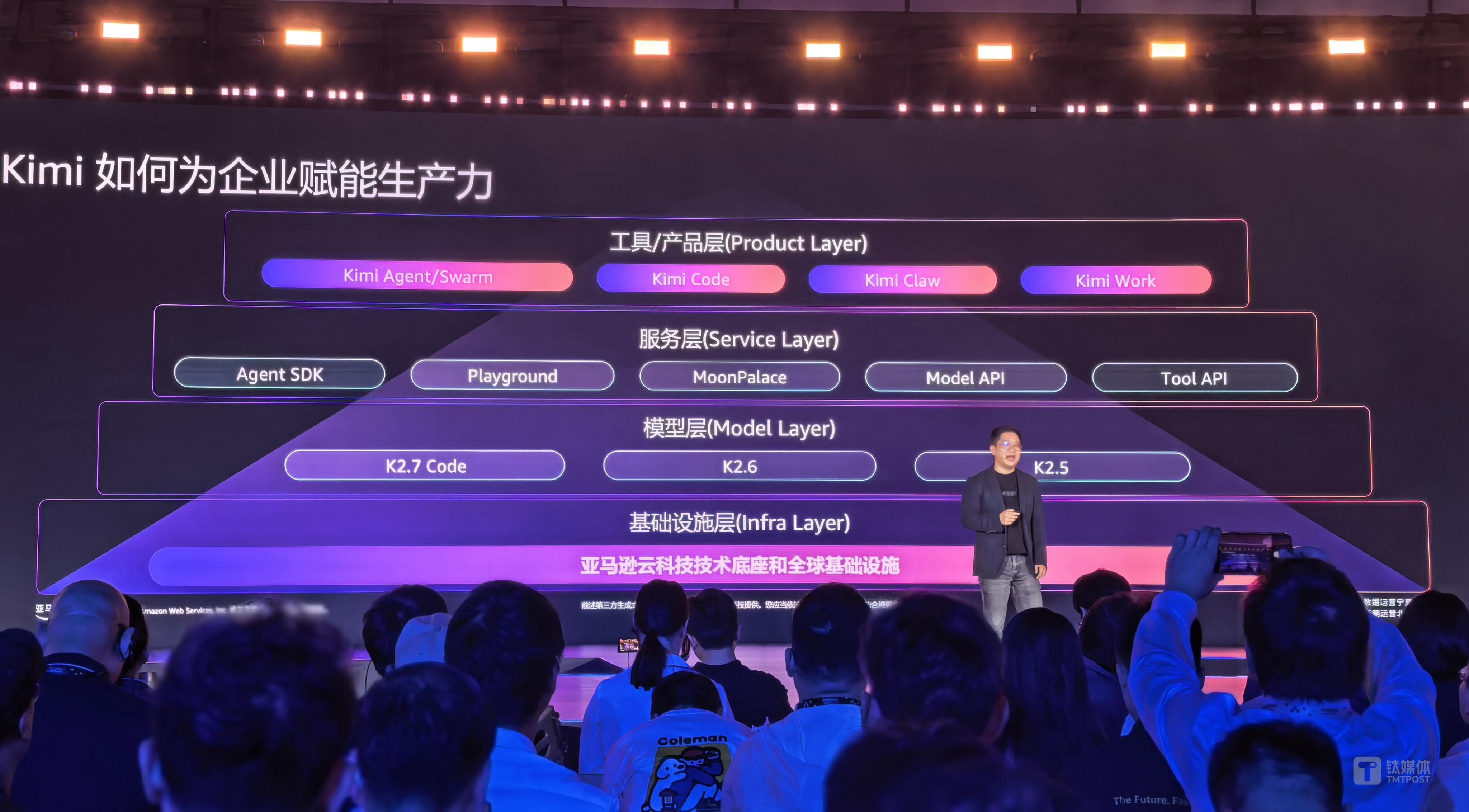
💡Learn why Moonshot AI is pivoting away from custom enterprise delivery to focus on model-level innovation.
⚡ 30-Second TL;DR
What Changed
Kimi rejects the 'heavy delivery' model common in enterprise AI.
Why It Matters
This signals a shift in strategy for major Chinese LLM providers, moving away from customized project work toward scalable, model-first product offerings.
What To Do Next
Evaluate your product roadmap: are you building a scalable model-first product or getting trapped in low-margin custom delivery?
Key Points
- •Kimi rejects the 'heavy delivery' model common in enterprise AI.
- •Focus is placed on fundamental model architecture innovation.
- •FDE (Full Delivery Engineering) challenges are viewed as secondary to model capability.
🧠 Deep Insight
AI-generated analysis for this event — not the original article.
🔑 Enhanced Key Takeaways
- •Moonshot AI has been actively transitioning its Kimi platform toward a 'Model-as-a-Service' (MaaS) architecture to minimize the need for bespoke, labor-intensive enterprise deployments.
- •The company's strategic pivot is a response to the 'AI project trap,' where high human-capital costs in custom integration often erode the profitability of LLM providers.
- •Huang Zhenxin has emphasized that Moonshot AI is prioritizing the development of long-context window capabilities and native multimodal processing as its primary competitive moats.
- •Industry analysts note that Moonshot AI's stance reflects a broader trend among Chinese 'AI Tigers' to avoid the low-margin system integration business model favored by traditional IT vendors.
- •Moonshot AI is increasingly focusing on API-first distribution, allowing enterprise clients to integrate Kimi's core intelligence into their own workflows without requiring Moonshot's direct engineering intervention.
📊 Competitor Analysis▸ Show
| Feature | Moonshot AI (Kimi) | Baidu (Ernie) | Alibaba (Qwen) |
|---|---|---|---|
| Primary Strategy | Model-First / API-Centric | Integrated Cloud/Project | Open Source / Ecosystem |
| Context Window | Ultra-long (Native) | Large (Optimized) | Large (Optimized) |
| Enterprise Model | Low-touch / MaaS | High-touch / Project-based | Hybrid / Open-source |
| Pricing Model | Usage-based API | Tiered Enterprise | Free/Usage-based API |
🛠️ Technical Deep Dive
- Architecture: Utilizes a proprietary long-context transformer architecture designed to handle massive token inputs without significant degradation in retrieval accuracy.
- Optimization: Focuses on 'Model-Native' performance, prioritizing architectural efficiency in attention mechanisms over post-training quantization or heavy pruning.
- Multimodal: Employs a unified latent space approach for processing text, image, and audio inputs natively within the base model rather than using modular adapters.
🔮 Future ImplicationsAI analysis grounded in cited sources
⏳ Timeline
Weekly AI Recap
Read this week's curated digest of top AI events →
👉Related Updates


AI-curated news aggregator. All content rights belong to original publishers.
Original source: 钛媒体 ↗
This is a summary, not the original. Read the source, or get the weekly briefing.
Weekly AI briefing
One email a week. Unsubscribe anytime.