Momenta’s First IPO Half-Year Report
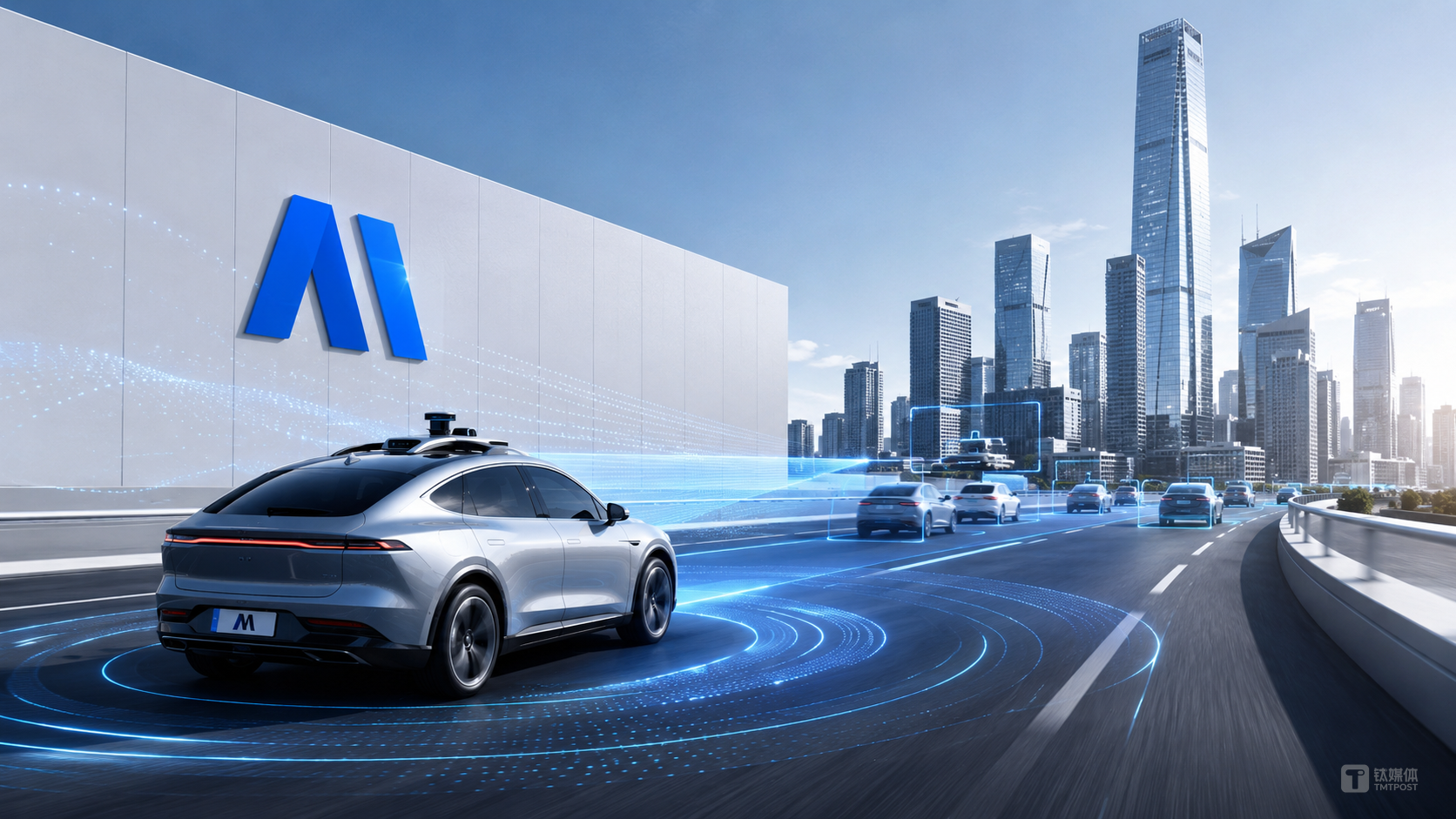
💡See how Momenta’s IPO report shifts autonomous-driving evaluation from technical storytelling to software economics.
⚡ 30-Second TL;DR
What Changed
Momenta published its first half-year report following its listing.
Why It Matters
The report may increase pressure on autonomous-driving companies to demonstrate repeatable software revenue and sustainable margins. For AI suppliers, technical capability alone may no longer be enough to win automaker partnerships or investor confidence.
What To Do Next
Build a unit-economics dashboard for your automotive AI product that tracks per-vehicle deployment cost, recurring software revenue, and gross margin.
Key Points
- •Momenta published its first half-year report following its listing.
- •Mass-produced intelligent driving is becoming a software business rather than only a vehicle technology feature.
- •Capital markets are beginning to evaluate Momenta through financial performance and commercial viability.
🧠 Deep Insight
Background and context from public sources — not the original article. 18 sources cited.
🔑 Enhanced Key Takeaways
- •Momenta achieved a 75.9% year-on-year revenue increase in H1 2026, reaching RMB 1.602 billion, while simultaneously reducing its non-IFRS adjusted net loss by 96.6%.
- •The company maintains a high gross margin of 73.2%, significantly outperforming traditional automotive component suppliers and signaling a transition toward a high-margin software-as-a-service (SaaS) business model.
- •Momenta's intelligent driving solutions are now integrated into over 1 million vehicles globally, with a footprint spanning 105 mass-produced models across 10 countries.
- •R&D investment remains aggressive, with RMB 1.16 billion spent in the first half of 2026, representing 72.6% of total revenue to support its 'World Model' platform development.
- •The company's July 2026 IPO on the HKEX was highly successful, raising HK$6.8 billion and achieving an oversubscription rate of 414 times.
📊 Competitor Analysis▸ Show
| Competitor | Business Model | Key Differentiator |
|---|---|---|
| Momenta | Software-focused / Tier 1.5 | High-margin 'World Model' platform |
| Huawei (ADS) | Full-stack integration | Deep ecosystem integration with HarmonyOS |
| Baidu (Apollo) | Robotaxi/Cloud-heavy | Extensive V2X and mapping infrastructure |
| Tesla (FSD) | Vertically integrated | Proprietary hardware/software stack |
🛠️ Technical Deep Dive
- World Model Platform: Integrates pre-training, simulation, and reinforcement learning to unify autonomous driving capabilities across passenger vehicles, Robovans, and Robotaxis.
- Mass Production Strategy: Utilizes a data-driven flywheel approach to iterate software based on real-world driving data from over 1 million deployed units.
- L3 Development: Currently collaborating with multiple OEM partners to transition from L2+ mass production to L3 autonomous driving systems.
- Operational Efficiency: Employs cloud-based simulation environments to reduce physical testing requirements and accelerate software deployment cycles.
🔮 Future ImplicationsAI analysis grounded in cited sources
⏳ Timeline
📎 Sources (18)
Factual claims are grounded in the sources below. Forward-looking analysis is AI-generated interpretation.
Weekly AI Recap
Read this week's curated digest of top AI events →
👉Related Updates



AI-curated news aggregator. All content rights belong to original publishers.
Original source: 钛媒体 ↗
This is a summary, not the original. Read the source, or get the weekly briefing.
Weekly AI briefing
One email a week. Unsubscribe anytime.