Moli Naibai loses trademark lawsuit against LV
💡A cautionary tale on trademark infringement risks for consumer brands using design elements similar to luxury icons.
⚡ 30-Second TL;DR
What Changed
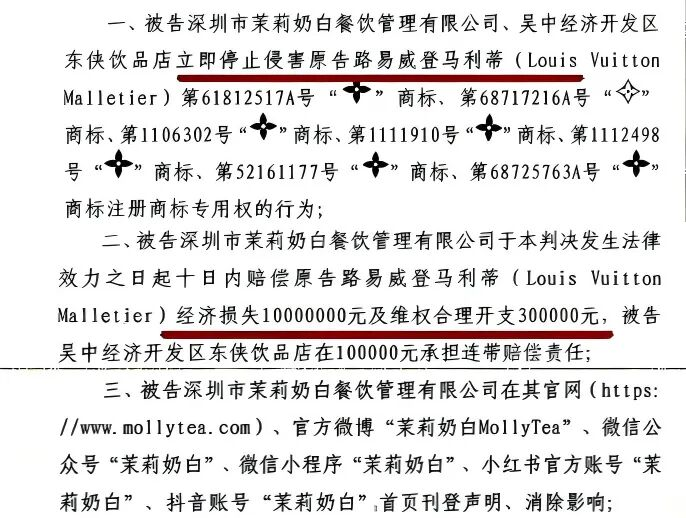
Suzhou Intermediate Court ruled Moli Naibai must pay 10 million RMB in damages.
Why It Matters
This case serves as a warning for brands to conduct thorough trademark clearance before adopting visual identities. It underscores the legal risks of 'borrowing' design elements from luxury brands.
What To Do Next
Always perform a comprehensive trademark search on the China Trademark Office website before finalizing any brand logo or visual asset.
Key Points
- •Suzhou Intermediate Court ruled Moli Naibai must pay 10 million RMB in damages.
- •The dispute centers on the similarity between Moli Naibai's floral logo and LV's 'Monogram'.
- •Moli Naibai previously failed to register the disputed logo due to trademark similarity.
- •The case highlights the strict 'first-to-file' trademark rules in China.
🧠 Deep Insight
AI-generated analysis for this event — not the original article.
🔑 Enhanced Key Takeaways
- •The lawsuit specifically targeted Moli Naibai's use of a 'four-leaf clover' pattern which the court found created a 'likelihood of confusion' with Louis Vuitton's iconic Monogram, despite the tea brand's attempt to differentiate through color and context.
- •Louis Vuitton has been aggressively pursuing intellectual property litigation in China, leveraging the 'well-known trademark' status to protect its visual identity against cross-industry infringement.
- •Moli Naibai's defense argued that their design was inspired by traditional Chinese floral aesthetics, but the court rejected this, citing the specific geometric arrangement's proximity to LV's protected intellectual property.
- •The 10 million RMB penalty is considered a significant deterrent in the Chinese food and beverage sector, signaling a shift toward higher statutory damages for trademark infringement cases involving luxury brands.
- •Legal experts note that this case underscores the risks for emerging Chinese consumer brands that adopt 'luxury-adjacent' visual branding strategies to elevate their market positioning.
🔮 Future ImplicationsAI analysis grounded in cited sources
⏳ Timeline
Weekly AI Recap
Read this week's curated digest of top AI events →
👉Related Updates
AI-curated news aggregator. All content rights belong to original publishers.
Original source: 虎嗅 ↗
This is a summary, not the original. Read the source, or get the weekly briefing.
Weekly AI briefing
One email a week. Unsubscribe anytime.