MIT Study Challenges How AI Learns From Images
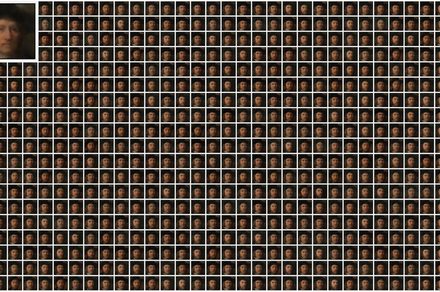
💡MIT’s findings could reshape how developers assess image-model memorization and copyright risk.
⚡ 30-Second TL;DR
What Changed
AI-generated images are often not traceable to one training image
Why It Matters
The findings may complicate attempts to attribute generated images to specific copyrighted works. They also suggest that dataset scale is an important variable when evaluating memorization, originality, and training-data influence.
What To Do Next
Run memorization and nearest-neighbor tests across multiple dataset sizes before making claims about whether your image model copies training examples.
Key Points
- •AI-generated images are often not traceable to one training image
- •Larger datasets dilute the influence of individual examples
- •The findings inform debates about memorization and image provenance
🧠 Deep Insight
AI-generated analysis for this event.
🔑 Enhanced Key Takeaways
- •The MIT research utilizes a framework called 'influence functions' to mathematically quantify how much a specific training image contributes to the final output of a generative model.
- •Researchers discovered that as model scale increases, the 'attribution' of a single image becomes statistically indistinguishable from noise, complicating copyright infringement claims.
- •The study highlights a phenomenon known as 'catastrophic forgetting' or data dilution, where the model prioritizes general patterns over specific pixel-level data points.
- •This research challenges the 'collage' theory of generative AI, which posits that models act as sophisticated databases that stitch together existing image fragments.
- •The findings suggest that legal frameworks relying on 'copy-paste' analogies for AI training may be technically misaligned with how modern diffusion models actually function.
🛠️ Technical Deep Dive
- The study employs influence functions to estimate the effect of removing a training point on the model's loss function.
- Analysis focused on diffusion-based architectures, specifically examining how latent space representations decouple from original input pixels.
- The research demonstrates that the gradient descent process during training effectively 'blurs' the relationship between input data and output generation as the dataset size exceeds a certain threshold.
- Findings indicate that memorization is largely restricted to highly repetitive or over-represented data points, rather than the general training corpus.
🔮 Future ImplicationsAI analysis grounded in cited sources
⏳ Timeline
Weekly AI Recap
Read this week's curated digest of top AI events →
👉Related Updates




AI-curated news aggregator. All content rights belong to original publishers.
Original source: Digital Trends ↗