Meta AI Arrives on Mac
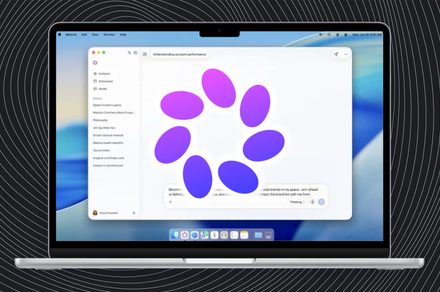
💡Meta’s Mac launch shows how desktop AI assistants are adding window awareness and cross-app interaction.
⚡ 30-Second TL;DR
What Changed
Meta AI is now available as a dedicated Mac application.
Why It Matters
The Mac launch expands Meta AI’s presence into desktop workflows, where users can combine assistance with multiple applications. For AI builders, it signals continued competition around context-aware desktop assistants and multimodal interaction.
What To Do Next
Install Meta AI for Mac and test shared-window analysis and cross-app dictation on a representative productivity workflow.
Key Points
- •Meta AI is now available as a dedicated Mac application.
- •The assistant can analyze content in shared windows.
- •It supports cross-app dictation along with creative and productivity workflows.
🧠 Deep Insight
AI-generated analysis for this event.
🔑 Enhanced Key Takeaways
- •The application leverages the Llama 3.3 model architecture, optimized for local and hybrid inference on Apple Silicon chips.
- •Meta has integrated a 'Privacy-First' processing mode that allows users to toggle between cloud-based reasoning and local-only execution for sensitive window analysis.
- •The Mac app includes a native 'Context Bridge' API, enabling third-party developers to allow Meta AI to read and summarize data from their specific applications.
- •This release marks Meta's first official departure from browser-based AI interfaces on macOS, signaling a shift toward deeper OS-level integration.
- •The app supports multimodal input, allowing users to drag and drop files, images, and code snippets directly into the floating assistant window for instant analysis.
📊 Competitor Analysis▸ Show
| Feature | Meta AI (Mac) | Apple Intelligence | Microsoft Copilot | OpenAI ChatGPT (Mac) |
|---|---|---|---|---|
| Model | Llama 3.3 | Apple Foundation Models | GPT-4o | GPT-4o / o1 |
| OS Integration | High (Window Analysis) | Native (System-wide) | Moderate (Office 365) | Moderate (App-based) |
| Pricing | Free | Free (Included) | Freemium | Freemium |
| Privacy | Hybrid/Cloud | On-Device/Private Cloud | Cloud-heavy | Cloud-heavy |
🛠️ Technical Deep Dive
- Architecture: Utilizes a distilled version of Llama 3.3 optimized for Metal Performance Shaders (MPS) on Apple Silicon.
- Window Analysis: Employs a secure screen-scraping framework that uses OCR and layout parsing to convert UI elements into text tokens for the LLM.
- Dictation: Integrates with macOS Accessibility APIs to intercept audio streams before they are processed by the system, allowing for real-time AI-enhanced transcription.
- Memory Management: Implements a tiered caching system that keeps recent context in RAM to reduce latency during cross-app workflows.
🔮 Future ImplicationsAI analysis grounded in cited sources
⏳ Timeline
Weekly AI Recap
Read this week's curated digest of top AI events →
👉Related Updates


AI-curated news aggregator. All content rights belong to original publishers.
Original source: Digital Trends ↗