MiniMax H3 Brings Open-Weight Multimodal Creation
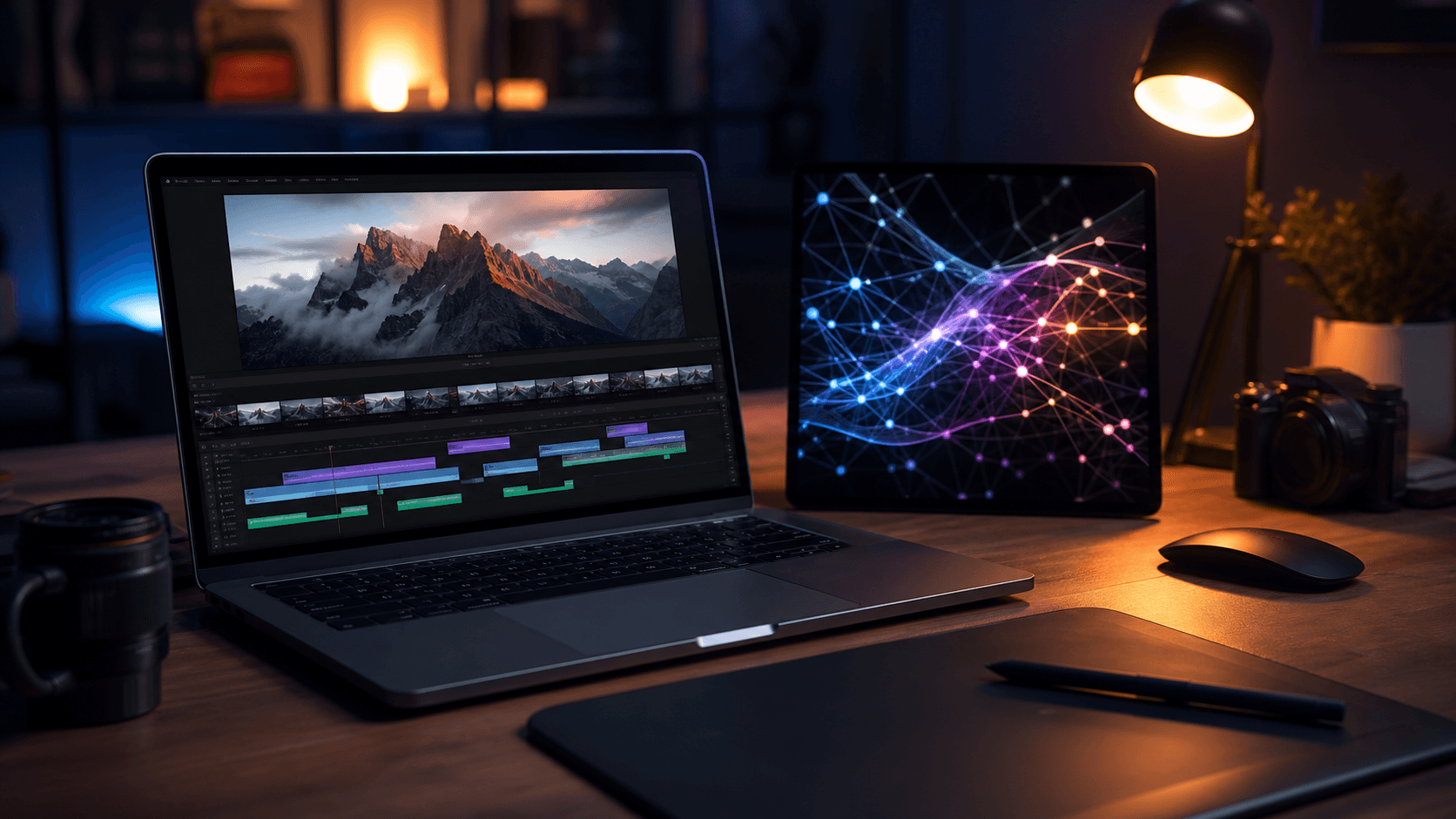
One open-weight model now connects video, audio, motion, and multimodal context in a local workflow.
30-Second TL;DR
What Changed
MiniMax H3 now ships with open weights.
Why It Matters
Open weights could make multimodal video creation more accessible to developers who need local control, customization, or lower inference costs. The unified workflow may also reduce the need to stitch together separate video, image, and audio models.
What To Do Next
Download the MiniMax H3 open weights and benchmark the 768p Base model on your target consumer GPU before designing a separate video-audio generation pipeline.
Key Points
- •MiniMax H3 now ships with open weights.
- •Text, image, video, and audio can be fused as context.
- •The model provides native stereo sound output for up to 15 seconds at 2K.
- •Community benchmarks report that the 768p Base model runs on consumer GPUs in minutes.
Deep Insight
AI-generated analysis for this event — not the original article.
Enhanced Key Takeaways
- •MiniMax H3 utilizes a unified multimodal architecture that processes diverse data streams through a shared latent space rather than relying on separate modality-specific encoders.
- •The model's open-weight release strategy is specifically designed to target the local-LLM developer community, aiming to reduce dependency on proprietary API-based multimodal services.
- •The 768p Base model's efficiency on consumer hardware is attributed to a novel quantization technique that maintains high-fidelity video generation while significantly reducing VRAM requirements.
- •MiniMax has integrated a proprietary 'Audio-Visual Alignment' layer that ensures temporal synchronization between generated video frames and the 2K stereo audio output.
- •The release includes a permissive license for research and commercial use, positioning MiniMax as a direct challenger to closed-source multimodal models like OpenAI's Sora or Google's Veo.
Competitor Analysis
- MiniMax H3
- Open-Weights
- OpenAI Sora
- Closed
- Google Veo
- Closed
- Meta Movie Gen
- Closed
- MiniMax H3
- Native 2K Stereo
- OpenAI Sora
- Limited/External
- Google Veo
- Integrated
- Meta Movie Gen
- Integrated
- MiniMax H3
- Consumer GPU
- OpenAI Sora
- Cloud-Only
- Google Veo
- Cloud-Only
- Meta Movie Gen
- Cloud-Only
- MiniMax H3
- Native Fusion
- OpenAI Sora
- Text-to-Video
- Google Veo
- Text-to-Video
- Meta Movie Gen
- Text-to-Video
| Feature | MiniMax H3 | OpenAI Sora | Google Veo | Meta Movie Gen |
|---|---|---|---|---|
| Weights | Open-Weights | Closed | Closed | Closed |
| Audio Generation | Native 2K Stereo | Limited/External | Integrated | Integrated |
| Hardware | Consumer GPU | Cloud-Only | Cloud-Only | Cloud-Only |
| Multimodal Input | Native Fusion | Text-to-Video | Text-to-Video | Text-to-Video |
Technical Deep Dive
- Architecture: Employs a Transformer-based backbone with cross-modal attention mechanisms that allow simultaneous processing of text, image, video, and audio tokens.
- Audio Processing: Utilizes a latent diffusion model for audio generation, capable of producing 48kHz stereo sound synchronized with video frame rates.
- Quantization: Supports 4-bit and 8-bit quantization modes, enabling the 768p variant to operate within 16GB-24GB VRAM constraints.
- Context Window: Supports long-context multimodal sequences, allowing for extended video generation tasks without significant degradation in temporal consistency.
Future ImplicationsAI analysis grounded in cited sources
Timeline
- 2023-03MiniMax releases its first large language model, abab-5.5, focusing on enterprise applications.
- 2024-02MiniMax introduces its first multimodal capabilities, integrating text and image processing.
- 2025-06MiniMax launches the H-series architecture, marking a shift toward unified multimodal generation.
- 2026-08MiniMax H3 is released with open weights, enabling local execution of multimodal workflows.
Weekly AI Recap
Read this week's curated digest of top AI events →
Related Updates




AI-curated news aggregator. All content rights belong to original publishers.
Original source: Pandaily ↗
This is a summary, not the original. Read the source, or get the weekly briefing.
The weekly digest
One email a week. Unsubscribe anytime.