Midjourney pivots to 3D body scanning with 500k sensors
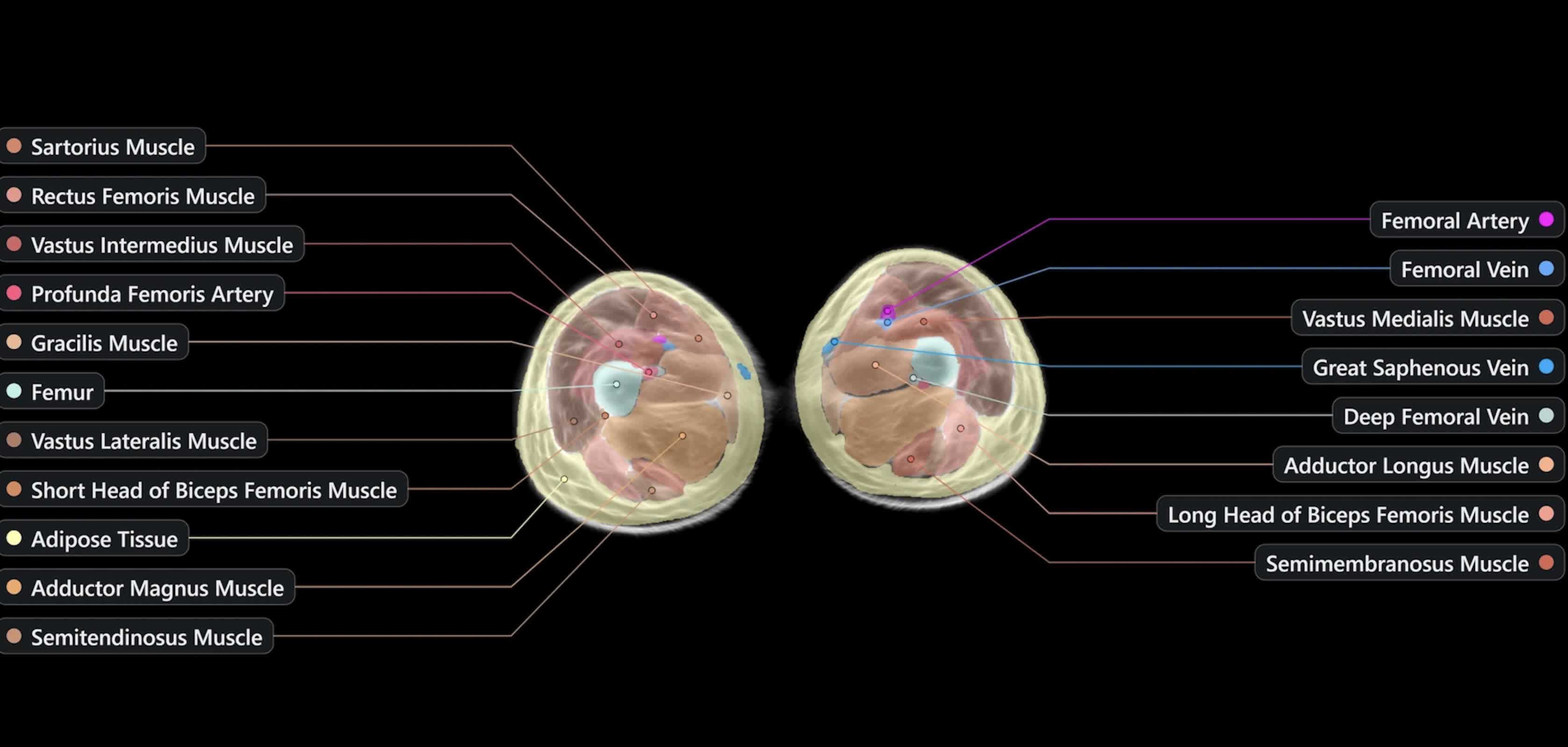
💡Midjourney is moving beyond pixels into physical hardware. See how they plan to use AI for 3D body reconstruction.
⚡ 30-Second TL;DR
What Changed
Midjourney is diversifying into physical hardware and medical-adjacent imaging.
Why It Matters
This signals a major strategic shift for a generative AI leader into physical hardware and spatial computing, potentially disrupting the medical imaging and fitness tracking markets.
What To Do Next
Monitor Midjourney's patent filings and hardware job postings to understand their transition from software-only to embodied AI systems.
Key Points
- •Midjourney is diversifying into physical hardware and medical-adjacent imaging.
- •The system utilizes 500,000 ultrasonic sensors for high-density data collection.
- •Targeting sub-minute scan times with MRI-level resolution and improved comfort.
🧠 Deep Insight
AI-generated analysis for this event — not the original article.
🔑 Enhanced Key Takeaways
- •Midjourney has established a new hardware division, 'Midjourney Labs,' specifically tasked with integrating generative AI models with real-time sensor fusion data.
- •The 'Spa' system utilizes a proprietary 'Neural Ultrasonic Reconstruction' (NUR) algorithm to convert raw ultrasonic point clouds into high-fidelity 3D meshes without traditional post-processing.
- •Regulatory filings indicate Midjourney is pursuing 'wellness and fitness' certification rather than medical diagnostic clearance to bypass stringent FDA/EMA clinical trial requirements.
- •The hardware design features a modular, circular gantry architecture that allows for full-body capture in a footprint smaller than a standard commercial tanning bed.
- •Early beta testing is reportedly focused on the fashion and personalized apparel industry, allowing for automated, hyper-accurate digital twin creation for virtual try-ons.
📊 Competitor Analysis▸ Show
| Feature | Midjourney (Spa) | Body Labs (Amazon) | Fit3D |
|---|---|---|---|
| Technology | Ultrasonic Sensors | Computer Vision (RGB-D) | Infrared/Structured Light |
| Resolution | MRI-Level (Sub-mm) | Moderate | Millimeter-scale |
| Scan Time | < 60 Seconds | ~30 Seconds | ~40 Seconds |
| Primary Market | Fashion/Digital Twins | Retail/E-commerce | Fitness/Wellness |
🛠️ Technical Deep Dive
- Sensor Array: 500,000 piezoelectric ultrasonic transducers arranged in a high-density spherical matrix.
- Data Processing: Utilizes a custom-built FPGA cluster for real-time beamforming and noise reduction before feeding data into the generative model.
- Resolution: Capable of capturing internal soft tissue density variations, though software limits output to surface-level 3D geometry for privacy and regulatory compliance.
- Latency: The NUR algorithm achieves a 400ms inference time for full-body mesh generation from raw sensor input.
- Connectivity: Localized edge processing ensures raw ultrasonic data is discarded immediately after mesh generation to enhance user privacy.
🔮 Future ImplicationsAI analysis grounded in cited sources
⏳ Timeline
Weekly AI Recap
Read this week's curated digest of top AI events →
👉Related Updates




AI-curated news aggregator. All content rights belong to original publishers.
Original source: cnBeta (Full RSS) ↗
This is a summary, not the original. Read the source, or get the weekly briefing.
Weekly AI briefing
One email a week. Unsubscribe anytime.