Microsoft Unveils Wearable AI Badge Concept
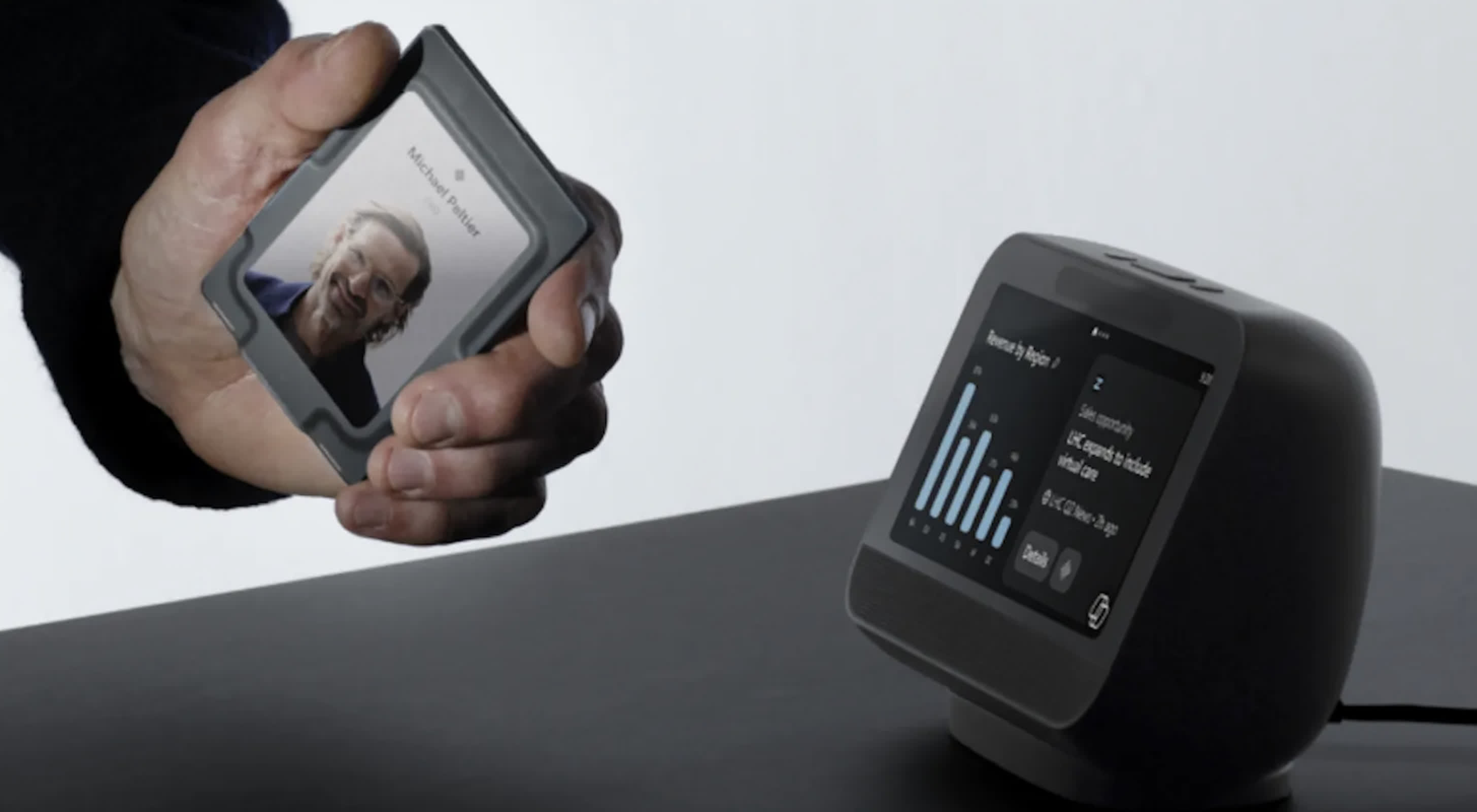
💡Microsoft's move into wearable AI hardware signals a major shift in how users will interact with LLMs in the real world.
⚡ 30-Second TL;DR
What Changed
Wearable 'access badge' design with camera and fingerprint sensor
Why It Matters
This represents a shift toward ambient computing, where AI agents are integrated into daily life via specialized hardware rather than software-only interfaces.
What To Do Next
Explore Microsoft's multimodal AI integration patterns for wearable devices to prepare for the next wave of ambient computing apps.
Key Points
- •Wearable 'access badge' design with camera and fingerprint sensor
- •Focus on moving AI beyond laptop screens and apps
- •Early-stage hardware concept for new human-computer interaction
- •Supports both clip-on and neck-worn form factors
🧠 Deep Insight
Background and context from public sources — not the original article. 12 sources cited.
🔑 Enhanced Key Takeaways
- •The wearable AI badge is a core component of Microsoft's broader 'Project Solara' initiative, a new platform designed for AI agents to operate independently of traditional applications and operating systems.
- •The device runs on the Microsoft Device Ecosystem Platform (MDEP), an enterprise-grade Android-based operating system specifically chosen for its suitability for lower-power devices while maintaining essential IT management, security, and privacy features.
- •Microsoft is targeting enterprise users, including information workers, nurses, and frontline staff, aiming to seamlessly integrate AI agents into their daily work environments for real-time, context-aware assistance.
- •The concept represents a strategic shift towards an 'agent-first' computing paradigm, where users express their intent, and AI agents autonomously execute tasks, moving away from the conventional app-launcher model.
- •Microsoft is collaborating with hardware partners, specifically Qualcomm for the wearable badge's silicon and MediaTek for a complementary desktop companion device, to bring these reference designs to fruition.
🛠️ Technical Deep Dive
- Operating System: Microsoft Device Ecosystem Platform (MDEP), an enterprise version of Android.
- Processor: Qualcomm wearable silicon.
- Connectivity: Wi-Fi, 5G cellular connectivity, Bluetooth, GNSS.
- Input/Output: Small touchscreen, far-field high SNR microphone array, speaker.
- Sensors: Side-facing camera (some sources mention top-facing), fingerprint reader for biometric security, privacy switch.
- User Interface: Utilizes 'just-in-time UI' to dynamically adapt interfaces to various device sizes and generate new UI on the fly.
- Functionality: Designed to host AI agents for tasks like scanning QR codes, recording and transcribing visits, logging vitals, and initiating prescriptions, particularly for healthcare workers.
🔮 Future ImplicationsAI analysis grounded in cited sources
⏳ Timeline
📎 Sources (12)
Factual claims are grounded in the sources below. Forward-looking analysis is AI-generated interpretation.
Weekly AI Recap
Read this week's curated digest of top AI events →
👉Related Updates
AI-curated news aggregator. All content rights belong to original publishers.
Original source: cnBeta (Full RSS) ↗
This is a summary, not the original. Read the source, or get the weekly briefing.
The weekly digest
One email a week. Unsubscribe anytime.