Microsoft Surface Laptop Ultra targets MacBook Pro
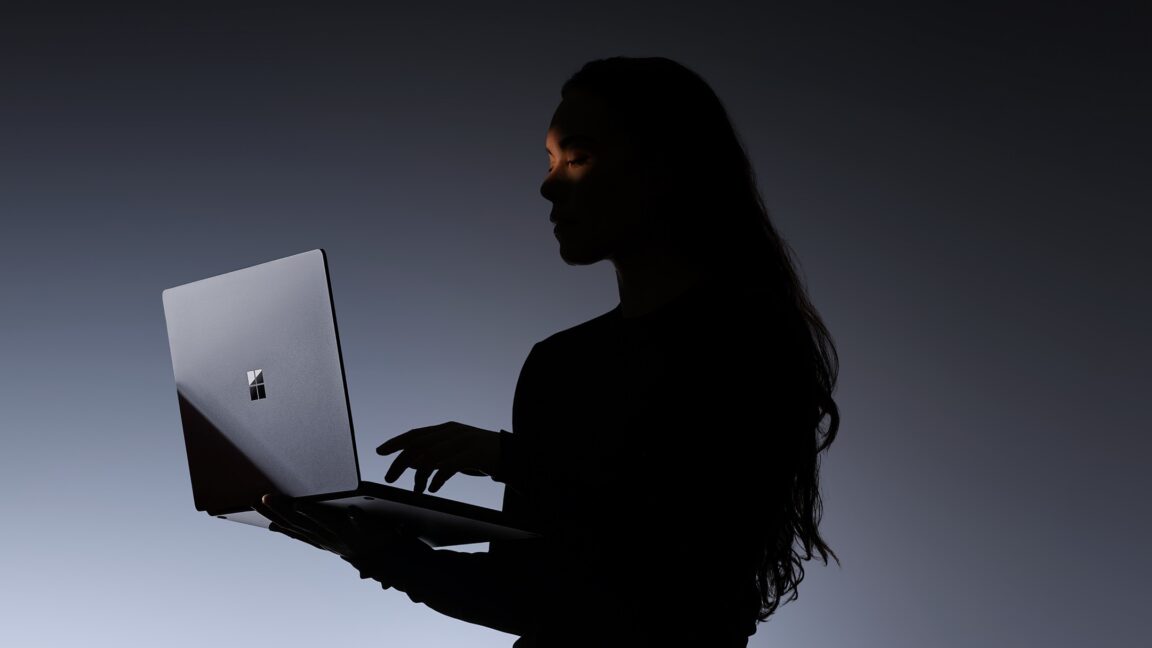
💡New high-end hardware often signals better local AI performance capabilities for developers.
⚡ 30-Second TL;DR
What Changed
High-end hardware design aimed at professional mobile workstations.
Why It Matters
Increased competition in the high-end laptop market may drive better hardware optimization for local AI workloads.
What To Do Next
Evaluate the NPU capabilities of the new Surface hardware for running local LLMs.
Key Points
- •High-end hardware design aimed at professional mobile workstations.
- •Direct market competition with Apple's MacBook Pro series.
- •Represents a shift in Microsoft's hardware strategy.
🧠 Deep Insight
Background and context from public sources — not the original article. 16 sources cited.
🔑 Enhanced Key Takeaways
- •The Surface Laptop Ultra is powered by Nvidia's newly announced RTX Spark chip, an ARM-based system-on-a-chip (SoC), marking a significant shift from previous Surface Laptops that primarily utilized Intel or Snapdragon X series processors.
- •It features a Blackwell GPU with 6,144 CUDA cores, which Microsoft states is roughly equivalent to an Nvidia RTX 5070 desktop GPU, and supports up to 128GB of unified LPDDR5X memory, enabling 1 petaflop of AI compute and the ability to run 120 billion parameter AI models locally.
- •The device incorporates a 15-inch mini-LED "PixelSense Ultra" touchscreen display, offering up to 2,000 nits of peak HDR brightness, which Microsoft claims is the brightest display ever shipped in a Surface product.
- •The Surface Laptop Ultra includes a comprehensive array of ports, such as HDMI, three USB-C, one USB-A, an SD card reader, and a 3.5mm headphone jack, alongside the largest haptic touchpad ever integrated into a Surface device.
- •Microsoft explicitly designed the Surface Laptop Ultra for "world makers," including creators, developers, and AI builders, emphasizing its capability to handle demanding workloads like 3D rendering, AI creation, and complex multi-model workflows.
📊 Competitor Analysis▸ Show
| Feature | Microsoft Surface Laptop Ultra | Apple MacBook Pro (M5 Max) |
|---|---|---|
| Processor | Nvidia RTX Spark (ARM-based, up to 20 CPU cores) | Apple M5 Max (ARM-based) |
| GPU | Blackwell RTX with 6,144 CUDA cores (RTX 5070-level) | Integrated Apple GPU |
| Unified Memory | Up to 128GB LPDDR5X | Up to 128GB unified memory |
| AI Compute | 1 Petaflop, runs 120B parameter models locally | High-performance Neural Engine |
| Display | 15-inch mini-LED "PixelSense Ultra" (2000 nits peak HDR) | Liquid Retina XDR (high brightness, ProMotion) |
| Ports | HDMI, 3x USB-C, 1x USB-A, SD card, 3.5mm audio | Thunderbolt/USB-C, HDMI, SD card, 3.5mm audio |
| Storage | Replaceable SSD | Integrated SSD (not user-replaceable) |
| Operating System | Windows 11 on ARM | macOS |
| Starting Price | Estimated $3,000 - $7,000 (maxed out) | ~$5,400 (for 16-inch M5 Max with 128GB RAM/2TB SSD) |
| Benchmarks | Not yet available | Industry-leading performance for creative tasks |
🛠️ Technical Deep Dive
- Processor: Nvidia RTX Spark SoC (ARM-based)
- CPU: Up to 20 ARM cores (Grace compute cores)
- GPU: Blackwell architecture with 6,144 CUDA cores, offering performance comparable to an Nvidia RTX 5070 laptop GPU.
- AI Performance: 1 petaflop of AI compute, capable of running large language models up to 120 billion parameters locally.
- Memory: Up to 128GB LPDDR5X unified memory, dynamically allocated between CPU and GPU for optimal workload distribution.
- Display: 15-inch mini-LED "PixelSense Ultra" touchscreen with up to 2,000 nits of peak HDR brightness and 262 pixels per inch.
- Ports: Includes HDMI, three USB-C ports, one USB-A port, an SD card reader, and a 3.5mm headphone jack.
- Storage: Features a user-replaceable SSD.
- Thermal Management: Designed with thermal headroom 2.5 times greater than the Surface Laptop 7 15-inch model.
- Operating System: Runs Windows 11 on ARM, with optimizations for the RTX Spark platform and Copilot+ features.
- Input: Equipped with the largest haptic touchpad ever on a Surface device and supports Windows Hello face recognition.
🔮 Future ImplicationsAI analysis grounded in cited sources
⏳ Timeline
📎 Sources (16)
Factual claims are grounded in the sources below. Forward-looking analysis is AI-generated interpretation.
Weekly AI Recap
Read this week's curated digest of top AI events →
👉Related Updates
AI-curated news aggregator. All content rights belong to original publishers.
Original source: Ars Technica ↗
This is a summary, not the original. Read the source, or get the weekly briefing.
The weekly digest
One email a week. Unsubscribe anytime.