Microsoft Surface Pro and Laptop Prices Increase Significantly
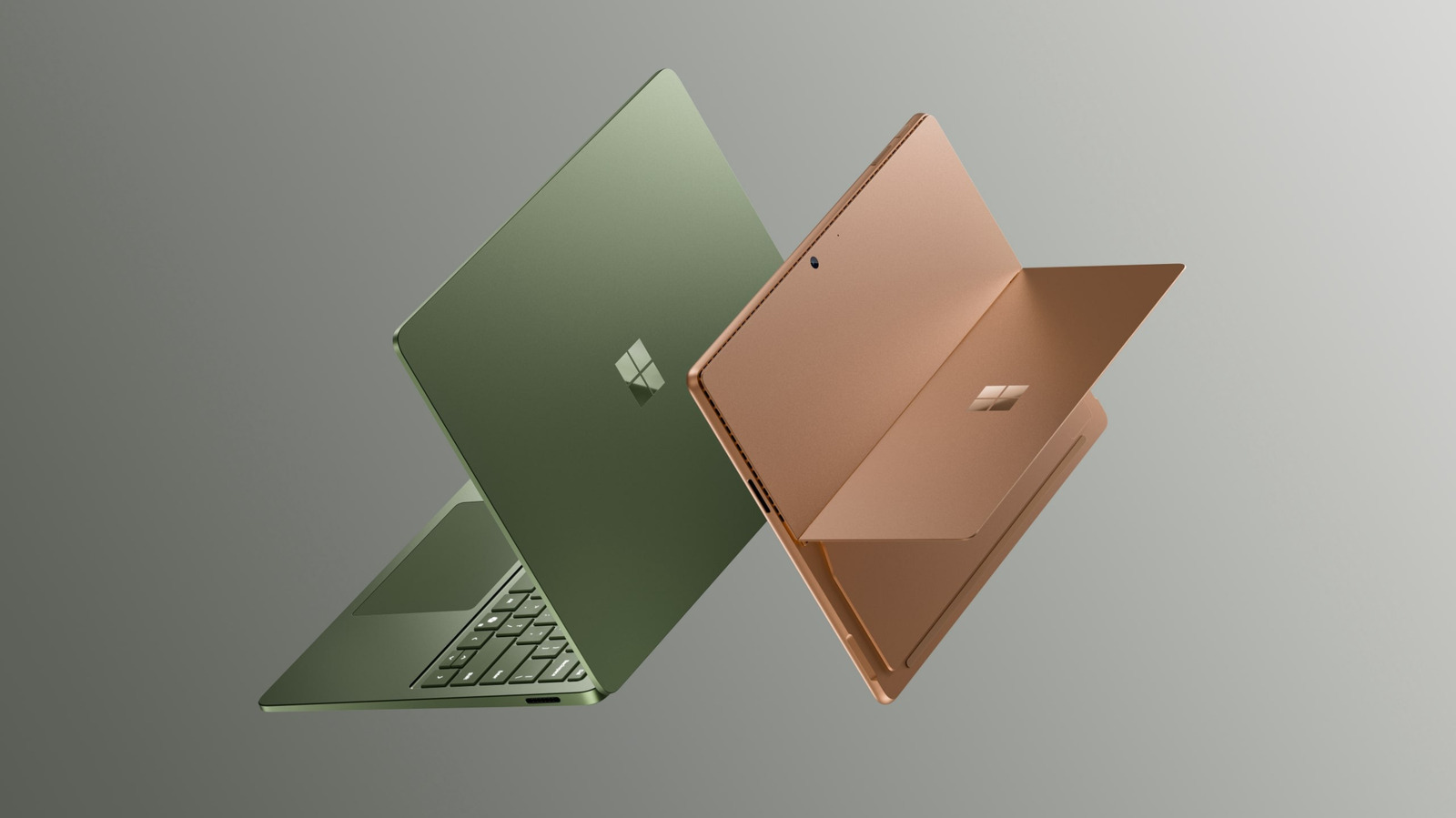
💡Understand how AI integration is driving hardware price premiums in the enterprise laptop market.
⚡ 30-Second TL;DR
What Changed
Surface Pro price increased by $500 over the previous generation.
Why It Matters
This pricing shift reflects the rising cost of hardware required to run on-device AI models, potentially impacting enterprise adoption rates for AI-ready PCs.
What To Do Next
Evaluate the NPU performance benchmarks of the new Surface lineup before recommending them for enterprise AI deployment.
Key Points
- •Surface Pro price increased by $500 over the previous generation.
- •Surface Laptop price increased by $600 over the previous generation.
- •Microsoft cites AI integration as a primary driver for the hardware cost increase.
🧠 Deep Insight
Background and context from public sources — not the original article. 22 sources cited.
🔑 Enhanced Key Takeaways
- •The latest Surface Pro and Laptop models are designated as "Copilot+ PCs," featuring dedicated NPUs (Neural Processing Units) that meet Microsoft's minimum requirement of 40 TOPS for on-device AI processing.
- •The initial $999 entry-level configurations for the consumer-focused Surface Pro 11 and Surface Laptop 7 were discontinued, raising their starting price to $1,199 for models with 512GB SSD storage.
- •These AI-enhanced devices integrate processors like Qualcomm's Snapdragon X Elite/Plus (45 TOPS NPU) or Intel's Core Ultra (Series 2) "Lunar Lake" (up to 48 TOPS NPU), enabling exclusive Windows 11 AI features such as Recall and Live Captions.
- •The shift to AI-centric hardware has also seen AMD introduce its Ryzen AI 300 series ("Strix Point") with 50 TOPS NPUs, intensifying competition among chipmakers to exceed Microsoft's AI PC performance benchmarks.
🛠️ Technical Deep Dive
- NPU Requirement: Microsoft's "Copilot+ PC" standard mandates a Neural Processing Unit (NPU) capable of at least 40 Trillion Operations Per Second (TOPS) for efficient on-device AI task execution.
- Processors and NPU Specifications:
- Qualcomm Snapdragon X Elite/Plus: Features a Hexagon NPU with up to 45 TOPS. The total platform (CPU, GPU, NPU) offers up to 70-75 TOPS. It includes a 12-core Qualcomm Oryon CPU with speeds up to 4.3GHz and 42MB of L2+L3 cache. The integrated Adreno GPU is rated for up to 4.6 TFLOPS.
- Intel Core Ultra (Series 2) "Lunar Lake": Its NPU delivers up to 48 TOPS, with the total AI performance (CPU, GPU, NPU) reaching 100-120 TOPS. This processor features a new fourth-generation NPU architecture and Xe2 GPU architecture.
- AMD Ryzen AI 300 series "Strix Point": Incorporates an XDNA 2 NPU capable of 50 TOPS, with the total platform offering up to 80 TOPS (for the Ryzen 370 variant). It utilizes Zen 5 CPU cores and RDNA 3.5 graphics.
- Memory and Storage: Copilot+ PCs require a minimum of 16GB RAM and 256GB SSD storage.
- Security Features: These devices are designed as Secured-core PCs and integrate the Microsoft Pluton security processor to enhance data protection.
- AI Capabilities: The integrated NPUs enable exclusive Windows 11 AI features such as Recall (allowing users to find anything seen on their PC by describing it), Live Captions with real-time translation, and Windows Studio Effects for enhanced video calls.
🔮 Future ImplicationsAI analysis grounded in cited sources
⏳ Timeline
📎 Sources (22)
Factual claims are grounded in the sources below. Forward-looking analysis is AI-generated interpretation.
Weekly AI Recap
Read this week's curated digest of top AI events →
👉Related Updates

AI-curated news aggregator. All content rights belong to original publishers.
Original source: Engadget ↗
This is a summary, not the original. Read the source, or get the weekly briefing.
Weekly AI briefing
One email a week. Unsubscribe anytime.