Microsoft Pursues AI Self-Sufficiency
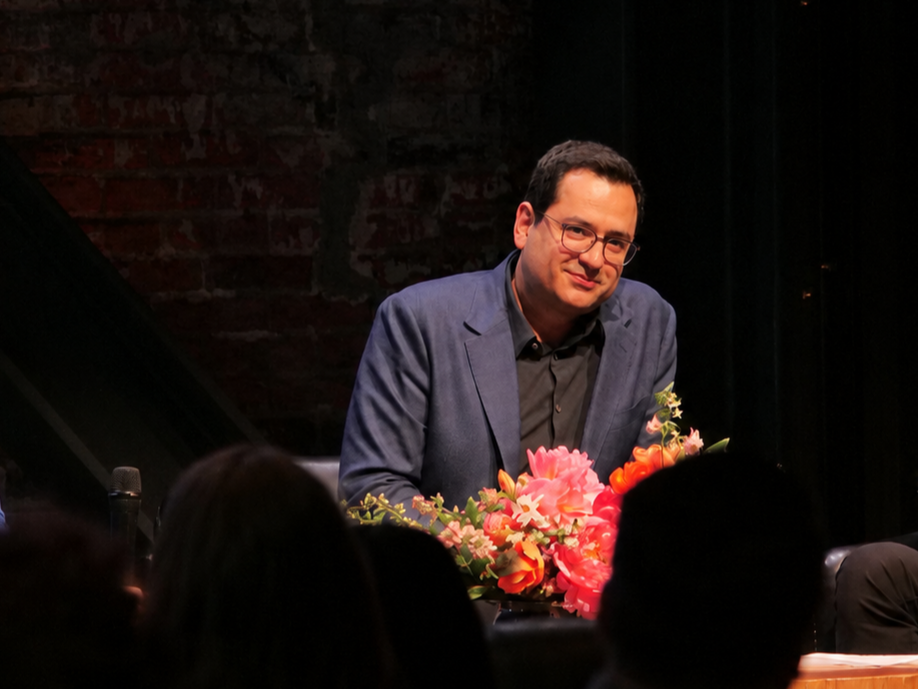
💡Microsoft wants its own frontier models—an important shift for AI platform strategy.
⚡ 30-Second TL;DR
What Changed
Microsoft is building its own frontier AI models.
Why It Matters
A stronger in-house model capability could give Microsoft more control over performance, costs, and product direction. For AI builders and enterprises, it may create another major source of frontier models and increase competition among model providers.
What To Do Next
Inventory your dependence on third-party frontier models and identify workloads that could migrate to Microsoft's future industry-tuned models.
Key Points
- •Microsoft is building its own frontier AI models.
- •The company plans to tune models for specific industries.
- •Ali Farhadi describes AI self-sufficiency as a long-term mission.
🧠 Deep Insight
Background and context from public sources — not the original article. 6 sources cited.
🔑 Enhanced Key Takeaways
- •Microsoft launched the 'MAI' brand at Build 2026, featuring the flagship 'MAI-Thinking-1' model which utilizes a sparse mixture of experts (MoE) architecture.
- •The company is shifting from chatbot-centric interfaces to an 'agent-first' strategy, deploying autonomous 'Autopilots' designed to operate within strict enterprise security boundaries.
- •Microsoft is developing proprietary server processors and quantum chip technology to reduce reliance on third-party hardware providers for AI workloads.
- •The 'Frontier Tuning' framework enables enterprises to train models on proprietary business data while maintaining internal compliance and data sovereignty.
- •Microsoft is integrating its AI stack across Windows, Azure, and GitHub to create a unified, owned runtime environment for its proprietary models.
📊 Competitor Analysis▸ Show
| Feature | Microsoft (MAI-Thinking-1) | Anthropic (Claude Opus 4.6) | OpenAI (GPT-5/o1) |
|---|---|---|---|
| Architecture | Sparse Mixture of Experts | Dense/Proprietary | Proprietary |
| Primary Focus | Agentic Autopilots | Reasoning/Safety | General Intelligence |
| Benchmark (SWE-bench) | Matches Opus 4.6 | Baseline | Competitive |
| Ecosystem | Windows/Azure/GitHub | API/Console | API/ChatGPT |
🛠️ Technical Deep Dive
- MAI-Thinking-1 utilizes a sparse mixture of experts (MoE) design to optimize inference efficiency for reasoning tasks.
- The architecture supports 'Frontier Tuning' for localized enterprise data integration.
- Infrastructure includes custom-designed server processors optimized for agentic runtime environments.
- Integration of quantum-ready hardware components to support future high-compute AI requirements.
🔮 Future ImplicationsAI analysis grounded in cited sources
⏳ Timeline
📎 Sources (6)
Factual claims are grounded in the sources below. Forward-looking analysis is AI-generated interpretation.
Weekly AI Recap
Read this week's curated digest of top AI events →
👉Related Updates

AI-curated news aggregator. All content rights belong to original publishers.
Original source: GeekWire ↗
This is a summary, not the original. Read the source, or get the weekly briefing.
Weekly AI briefing
One email a week. Unsubscribe anytime.