AI Finds Hidden Immunotherapy Clue in Breast Cancer Data
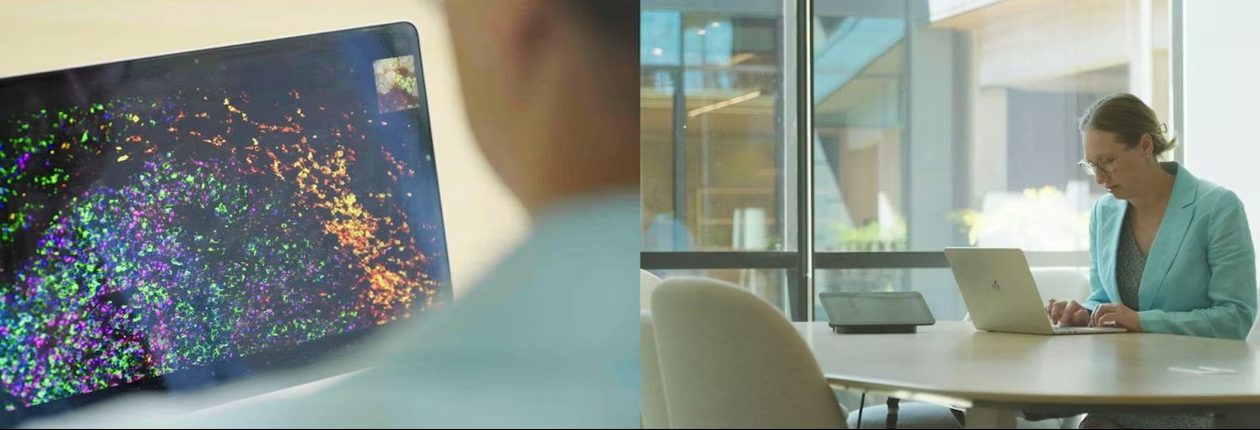
💡See how AI uncovered a missed cancer-treatment signal in years-old biomedical data.
⚡ 30-Second TL;DR
What Changed
The AI system identified a potential immunotherapy response in a common form of breast cancer.
Why It Matters
The result illustrates how AI can uncover clinically relevant patterns in large, existing biomedical datasets. If validated experimentally and clinically, the finding could help expand immunotherapy research beyond cancers already known to respond.
What To Do Next
Review the Allen Institute for AI system's published cancer-analysis methodology when available, focusing on cohort selection, biomarkers, and independent validation requirements.
Key Points
- •The AI system identified a potential immunotherapy response in a common form of breast cancer.
- •The finding was present in cancer data but had not been noticed by researchers for years.
- •The discovery prompted an expanded partnership between the Allen Institute for AI and Providence Swedish Cancer Institute.
🧠 Deep Insight
Background and context from public sources — not the original article. 6 sources cited.
🔑 Enhanced Key Takeaways
- •The discovery leverages AI-derived tumor-infiltrating lymphocyte (TIL) scoring, which has recently gained clinical validation as a superior prognostic marker for risk discrimination in breast cancer.
- •The research aligns with the broader industry shift toward multimodal AI integration, combining histopathology imaging with molecular and clinical biomarker data to identify treatment responders.
- •The identification of immunotherapy candidates in common breast cancer subtypes mirrors recent breakthroughs in predicting cytotoxic T-cell density to determine chemotherapy resistance.
- •The partnership expansion reflects a growing trend of integrating AI platforms into 'Molecular Tumor Boards' to standardize immune biomarker evaluation in clinical settings.
- •The methodology likely utilizes automated histopathology analysis, similar to recent advancements that replace expensive genomic testing with digitized slide-based AI predictions.
📊 Competitor Analysis▸ Show
| Feature | Caris Life Sciences (Precision Oncology) | Allen Institute/Providence Swedish AI | NYU/Academic AI Models |
|---|---|---|---|
| Primary Focus | Molecular signature/Treatment selection | Immunotherapy clue discovery | Recurrence risk prediction |
| Data Source | Multi-omics/Molecular data | Histopathology/Cancer data | Digitized slides/Clinical data |
| Clinical Status | Commercialized/Clinical use | Research/Partnership-based | Academic/Validation phase |
🛠️ Technical Deep Dive
- Utilization of deep learning architectures for the automated quantification of tumor-infiltrating lymphocytes (TILs) within digitized histopathology slides.
- Integration of multimodal data pipelines that fuse clinical patient records with molecular biomarker profiles to enhance predictive accuracy.
- Application of pattern recognition algorithms to identify spatial distributions of cytotoxic T-cells as a proxy for immunotherapy efficacy.
- Implementation of high-throughput image processing to detect morphological biomarkers, such as centrosome abnormalities, that correlate with tumor aggressiveness.
🔮 Future ImplicationsAI analysis grounded in cited sources
⏳ Timeline
📎 Sources (6)
Factual claims are grounded in the sources below. Forward-looking analysis is AI-generated interpretation.
Weekly AI Recap
Read this week's curated digest of top AI events →
👉Related Updates

AI-curated news aggregator. All content rights belong to original publishers.
Original source: GeekWire ↗
This is a summary, not the original. Read the source, or get the weekly briefing.
Weekly AI briefing
One email a week. Unsubscribe anytime.