Microsoft Launches Secure Execution Containers for AI Agents
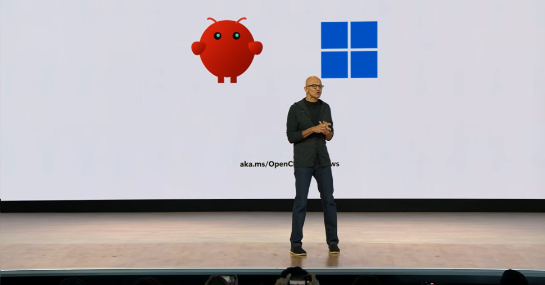
💡New sandbox environment for AI agents. Essential for developers building secure, production-grade autonomous agents.
⚡ 30-Second TL;DR
What Changed
Introduces isolated environments for AI agent execution
Why It Matters
By providing a sandboxed environment, MXC addresses critical security concerns regarding AI agents interacting with external systems. This is a significant step toward deploying autonomous agents in production enterprise environments.
What To Do Next
Evaluate your current agent architecture and test MXC to isolate your agent's tool-use environment, reducing the risk of unauthorized system access.
Key Points
- •Introduces isolated environments for AI agent execution
- •Supports OpenClaw integration for complex tasks
- •Focuses on customizable and secure agent runtime
🧠 Deep Insight
Background and context from public sources — not the original article. 8 sources cited.
🔑 Enhanced Key Takeaways
- •Microsoft Execution Containers (MXC) functions as a policy-driven execution layer deeply integrated into the Windows operating system, enabling real-time enforcement of defined access boundaries for AI agents.
- •MXC provides a 'composable sandbox spectrum,' offering various isolation options from lightweight process isolation to full micro-virtual machines and Linux containers, adaptable to the risk level of an agent's tasks.
- •MXC is not a standalone product but an SDK and a foundational policy model embedded within Windows and the Windows Subsystem for Linux (WSL), allowing developers to build secure agent applications.
- •The platform integrates with Microsoft's broader enterprise security ecosystem, including Agent 365, Microsoft Defender, Entra for identity management, Intune for device policy, and Purview for data governance, enabling centralized management of AI agent containment.
- •OpenClaw, previously highlighted for its security vulnerabilities, is now being integrated with MXC and Microsoft's security stack to facilitate secure enterprise deployment, as demonstrated by Microsoft's new 'Scout' AI agent.
🛠️ Technical Deep Dive
- MXC is designed as a cross-platform sandboxed code execution system, supporting Windows, Linux, and macOS.
- It utilizes a unified JSON configuration schema for defining execution parameters and security policies, along with a TypeScript SDK for development.
- The system offers multiple containment backends, including ProcessContainer, Windows Sandbox, LXC, Bubblewrap, Seatbelt (macOS), MicroVM (NanVix), Hyperlight, IsolationSession, and WSLC.
- Policy-driven sandboxing capabilities encompass filesystem policies (read-only/read-write path lists), network policies (proxy support, outbound/host filtering), and UI policies (clipboard, display, GUI access controls).
- MXC implements a state-aware lifecycle for session sandboxes, involving distinct phases: provision, start, exec, stop, and deprovision.
- Session isolation is a key feature, separating the agent's execution from the user's desktop, clipboard, user interface, and input devices to mitigate various attack vectors.
- Each agent is bound to a strong identity, either a local ID or a cloud-provisioned identity backed by Microsoft Entra, ensuring all agent actions are attributable, auditable, and governable.
- As of its early preview, the MXC SDK's current policies should not yet be treated as definitive security boundaries, indicating ongoing development.
🔮 Future ImplicationsAI analysis grounded in cited sources
⏳ Timeline
📎 Sources (8)
Factual claims are grounded in the sources below. Forward-looking analysis is AI-generated interpretation.
Weekly AI Recap
Read this week's curated digest of top AI events →
👉Related Updates

AI-curated news aggregator. All content rights belong to original publishers.
Original source: ITmedia AI+ (日本) ↗
This is a summary, not the original. Read the source, or get the weekly briefing.
The weekly digest
One email a week. Unsubscribe anytime.