Microsoft Japan Deploys AI Business-Wide
💡Microsoft Japan's AI rollout strategies for enterprise—key lessons for scaling in Asia
⚡ 30-Second TL;DR
What Changed
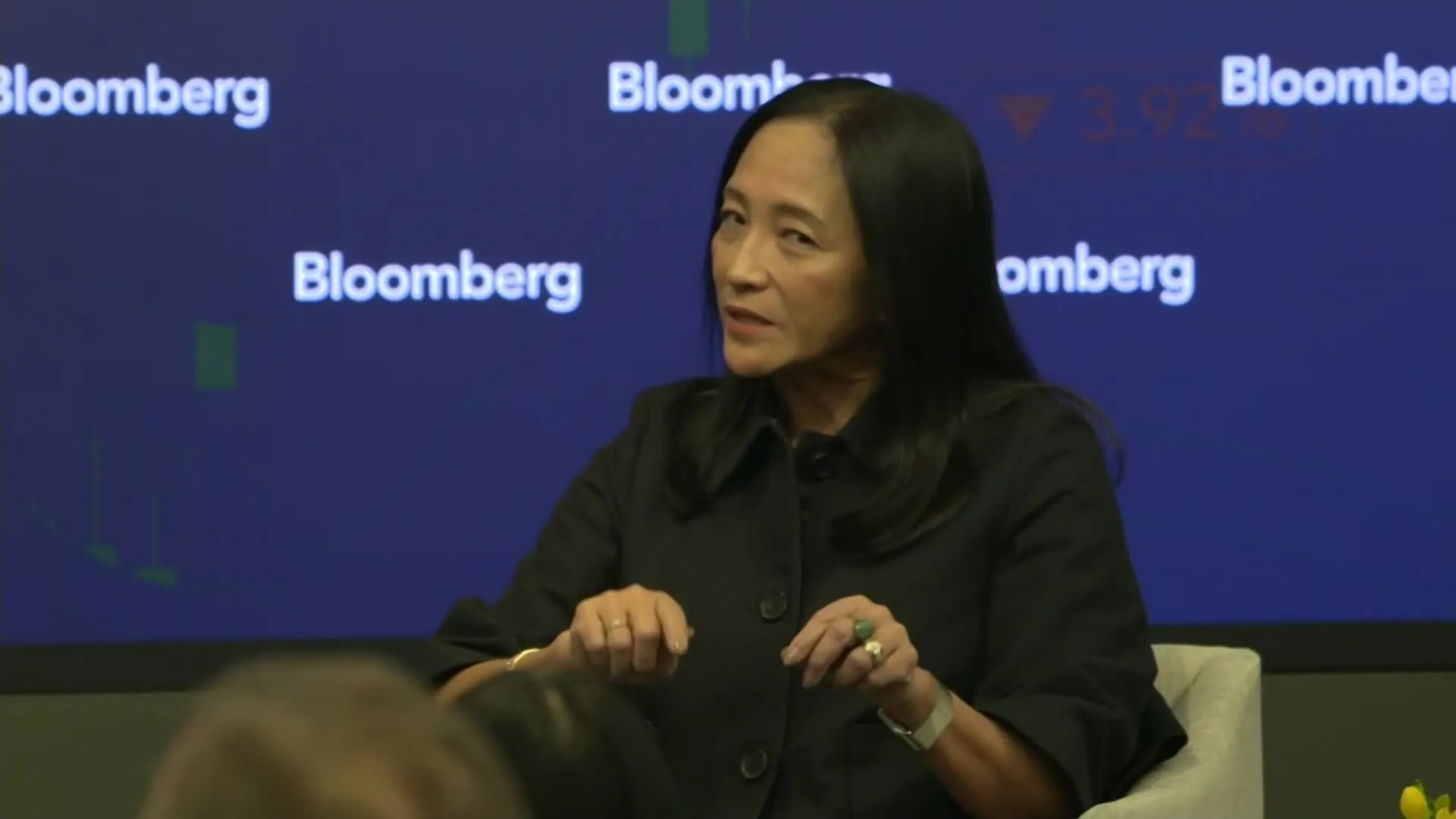
Interview with Microsoft Japan President Miki Tsusaka
Why It Matters
Highlights enterprise AI strategies in Asia, offering insights for global scaling. Could influence how multinationals adapt AI for regional markets like Japan.
What To Do Next
Review Microsoft Japan's AI deployment case studies for enterprise integration blueprints.
Key Points
- •Interview with Microsoft Japan President Miki Tsusaka
- •Focus on AI implementation across entire business
- •Event held for Bloomberg.com subscribers in Tokyo
🧠 Deep Insight
Background and context from public sources — not the original article. 9 sources cited.
🔑 Enhanced Key Takeaways
- •Microsoft's $2.9 billion investment in Japan (announced April 2025) represents the company's largest financial commitment to the country, with infrastructure expansion completed by late 2025 to support AI and cloud services across Japanese enterprises[1][2]
- •Microsoft Research Asia–Tokyo was established in late 2024 as a dedicated R&D hub focusing on embodied AI, robotics, societal AI, and neuroscience—directly supporting Japan's AI transformation agenda[3]
- •Microsoft Japan is executing an ambitious AI skilling program targeting 3 million people by 2027 through AI Skills Navigators, micro-degrees in partnership with the United Nations University, and women-in-tech initiatives[3]
- •Real-world AI deployment is accelerating in Japan's healthcare and aviation sectors: Japan Airlines reduced cabin crew reporting time by two-thirds using Microsoft's Phi-4 small language model, while JCHO Osaka Hospital launched a generative AI project (operational June 2026) for discharge summaries and nursing handovers[4][5]
- •Microsoft Japan introduced CyberSmart AI, a free cybersecurity initiative for eligible small and midsize businesses, addressing security concerns as a prerequisite for broader AI adoption in regulated industries[3]
🛠️ Technical Deep Dive
- •Microsoft deployed Phi-4 and Phi-4-mini small language models (SLMs) in production environments, prioritizing offline capability and Japanese language performance over cloud-dependent large language models for enterprise applications[5]
- •JAL-AI Report implementation used Azure as the foundational infrastructure with Fujitsu's Kozuchi AI engines and Takane (Fujitsu's enterprise LLM with advanced Japanese capabilities) integrated alongside Microsoft's SLM for hybrid on-premises and edge deployment[5]
- •JCHO Osaka Hospital's generative AI system operates on Microsoft Japan's AI platform with operational governance emphasizing data handling protocols, privacy compliance, and medical information confidentiality—establishing a replicable model for healthcare sector adoption[4]
- •Infrastructure expansion includes deployment of graphics processing units (GPUs) essential for AI applications, though specific capacity metrics and geographic distribution within Japan were not disclosed[1]
🔮 Future ImplicationsAI analysis grounded in cited sources
⏳ Timeline
📎 Sources (9)
Factual claims are grounded in the sources below. Forward-looking analysis is AI-generated interpretation.
- totaltele.com — Microsoft to Invest 2 9 Billion to Boost Japanese Cloud and AI Infrastructure
- news.microsoft.com — Accelerating Japans Growth with AI
- Microsoft — Transforming Japan with AI 5 Companies From the Front Lines of Innovation
- global.fujitsu — 0219 01
- global.fujitsu — Tl Ms AI Tour 20250423
- Microsoft — 21914 Sumitomo Corporation Microsoft 365 Copilot
- Microsoft — Global AI Adoption 2025
- devblogs.microsoft.com — The Realities of Application Modernization with Agentic AI Early 2026
- Microsoft — Microsoft AI Diffusion Report 2025 H2
Weekly AI Recap
Read this week's curated digest of top AI events →
👉Related Updates



AI-curated news aggregator. All content rights belong to original publishers.
Original source: Bloomberg Technology ↗
This is a summary, not the original. Read the source, or get the weekly briefing.
Weekly AI briefing
One email a week. Unsubscribe anytime.