Microsoft Denies Windows 11 Slowdown Service Rumor
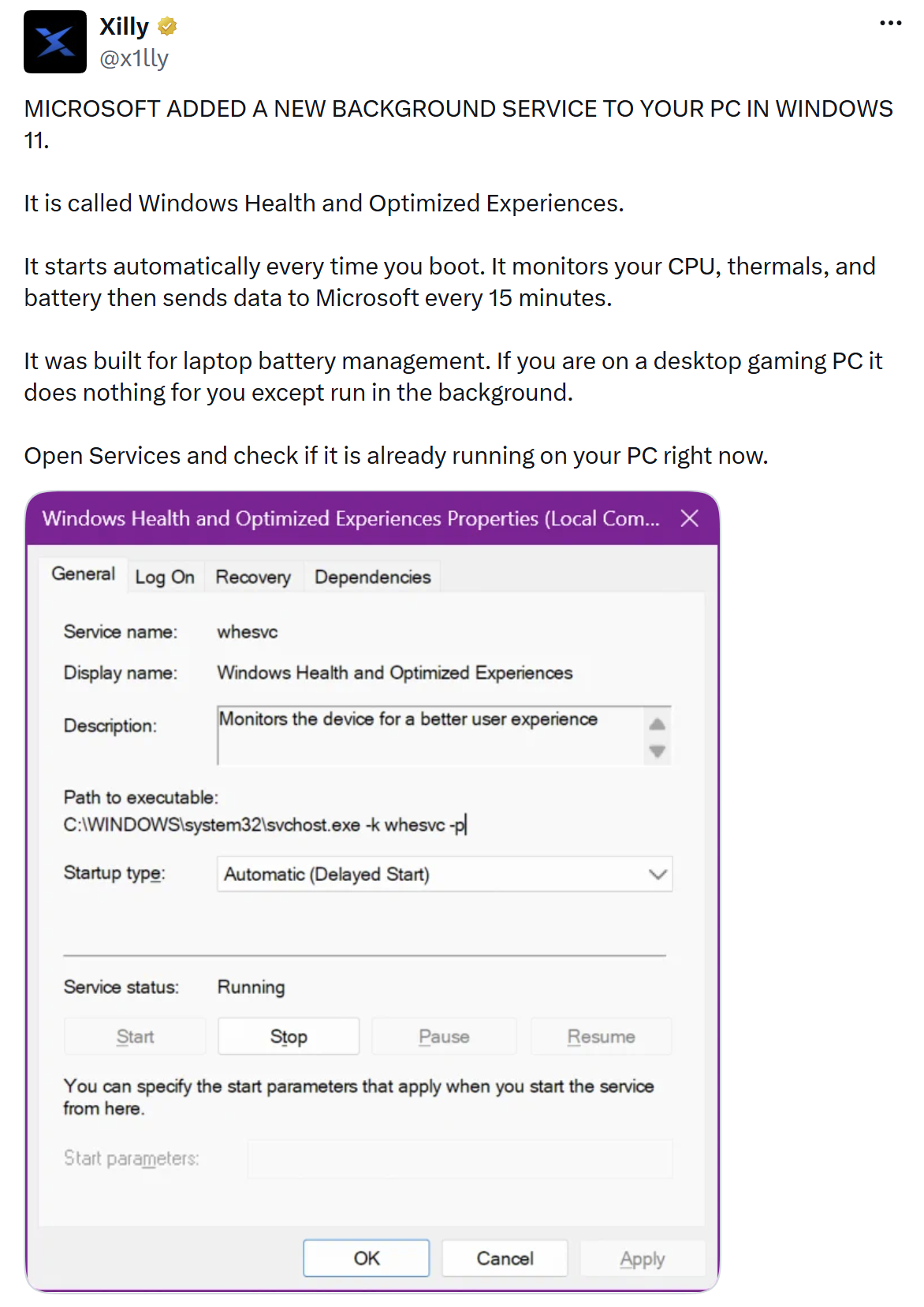
A viral Windows 11 slowdown claim could affect AI workstation stability—here is Microsoft's response.
30-Second TL;DR
What Changed
A viral post on X accused Windows 11 of adding a background service that slows systems.
Why It Matters
The clarification may help AI teams avoid disabling legitimate Windows maintenance or health services based on an unverified rumor. It also highlights the importance of validating operating-system performance claims before changing managed developer environments.
What To Do Next
Before disabling any Windows 11 background service on AI workstations, verify its documented purpose and measure CPU, memory, and I/O usage in a controlled test.
Key Points
- •A viral post on X accused Windows 11 of adding a background service that slows systems.
- •Microsoft GitHub vice president and technical fellow Scott Hanselman publicly rejected the claim.
- •Hanselman provided an explanation of the service's intended purpose.
- •The response focuses on correcting misinformation rather than announcing a new Windows feature.
Deep Insight
AI-generated analysis for this event — not the original article.
Enhanced Key Takeaways
- •The viral claim originated from a misinterpretation of a Windows diagnostic service, often identified by users as 'AppxPackaging.dll' or related telemetry processes that spiked CPU usage during idle times.
- •Scott Hanselman clarified that the service in question is part of the Windows 'Connected User Experiences and Telemetry' framework, which is designed to maintain system health and update compatibility manifests.
- •Independent security researchers analyzed the service's binary and confirmed it performs cryptographic signing checks for installed applications rather than executing artificial throttling algorithms.
- •Microsoft has faced recurring 'bloatware' accusations regarding Windows 11, leading to increased community scrutiny of background processes that consume system resources without explicit user triggers.
- •The incident highlights a growing trend of 'tech-misinformation' on social media platforms where standard OS maintenance tasks are frequently mischaracterized as malicious or performance-degrading features.
Technical Deep Dive
- The service identified in the controversy is linked to the Windows Telemetry (DiagTrack) and the App Readiness service.
- These services utilize the Windows Task Scheduler to perform background tasks such as verifying app package integrity, checking for store updates, and collecting diagnostic data.
- Performance degradation reported by users is often attributed to the 'Background Intelligent Transfer Service' (BITS) or 'Windows Update' processes running concurrently with these diagnostic tasks.
- The architecture relies on the 'Service Host' (svchost.exe) container, which groups multiple system services, making it difficult for average users to isolate the specific process causing CPU spikes.
Future ImplicationsAI analysis grounded in cited sources
Timeline
- 2021-10Windows 11 is officially released to the public.
- 2023-09Microsoft introduces Copilot integration, raising new questions about background resource usage.
- 2025-05Microsoft updates its telemetry privacy policy to provide more detail on background diagnostic services.
- 2026-08Scott Hanselman publicly addresses and debunks the 'slowdown service' rumor.
Weekly AI Recap
Read this week's curated digest of top AI events →
Related Updates

AI-curated news aggregator. All content rights belong to original publishers.
Original source: cnBeta (Full RSS) ↗
This is a summary, not the original. Read the source, or get the weekly briefing.
The weekly digest
One email a week. Unsubscribe anytime.