Meta’s $17.1B Youth Safety Settlement
💡Meta’s settlement may turn addictive AI-powered product design into a direct compliance obligation.
⚡ 30-Second TL;DR
What Changed
Meta will pay approximately $12.1 billion unconditionally over 10 years, while $5.02 billion is contingent on competitors adopting comparable compliance measures.
Why It Matters
The agreement could establish a regulatory template that makes platform architecture, recommendation systems, and engagement mechanics direct sources of legal liability. AI and social-product teams may face stronger expectations to provide auditable defaults, age-aware controls, and non-personalized recommendation modes.
What To Do Next
Audit your AI-driven recommendation or engagement features for age-based defaults, autoplay behavior, usage limits, and an easily accessible non-personalized mode.
Key Points
- •Meta will pay approximately $12.1 billion unconditionally over 10 years, while $5.02 billion is contingent on competitors adopting comparable compliance measures.
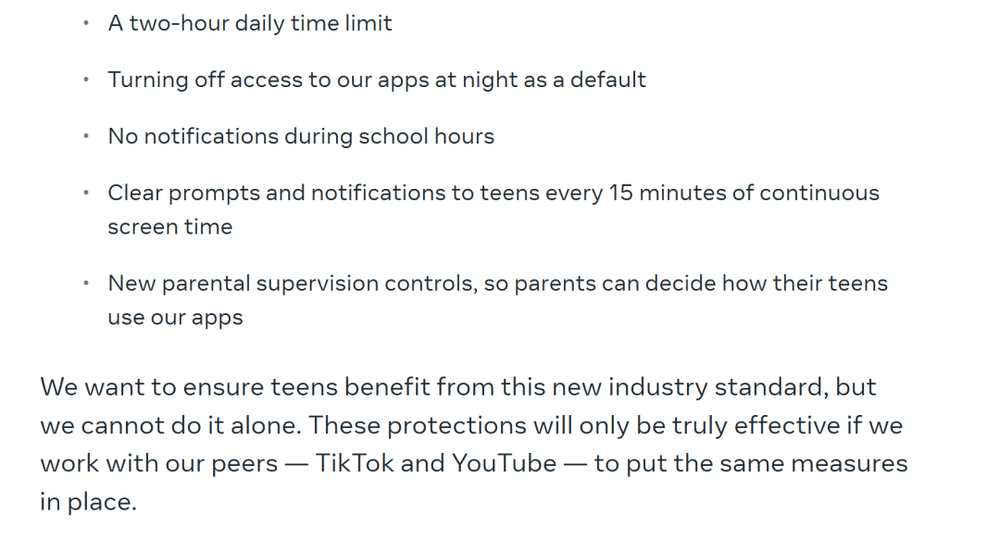
- •First-stage requirements for U.S. users aged 13–17 include a two-hour daily limit, usage reminders, nighttime and school modes, hidden like counts, disabled cosmetic-surgery filters, and non-personalized feeds.
- •A second stage could reduce daily platform access to roughly one hour for 10 years if TikTok, YouTube, and Snap accept equivalent obligations.
- •The settlement shifts regulatory focus from user content to addictive product-design mechanisms such as infinite scroll, autoplay, social comparison, and recommendation algorithms.
🧠 Deep Insight
Background and context from public sources — not the original article. 10 sources cited.
🔑 Enhanced Key Takeaways
- •The settlement represents the largest state-led consumer protection agreement in U.S. history, surpassing all previous settlements since the 1990s Big Tobacco Master Settlement Agreement.
- •The agreement includes a resolution to long-standing investigations regarding Meta's historical data-sharing practices, specifically referencing the Cambridge Analytica scandal.
- •Meta is required to undergo annual independent compliance audits for a period of five years to verify the implementation of the mandated safety features.
- •The settlement explicitly includes a 'no admission of wrongdoing' clause, allowing Meta to resolve the litigation without legal liability for the alleged harms.
- •The operational mandates include specific time-based restrictions, such as a mandatory platform blackout period for teen users between midnight and 6:00 a.m.
📊 Competitor Analysis▸ Show
| Feature | Meta (Post-Settlement) | TikTok/YouTube/Snap (Pre-Settlement) |
|---|---|---|
| Daily Time Limit | 2 Hours (Mandatory) | Variable/User-Controlled |
| Nighttime Access | Blocked (00:00-06:00) | Unrestricted |
| Feed Algorithm | Optional Chronological | Default Algorithmic |
| Compliance Audit | Independent (Annual) | Internal/Self-Regulated |
| Beauty Filters | Disabled for Minors | Enabled |
🛠️ Technical Deep Dive
- Implementation of a hard-coded gatekeeper for account age verification to enforce the 13-17 age bracket restrictions.
- Integration of a chronological feed toggle that bypasses the primary engagement-based recommendation engine (ranking model).
- Deployment of system-level notification suppressors triggered by geofencing or local time settings during school hours (08:00-15:00).
- Modification of the UI/UX layer to strip social proof metrics (Like counts) and cosmetic-altering AR filters for verified minor accounts.
🔮 Future ImplicationsAI analysis grounded in cited sources
⏳ Timeline
📎 Sources (10)
Factual claims are grounded in the sources below. Forward-looking analysis is AI-generated interpretation.
Weekly AI Recap
Read this week's curated digest of top AI events →
👉Related Updates

AI-curated news aggregator. All content rights belong to original publishers.
Original source: 虎嗅 ↗
This is a summary, not the original. Read the source, or get the weekly briefing.
Weekly AI briefing
One email a week. Unsubscribe anytime.