Meta Employees Protest Mouse Tracking Software
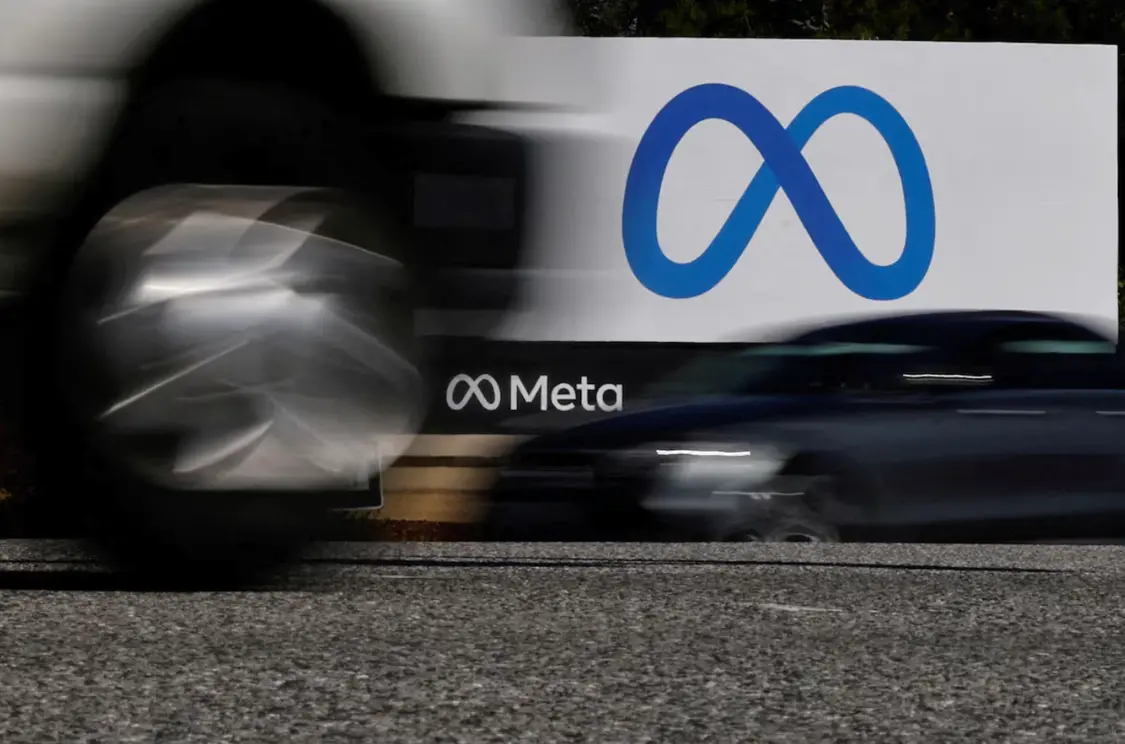
A cautionary tale for AI builders on the ethical and legal limits of workplace monitoring and productivity tracking.
30-Second TL;DR
What Changed
Meta installed mouse tracking software on employee workstations.
Why It Matters
This highlights the growing tension between AI-driven productivity monitoring tools and employee privacy/labor rights in big tech.
What To Do Next
If developing employee monitoring or productivity AI, ensure transparency and ethical compliance to avoid labor disputes and legal risks.
Key Points
- •Meta installed mouse tracking software on employee workstations.
- •Employees are organizing via petitions and flyers in US offices.
- •Protest cites the National Labor Relations Act regarding working conditions.
Deep Insight
Background and context from public sources — not the original article. 17 sources cited.
Enhanced Key Takeaways
- •The controversial software is officially named the "Model Capability Initiative" (MCI) or "Agent Transformation Accelerator" (ATA).
- •Meta's stated rationale for implementing the software is to gather real-world data, including mouse movements, clicks, keystrokes, and screenshots, to train its AI agents to autonomously navigate software and perform complex computing tasks.
- •Employees are concerned that the software constitutes intrusive workplace surveillance and that the AI agents being trained could ultimately automate and replace their own jobs, a fear heightened by impending layoffs.
- •Beyond US offices, a parallel unionization effort is underway in the UK, with Meta employees organizing with United Tech and Allied Workers (UTAW) in response to the tracking program.
- •The tracking software operates on a specific list of work-related applications and websites, such as Gmail, GChat, and Metamate, and does not extend to personal phones.
Technical Deep Dive
- The Model Capability Initiative (MCI) or Agent Transformation Accelerator (ATA) software is installed on work computers of US-based Meta employees and contractors.
- It is designed to capture granular user interaction data, specifically mouse movements, clicks, and keystrokes.
- The software also takes occasional screenshots of the content displayed on employees' screens.
- Data collection is limited to a designated set of work-related applications and websites, which reportedly include platforms like Gmail, GChat, and Meta's internal AI assistant, Metamate.
- Meta asserts that safeguards are implemented to protect sensitive content and that the collected data will exclusively be used for AI model training, not for performance evaluations or other purposes.
- The primary technical objective is to feed this human interaction data into Meta's AI training pipeline to enable AI agents to learn and replicate how humans navigate and utilize computer software autonomously.
Future ImplicationsAI analysis grounded in cited sources
Timeline
- 2022-10-31NLRB General Counsel issued Memorandum 23-02, expressing concerns that electronic monitoring could interfere with employees' NLRA rights.
- 2023-03-07The NLRB and Consumer Financial Protection Bureau (CFPB) announced a partnership to address employer surveillance and data collection.
- 2025-02-18The NLRB's acting general counsel rescinded previous guidance memos, including GC 23-02, potentially altering the regulatory landscape for employee monitoring.
- 2026-01Meta CEO Mark Zuckerberg declared 2026 as the year AI would 'dramatically change the way that we work.'
- 2026-04-22Meta internally announced the Model Capability Initiative (MCI), a program to install tracking software on employee computers for AI training.
- 2026-05-13Meta employees initiated protests in US offices, distributing flyers and petitions against the mouse tracking software.
Sources (17)
Factual claims are grounded in the sources below. Forward-looking analysis is AI-generated interpretation.
Weekly AI Recap
Read this week's curated digest of top AI events →
Related Updates

AI-curated news aggregator. All content rights belong to original publishers.
Original source: cnBeta (Full RSS) ↗
This is a summary, not the original. Read the source, or get the weekly briefing.
The weekly digest
One email a week. Unsubscribe anytime.