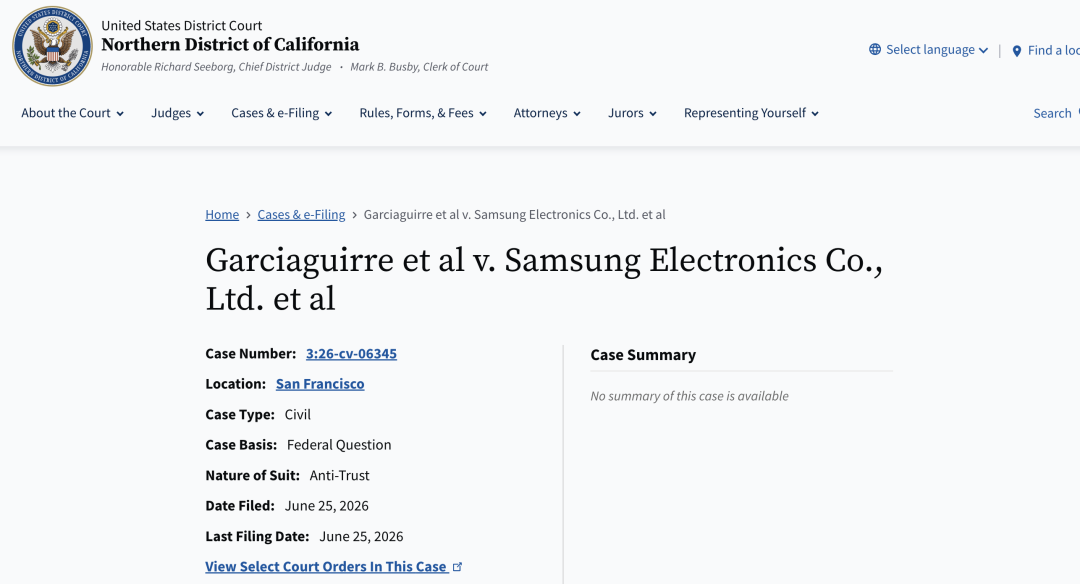
Memory giants sued over DRAM price manipulation
💡Understand how the AI hardware boom is causing a global memory supply crisis and impacting infrastructure costs.
⚡ 30-Second TL;DR
What Changed
Memory giants accused of colluding to restrict supply of traditional DRAM.
Why It Matters
The shift toward HBM production creates a long-term supply constraint for standard memory, likely keeping hardware costs high for AI infrastructure and consumer devices.
What To Do Next
Factor in long-term memory cost volatility when planning hardware procurement for AI server deployments.
Key Points
- •Memory giants accused of colluding to restrict supply of traditional DRAM.
- •AI-driven demand for HBM is cannibalizing production capacity for consumer electronics.
- •DRAM prices have surged 700% over the past four years, impacting global hardware costs.
🧠 Deep Insight
AI-generated analysis for this event — not the original article.
🔑 Enhanced Key Takeaways
- •The lawsuit alleges that the 'Big Three' memory manufacturers utilized coordinated production cuts under the guise of inventory correction to artificially inflate DRAM spot prices.
- •Plaintiffs argue that the shift toward High Bandwidth Memory (HBM) was used as a strategic pretext to reduce the output of legacy DDR4 and DDR5 chips, thereby creating artificial scarcity.
- •Regulatory bodies in multiple jurisdictions, including the EU and the US, have previously investigated these firms for similar anti-competitive behavior in the early 2000s, establishing a legal precedent for price-fixing allegations.
- •The surge in DRAM pricing has disproportionately affected the enterprise server market, where memory costs now constitute a significantly higher percentage of total Bill of Materials (BOM) compared to 2022 levels.
- •Legal filings suggest that internal communications between executives at the three firms may have been synchronized during industry trade conferences, potentially violating antitrust statutes regarding information sharing.
🛠️ Technical Deep Dive
- HBM3e and HBM4 architectures require significantly larger die sizes and complex TSV (Through-Silicon Via) stacking processes compared to standard DDR5 DRAM.
- The manufacturing process for HBM involves a multi-step bonding process that consumes approximately 2x to 3x the wafer capacity of traditional DRAM per gigabyte of output.
- Production yield rates for high-density HBM are lower than legacy DRAM, leading manufacturers to prioritize these chips to maximize revenue per wafer in a constrained supply environment.
🔮 Future ImplicationsAI analysis grounded in cited sources
⏳ Timeline
Weekly AI Recap
Read this week's curated digest of top AI events →
👉Related Updates


AI-curated news aggregator. All content rights belong to original publishers.
Original source: 虎嗅 ↗
This is a summary, not the original. Read the source, or get the weekly briefing.
The weekly digest
One email a week. Unsubscribe anytime.