Mastering 4 AI Coding Loop Patterns with Claude Code
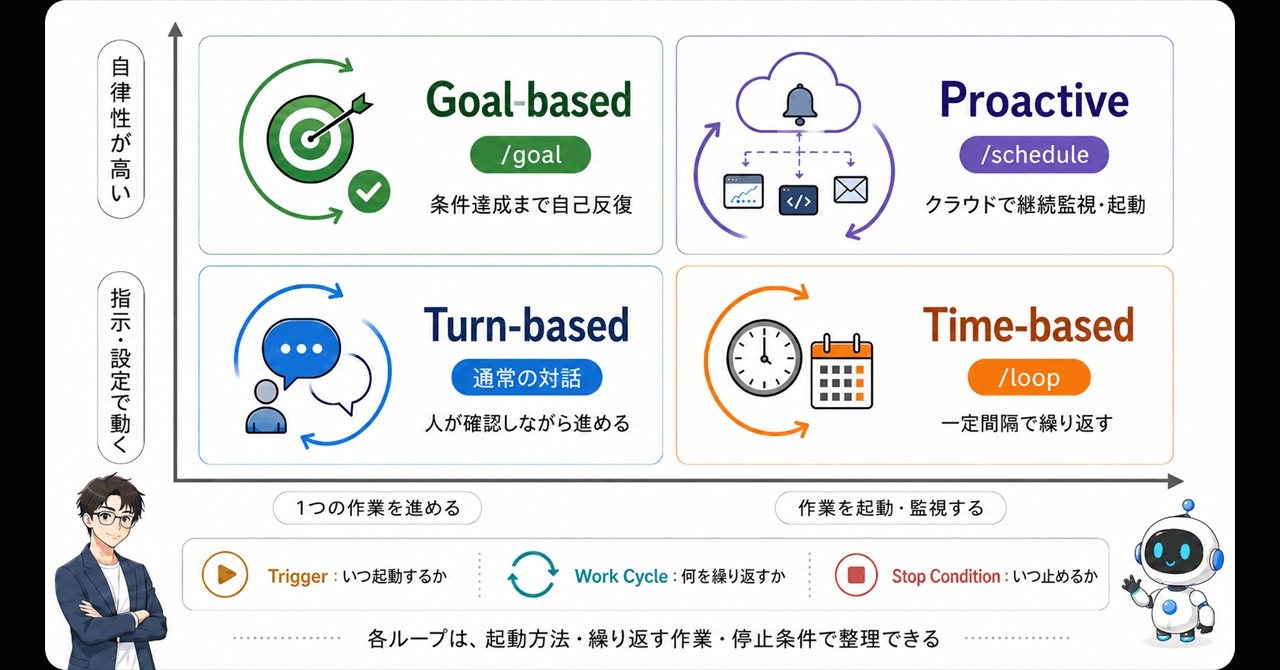
💡Learn the 4 essential patterns for AI coding to improve your efficiency and control when using Claude Code.
⚡ 30-Second TL;DR
What Changed
Categorization of AI coding workflows into 4 distinct loop types
Why It Matters
Provides a mental model for developers to optimize their interaction with AI coding agents, reducing errors and improving productivity.
What To Do Next
Review your current AI coding workflow and map it to one of the 4 Anthropic loop patterns to identify where you should add manual checkpoints.
Key Points
- •Categorization of AI coding workflows into 4 distinct loop types
- •Guidance on task delegation between human and AI
- •Best practices for maintaining control during AI-assisted development
🧠 Deep Insight
AI-generated analysis for this event — not the original article.
🔑 Enhanced Key Takeaways
- •Claude Code functions as an agentic CLI tool that executes commands, reads files, and manages git operations directly within the developer's local environment.
- •The four loop patterns—'Plan', 'Execute', 'Verify', and 'Refine'—are designed to mitigate hallucinations by enforcing structured checkpoints in the AI's autonomous workflow.
- •Anthropic emphasizes 'human-in-the-loop' security by requiring explicit user approval for destructive actions like file deletion or executing arbitrary shell commands.
- •The tool leverages Claude 3.5 Sonnet's enhanced reasoning capabilities to navigate complex codebases and resolve dependency issues that typically stall smaller models.
- •Integration with existing IDEs and terminal workflows allows Claude Code to maintain context across multi-file refactoring tasks, reducing the need for manual copy-pasting.
📊 Competitor Analysis▸ Show
| Feature | Claude Code | GitHub Copilot Workspace | Cursor (Composer) |
|---|---|---|---|
| Primary Interface | CLI-first | IDE-integrated | IDE-integrated |
| Agentic Autonomy | High (System-level) | Medium (Task-focused) | High (Context-aware) |
| Pricing Model | Usage-based (API) | Subscription | Subscription + Usage |
| Core Strength | Terminal/Git workflow | GitHub ecosystem | Deep IDE integration |
🛠️ Technical Deep Dive
- Claude Code operates as a local agentic process that utilizes a system prompt to define its operational boundaries and tool-use capabilities.
- It employs a persistent state machine to track the 'loop' status, ensuring the model does not deviate from the current task phase (Plan vs. Execute).
- The tool utilizes a secure sandbox environment for executing code, preventing unauthorized access to sensitive system files or environment variables.
- It supports multi-turn reasoning by maintaining a local context window that summarizes previous loop iterations to optimize token usage.
🔮 Future ImplicationsAI analysis grounded in cited sources
⏳ Timeline
Weekly AI Recap
Read this week's curated digest of top AI events →
👉Related Updates

AI-curated news aggregator. All content rights belong to original publishers.
Original source: ITmedia AI+ (日本) ↗
This is a summary, not the original. Read the source, or get the weekly briefing.
Weekly AI briefing
One email a week. Unsubscribe anytime.