Major kitchen appliance brands face performance stagnation
Traditional hardware sectors are ripe for AI disruption; see where the market is stalling.
30-Second TL;DR
What Changed
Market growth for traditional kitchen appliances is slowing
Why It Matters
The stagnation in traditional kitchen appliances highlights the urgent need for these companies to integrate AI-driven smart home features to regain market share.
What To Do Next
If you are in the smart home sector, look for partnership opportunities with traditional appliance makers who are struggling to modernize their product lines.
Key Points
- •Market growth for traditional kitchen appliances is slowing
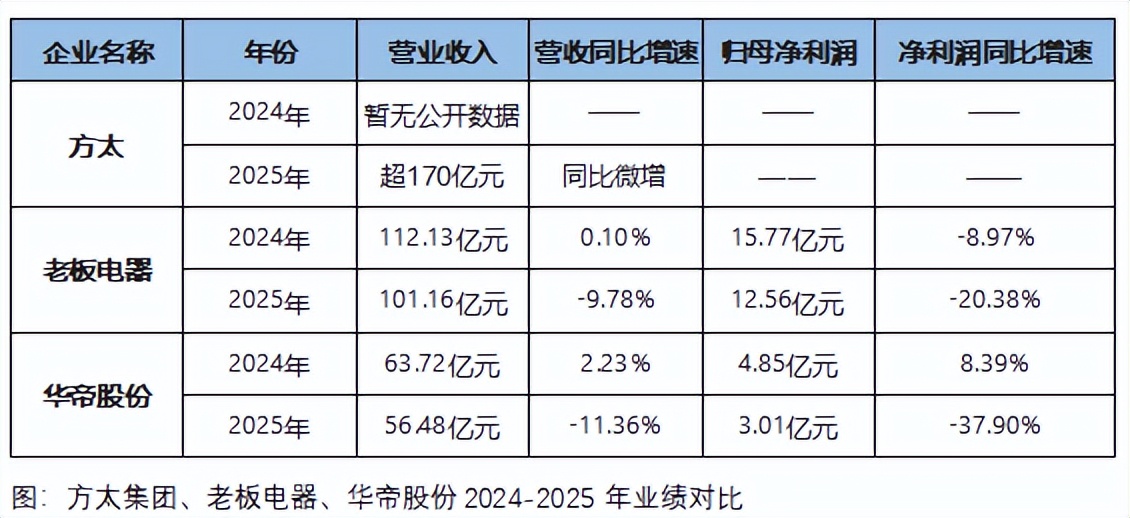
- •The 'Fang-Lao-Hua' trio faces collective performance pressure
- •Industry shift towards smart appliances is accelerating
Deep Insight
Background and context from public sources — not the original article. 17 sources cited.
Enhanced Key Takeaways
- •The overall China kitchen appliance market is projected to reach USD 62.14 billion by 2031, growing at a CAGR of 2.29% from 2026, with major appliances holding the largest market share in 2024, but small appliances showing the fastest growth.
- •Government initiatives, such as the national 'trade-in' subsidy program launched in August 2024 and renewed in December 2025, significantly boosted home appliance consumption in China, contributing to a 4.8% revenue increase for the sector in the first half of 2025.
- •The penetration rate of AI home appliances in China exceeded 50% in 2025, with intelligence becoming a mainstream commercial language and a shift occurring from single smart products to interconnected systems.
- •Robam, a leading Chinese kitchen appliance manufacturer, reported a decline in financial performance for Q1 2026, with sales down to CNY 1,962.94 million from CNY 2,076.19 million a year ago, and net income falling to CNY 306.64 million from CNY 340.02 million.
- •Chinese brands are increasingly focusing on full-category competition and 'active intelligence' with personalized adaptation, moving beyond simple home linkages, as seen with companies like Hisense leveraging its Xinghai large model for various AI agents.
Technical Deep Dive
- AI Mega Models for Cooking: Robam has launched the 'Culinary Master AI Mega Model' tailored for cooking, which can recommend recipes based on fridge contents and link with digital kitchen appliances for automatic stove adjustments.
- AI Cooking Glasses: Robam's AI cooking glasses can recognize ingredients, sense stove heat, and provide real-time prompts to the user.
- IoT and AI Integration: Chinese home appliance giants like Haier Group are combining AI, IoT, and large-model technology to create smart home brains that make services proactive, such as air conditioners adjusting fresh-air functions based on indoor conditions and washing machines identifying fabric types.
- Voice Control and LLMs: Smart ovens feature voice recognition and can connect to large language models (LLMs) to offer recipe suggestions and automatically set cooking parameters.
- AI Eye Technology: Haier's smart refrigerators are equipped with 'AI eye technology' that automatically identifies and records information about ingredients, including type, time, and location.
- Integrated Screens: Appliances like gas stoves are being integrated with screens that display instructional cooking videos.
- Smart Sensors and Adaptive Control: Smart ovens use advanced sensors and AI-driven programs to optimize cooking times and temperatures, while intelligent refrigerators monitor inventory and maintain optimal freshness through adaptive temperature control.
- Cloud-based Platforms: Smart home IoT solutions are built on cloud services (e.g., AWS IoT Core) to connect appliances, manage devices at scale, and enable real-time status updates and remote control via mobile apps.
Future ImplicationsAI analysis grounded in cited sources
Timeline
- 2024-08China launches national home appliance 'trade-in' subsidy program to boost consumption.
- 2025-02-24Fotile introduces its FreshBake™ Range at KBIS 2025, featuring patented air purification technology.
- 2025-04-24China's '2025 China Home Appliance Consumption Trend White Paper' highlights upgrading to smarter appliances as a major trend, with smart products accounting for over 50% of retail volume in several categories in 2024.
- 2025-08-27Hangzhou Robam Appliances Co., Ltd. reports decreased sales and net income for the half year ended June 30, 2025.
- 2025-12China's national home appliance trade-in subsidy program is renewed, though with fewer categories and reduced incentives.
- 2026-04-28Hangzhou Robam Appliances Co., Ltd. reports a decline in sales and net income for the first quarter ended March 31, 2026.
Sources (17)
Factual claims are grounded in the sources below. Forward-looking analysis is AI-generated interpretation.
Weekly AI Recap
Read this week's curated digest of top AI events →
AI-curated news aggregator. All content rights belong to original publishers.
Original source: 钛媒体 ↗
This is a summary, not the original. Read the source, or get the weekly briefing.
The weekly digest
One email a week. Unsubscribe anytime.