macOS Golden Gate integrates Siri AI into Spotlight
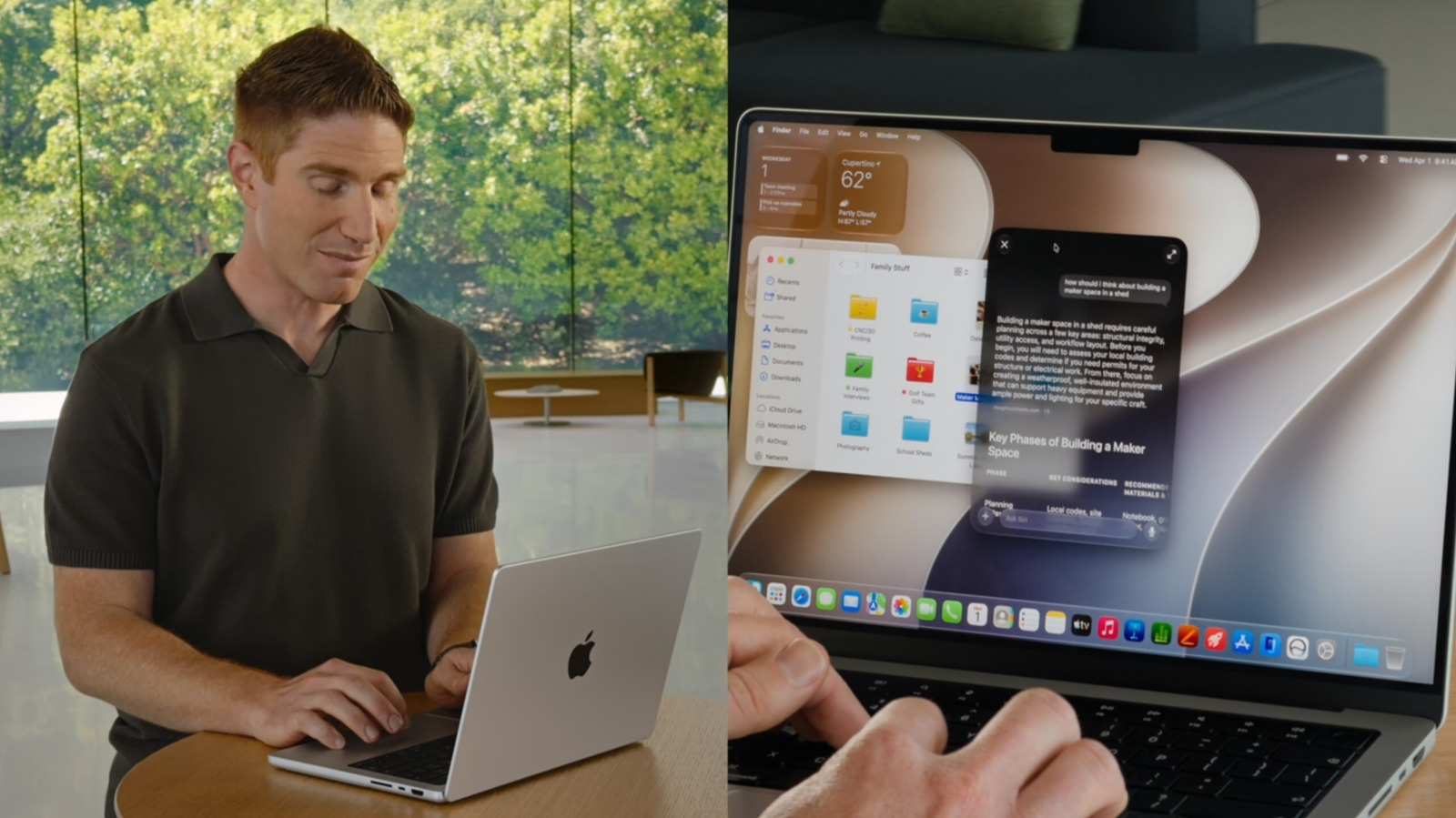
💡Spotlight is becoming an AI agent. Learn how this shift affects system-level search and data retrieval.
⚡ 30-Second TL;DR
What Changed
Siri AI integrated into Spotlight
Why It Matters
Integrating AI into the OS search layer transforms Spotlight from a simple launcher into a proactive intelligent assistant. This increases the utility of local file and web search for power users.
What To Do Next
Prepare your local file indexing strategies to ensure compatibility with the new AI-enhanced Spotlight search.
Key Points
- •Siri AI integrated into Spotlight
- •Enhanced system-wide search intelligence
- •Part of macOS Golden Gate update
🧠 Deep Insight
Background and context from public sources — not the original article. 24 sources cited.
🔑 Enhanced Key Takeaways
- •The macOS Golden Gate update, officially named macOS 27, will exclusively support Apple's M-series Macs, ending compatibility for Intel-powered Macs and Rosetta 2 after seven years.
- •Siri AI has been rebuilt with a new architecture for Apple Intelligence, featuring deep system-wide understanding of personal context, on-screen awareness, and leveraging next-generation Apple Foundation Models, with a partnership with Google to integrate Gemini AI for broad world knowledge.
- •Beyond Spotlight integration, Siri AI will include a dedicated app to store and sync conversation history across all Apple devices, including iPhone, iPad, Mac, Apple Watch, and Vision Pro.
- •The integration allows users to type questions directly into Spotlight, which intelligently recognizes and routes AI-related queries to Siri AI, and also enables contextual questions by right-clicking on files.
- •Siri AI will not be available initially in the European Union on iOS and iPadOS due to complexities related to the Digital Markets Act (DMA) regulations.
📊 Competitor Analysis▸ Show
While direct feature-by-feature comparison tables for OS-level generative AI search are still emerging, key competitors in the broader generative AI and intelligent assistant space include:
| Feature / Company | Apple (Siri AI / Apple Intelligence) | Google (Gemini / Google Assistant) | Microsoft (Copilot / Azure AI) | Amazon (Alexa / AWS Bedrock) |
|---|---|---|---|---|
| Generative AI Integration | Deeply integrated into macOS Spotlight, iOS, iPadOS, watchOS, visionOS; system-wide context and on-screen awareness. | Integrated across Android, Chrome OS, Google Search, and Google Cloud (Vertex AI); powers various AI assistants and services. | Integrated into Windows (Copilot), Microsoft 365, Azure AI services; leverages OpenAI models (GPT-5, DALL-E 3). | Powers Alexa, integrated into AWS Bedrock with various foundation models (Titan, third-party). |
| On-device vs. Cloud Processing | Emphasizes on-device processing for privacy, with Private Cloud Compute for complex queries using Apple Silicon. | Utilizes both on-device and cloud processing; Google Fuchsia aims for native Gemini integration. | Primarily cloud-based for complex tasks (Azure AI); some on-device capabilities. | Primarily cloud-based (AWS Bedrock, cloud-hosted FMs). |
| Privacy Focus | Strong emphasis on privacy with on-device processing and Private Cloud Compute designed to prevent data storage/access by Apple. | Offers privacy controls; data handling varies by service and user settings. | Enterprise-grade security and compliance for Azure AI; data handling policies for Copilot. | Data privacy and security measures for AWS services; customer control over data in Bedrock. |
| Ecosystem Reach | Unified experience across iPhone, iPad, Mac, Apple Watch, Vision Pro, HomePod, Apple TV. | Extensive reach across Android, Chrome, Google Search, smart home devices, and enterprise cloud. | Integrated across Windows, Xbox, Microsoft 365, Azure, and enterprise solutions. | Powers Echo devices, Fire TV, and integrated into AWS cloud services. |
| Key Differentiator | Personal context understanding, on-screen awareness, and system-wide actions with a strong privacy-first approach. | Broad web knowledge, multimodal capabilities, and deep integration with Google's vast information ecosystem. | Enterprise focus, integration with productivity suites, and access to leading third-party AI models. | Flexible foundation model access via Bedrock, strong cloud infrastructure for AI development. |
🛠️ Technical Deep Dive
- Siri AI is built on a new architecture for Apple Intelligence, leveraging next-generation Apple Foundation Models.
- These models operate both on-device and on servers using Apple's Private Cloud Compute, which is designed to ensure personal data is not stored or made accessible to Apple or others during cloud-bound requests.
- The system orchestrator allows Siri AI to tap into core capabilities like the Spotlight index and App Toolbox, which function entirely on-device to maintain user control over data.
- Apple has partnered with Google to integrate Gemini models, specifically for providing broad world knowledge and up-to-date web information.
- Visual Intelligence features, such as Spatial Reframing and contextual image analysis, are powered by Apple Foundation models and utilize on-device spatial models and Private Cloud Compute.
- Siri's voice synthesis has evolved from human recordings to machine learning and text-to-speech (TTS) technology, generating speech dynamically for smoother, more natural responses.
- The underlying technology for Siri involves natural language processing (NLP) and speech recognition, with NLP breaking down language into syntax (grammar) and semantics (meaning) to interpret user intent.
🔮 Future ImplicationsAI analysis grounded in cited sources
⏳ Timeline
📎 Sources (24)
Factual claims are grounded in the sources below. Forward-looking analysis is AI-generated interpretation.
- macworld.com
- appleinsider.com
- techradar.com
- cnet.com
- tomsguide.com
- apple.com
- 9to5mac.com
- mobilesyrup.com
- apple.com
- nationalcioreview.com
- tomshardware.com
- mashable.com
- ign.com
- techradar.com
- megaport.com
- youtube.com
- binariks.com
- macrumors.com
- iot-analytics.com
- wikipedia.org
- techechelon.com
- pcmag.com
- async.com
- colocationamerica.com
Weekly AI Recap
Read this week's curated digest of top AI events →
👉Related Updates
AI-curated news aggregator. All content rights belong to original publishers.
Original source: Engadget ↗
This is a summary, not the original. Read the source, or get the weekly briefing.
The weekly digest
One email a week. Unsubscribe anytime.