Lynk & Co LiDAR Failures Trigger Supplier Investigation
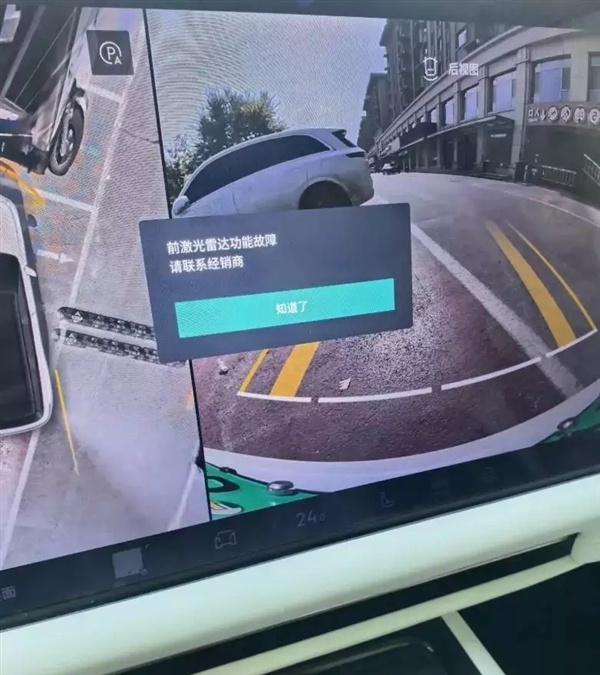
💡A real-world LiDAR failure exposes the reliability gaps autonomous-driving teams must design for.
⚡ 30-Second TL;DR
What Changed
Lynk 10 and Lynk 900 owners reported LiDAR abnormalities during driving.
Why It Matters
A recurring LiDAR failure can reduce the availability and reliability of autonomous-driving features, while also creating safety and service risks. For AI and robotics teams, the incident highlights the need for robust sensor-health monitoring and graceful fallback behavior.
What To Do Next
Add simulated LiDAR-dropout and corrupted-data cases to your autonomous-driving validation suite, then verify safe fallback behavior.
Key Points
- •Lynk 10 and Lynk 900 owners reported LiDAR abnormalities during driving.
- •Vehicle systems displayed warnings including restricted driver assistance and front LiDAR failure.
- •4S dealerships reportedly identified abnormal LiDAR data through remote diagnostics.
- •Lynk & Co is analyzing the issue with supplier RoboSense.
🧠 Deep Insight
AI-generated analysis for this event.
🔑 Enhanced Key Takeaways
- •The LiDAR units in question are identified as RoboSense's M-series platform, which utilizes a MEMS-based scanning architecture.
- •Initial diagnostic data suggests the failures may be linked to thermal management issues within the LiDAR housing during high-ambient temperature operation.
- •Lynk & Co has initiated a voluntary service campaign to update the firmware of the perception fusion module to better handle intermittent sensor data loss.
- •Industry analysts note that this incident marks one of the first large-scale reliability concerns for RoboSense's second-generation solid-state LiDARs in mass-market passenger vehicles.
- •Regulatory bodies in China have requested a technical report from Lynk & Co to determine if the LiDAR failure constitutes a safety defect requiring a mandatory recall.
📊 Competitor Analysis▸ Show
| Feature | Lynk & Co (RoboSense) | NIO (Innovusion) | Xpeng (Livox/Hesai) |
|---|---|---|---|
| LiDAR Type | MEMS Solid-State | Fiber Laser | Hybrid Solid-State |
| Typical Range | 200m @ 10% reflectivity | 250m @ 10% reflectivity | 150m-200m @ 10% reflectivity |
| Integration | Roof-mounted | Roof-mounted | Front bumper/Roof |
| Market Segment | Premium Mass Market | Premium/Luxury | Mid-to-High Range |
🛠️ Technical Deep Dive
- The RoboSense M-series utilizes a 905nm laser wavelength, which is standard for cost-effective automotive LiDAR integration.
- The system employs a proprietary MEMS (Micro-Electro-Mechanical Systems) mirror to scan the environment, which is susceptible to mechanical fatigue if vibration damping is insufficient.
- Perception fusion algorithms in the Lynk 10/900 rely on a multi-sensor approach, combining LiDAR point clouds with 8MP cameras and millimeter-wave radar.
- The reported fault alerts are triggered when the perception stack detects a 'confidence score' drop below a predefined threshold for more than 500 milliseconds.
🔮 Future ImplicationsAI analysis grounded in cited sources
⏳ Timeline
Weekly AI Recap
Read this week's curated digest of top AI events →
👉Related Updates



AI-curated news aggregator. All content rights belong to original publishers.
Original source: cnBeta (Full RSS) ↗