Luming Robotics Shifts From Robots to Skills
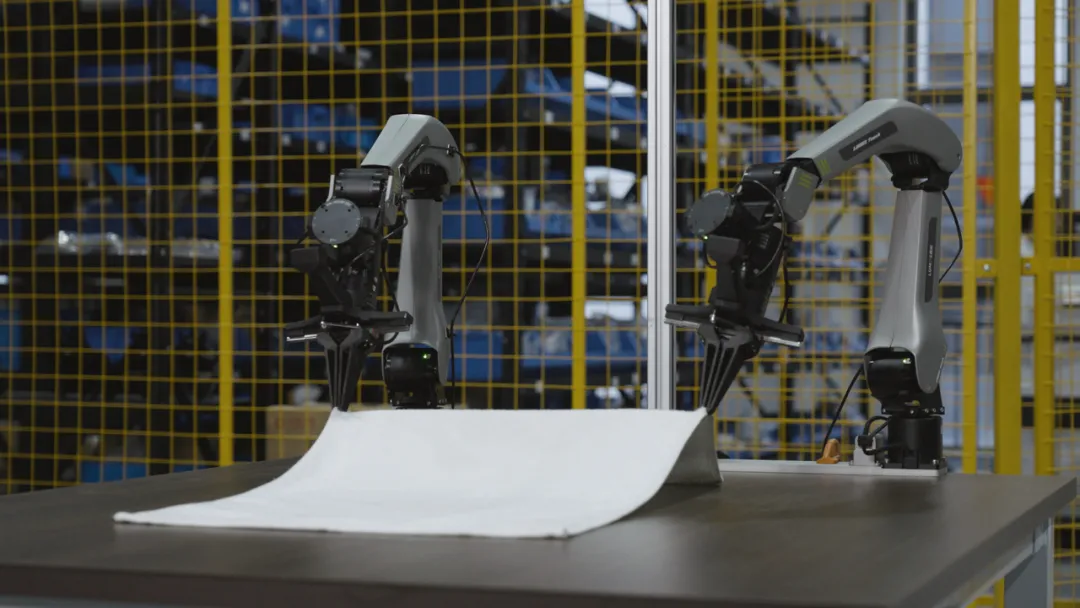
💡See why embodied AI may compete on reusable task skills rather than robot hardware alone.
⚡ 30-Second TL;DR
What Changed
Yu Chao frames the next stage of embodied AI as a shift from robot manufacturing to skill development.
Why It Matters
This perspective could redirect investment from general-purpose hardware toward skill libraries, data collection, and task-level evaluation. For AI builders, it highlights the importance of co-designing models, control policies, and hardware around specific workflows.
What To Do Next
Choose one narrow physical task and document its required perception, planning, control, data, and hardware skills before selecting a robot platform.
Key Points
- •Yu Chao frames the next stage of embodied AI as a shift from robot manufacturing to skill development.
- •The core principle is that tasks determine both required capabilities and robot form factors.
- •The strategy suggests reusable task skills may become a key differentiator for embodied-AI companies.
🧠 Deep Insight
AI-generated analysis for this event.
🔑 Enhanced Key Takeaways
- •Luming Robotics has transitioned its focus toward 'General Purpose Skill Sets' (GPSS), aiming to decouple robotic intelligence from specific hardware chassis to allow software portability across different robot embodiments.
- •The company is leveraging a proprietary 'Skill-Task-Hardware' mapping framework that prioritizes data efficiency in simulation-to-real (Sim2Real) transfer for complex manipulation tasks.
- •Yu Chao's strategy involves building a 'Skill Library' that utilizes foundation models to generalize motor control, reducing the need for retraining robots when hardware form factors change.
- •Luming Robotics has recently integrated multimodal large language models (MLLMs) to interpret natural language instructions into executable skill sequences, moving away from traditional hard-coded robot programming.
- •The shift is partially driven by the high cost and slow iteration cycles of custom hardware, leading the company to adopt an 'asset-light' approach that focuses on licensing software stacks to third-party hardware manufacturers.
📊 Competitor Analysis▸ Show
| Feature | Luming Robotics | Figure AI | Tesla (Optimus) |
|---|---|---|---|
| Core Focus | Skill-centric software portability | Integrated humanoid hardware/AI | Mass-produced humanoid hardware |
| Business Model | Software/Skill licensing | Full-stack hardware/AI | Full-stack hardware/AI |
| Hardware Strategy | Agnostic (Hardware-independent) | Proprietary humanoid | Proprietary humanoid |
🛠️ Technical Deep Dive
- Architecture utilizes a hierarchical control system where a high-level MLLM planner decomposes tasks into primitive skill tokens.
- Implements a Transformer-based policy network trained on large-scale teleoperation data to predict joint torques.
- Employs a modular skill-embedding space that allows for the composition of new behaviors by chaining pre-trained skill primitives.
- Uses a unified observation space that normalizes sensor inputs (RGB-D, tactile, proprioception) across different robot morphologies.
🔮 Future ImplicationsAI analysis grounded in cited sources
⏳ Timeline
Weekly AI Recap
Read this week's curated digest of top AI events →
👉Related Updates



AI-curated news aggregator. All content rights belong to original publishers.
Original source: 钛媒体 ↗