🐯虎嗅•Stalecollected in 47m
Loongson Zhongke Losses Persist 3 Years Post-IPO
💡Chinese CPU leader's losses signal infra hurdles for non-Nvidia AI compute alternatives
⚡ 30-Second TL;DR
What Changed
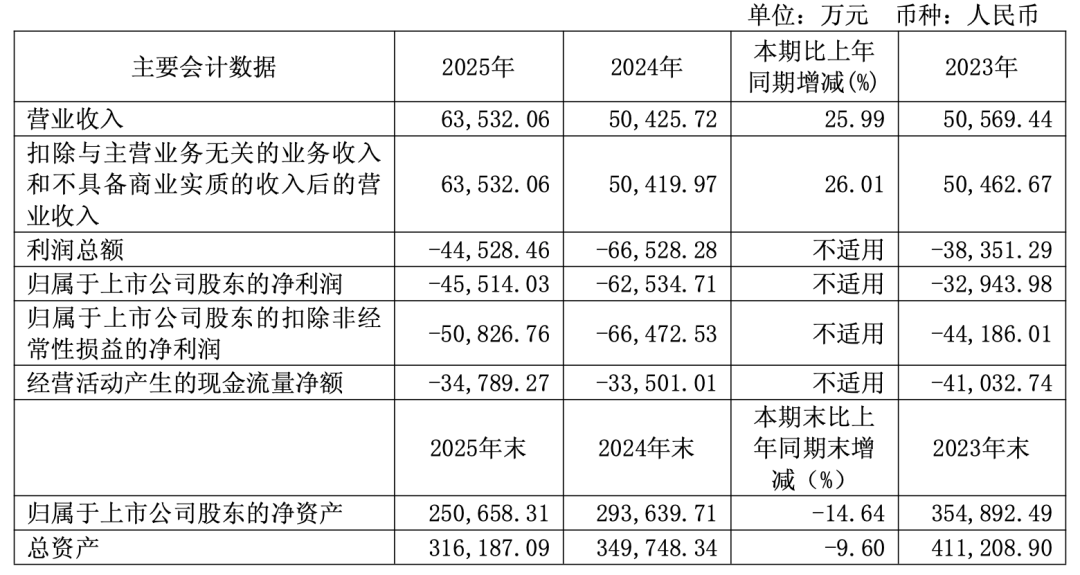
2025 revenue 635M CNY (+26%), net loss 455M CNY (3rd year)
Why It Matters
Exposes challenges for domestic CPU firms in scaling beyond policy niches, with high costs and slow cash conversion limiting competition in open markets.
What To Do Next
Test Loongson CPUs via IP licensing for secure, domestic AI inference in edge govt applications.
Who should care:Researchers & Academics
Key Points
- •2025 revenue 635M CNY (+26%), net loss 455M CNY (3rd year)
- •Cumulative post-IPO losses 14.09B CNY; Q1 2026 loss 114M CNY
- •Receivables 679M CNY (15% assets) with 207M bad debt provision
- •Focus on policy markets like e-gov, security; LoongArch IP licensing
- •Cut R&D staff to sales for market push, revenue from prior R&D
🧠 Deep Insight
AI-generated analysis for this event.
🔑 Enhanced Key Takeaways
- •Loongson's financial strain is exacerbated by the 'Xinchuang' (IT innovation) policy cycle, where long payment cycles from government-backed clients create a structural mismatch between R&D expenditure and cash inflow.
- •The company is aggressively pivoting its LoongArch architecture toward the consumer PC and industrial control markets to reduce reliance on government procurement, though these segments face intense price competition from x86 and ARM-based incumbents.
- •Recent shareholder reports indicate that Loongson has begun shifting its business model from pure hardware sales to a hybrid model emphasizing IP licensing and software ecosystem development to monetize its proprietary instruction set architecture.
📊 Competitor Analysis▸ Show
| Feature | Loongson (LoongArch) | Intel/AMD (x86) | Huawei (Kunpeng/ARM) |
|---|---|---|---|
| Architecture | Proprietary (RISC-based) | x86 (CISC) | ARM (RISC) |
| Ecosystem | Developing (Linux-based) | Mature (Windows/Linux) | Strong (Cloud/Server) |
| Market Focus | Gov/Security/Niche | Global/Consumer/Enterprise | Cloud/Data Center |
| Performance | Mid-range (Catching up) | High-end | High-end |
🛠️ Technical Deep Dive
- •LoongArch (LA) instruction set architecture: A RISC-based architecture designed to be independent of foreign IP, featuring over 2,000 instructions.
- •Binary translation technology: Loongson utilizes proprietary 'LAT' (LoongArch Translation) technology to enable the execution of x86 and ARM applications on its native hardware, though with performance overhead.
- •Process node transition: Recent flagship chips (e.g., 3A6000 series) have transitioned to domestic 12nm/7nm-class manufacturing processes to mitigate supply chain risks.
- •Security features: Integrated hardware-level security modules (SM2/SM3/SM4) for cryptographic acceleration, targeting high-security government and military applications.
🔮 Future ImplicationsAI analysis grounded in cited sources
Loongson will likely face a liquidity crisis within 18 months if government receivables do not accelerate.
The current burn rate combined with the high provision for bad debts suggests that the company's cash reserves are insufficient to sustain current R&D levels without external financing or a major market breakthrough.
The company will prioritize software ecosystem compatibility over raw hardware performance in 2026.
Management has signaled that the primary barrier to adoption in open markets is the lack of application software support, necessitating a shift in R&D resources toward binary translation and compiler optimization.
⏳ Timeline
2021-06
Loongson Zhongke completes its IPO on the STAR Market in Shanghai.
2022-07
Loongson officially releases the LoongArch instruction set architecture to the public.
2023-11
Launch of the 3A6000 processor, claiming performance parity with mid-range Intel Core chips.
2024-04
Company reports first full-year net loss post-IPO, citing high R&D costs and market competition.
📰
Weekly AI Recap
Read this week's curated digest of top AI events →
👉Related Updates

AI-curated news aggregator. All content rights belong to original publishers.
Original source: 虎嗅 ↗