Longsys profit surges 744x due to memory cycle
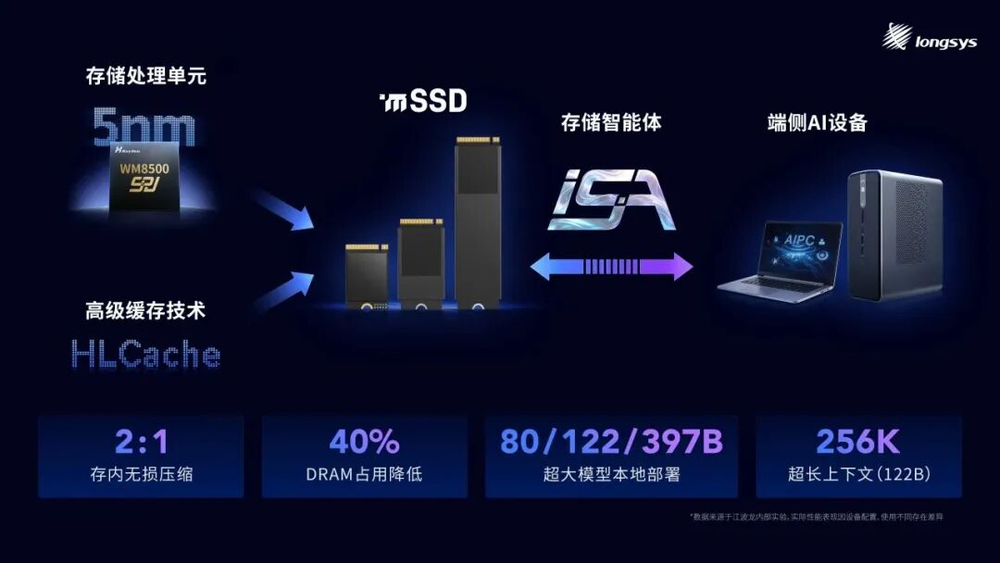
💡Understand how memory supply chain dynamics and inventory strategies drive massive financial shifts in AI hardware.
⚡ 30-Second TL;DR
What Changed
2026 H1 net profit reached 9.2-11 billion RMB, a massive year-over-year increase.
Why It Matters
The case highlights how mid-stream memory module manufacturers can outperform upstream giants through aggressive inventory cycles and capital management.
What To Do Next
Monitor memory spot prices and inventory turnover ratios of hardware suppliers to anticipate potential supply chain cost fluctuations.
Key Points
- •2026 H1 net profit reached 9.2-11 billion RMB, a massive year-over-year increase.
- •Strategic inventory management allowed the company to capitalize on the NAND Flash and DRAM price surge.
- •Longsys maintains strong relationships with upstream wafer manufacturers despite lacking its own fabrication plants.
🧠 Deep Insight
AI-generated analysis for this event — not the original article.
🔑 Enhanced Key Takeaways
- •Longsys has aggressively expanded its global footprint by acquiring Lexar, which serves as a critical channel for its consumer-facing memory products and brand recognition.
- •The company's business model relies heavily on a 'storage module' strategy, where it focuses on firmware development and controller integration to add value to third-party wafers.
- •Longsys has been increasing its R&D investment in enterprise-grade SSDs and embedded storage solutions to reduce reliance on volatile consumer electronics markets.
- •The 2026 profit surge is partially attributed to the company's successful transition into the automotive and industrial storage sectors, which command higher margins than standard consumer modules.
- •Longsys has established a 'dual-brand' strategy, utilizing the Longsys brand for industrial/embedded applications and the Lexar brand for retail and high-performance consumer storage.
📊 Competitor Analysis▸ Show
| Competitor | Business Model | Key Strength | Market Focus |
|---|---|---|---|
| Kingston | Independent Module House | Massive scale & supply chain dominance | Consumer/Enterprise |
| ADATA | Independent Module House | Strong retail brand presence | Consumer/Gaming |
| Phison | Controller/Module Hybrid | Proprietary controller technology | Industrial/Enterprise |
| Longsys | Module/Brand Hybrid | Strategic wafer procurement & Lexar integration | Consumer/Industrial |
🛠️ Technical Deep Dive
- Longsys utilizes a vertically integrated firmware development approach, allowing them to optimize NAND Flash performance and endurance without owning fabrication plants.
- The company employs advanced packaging technologies, including multi-die stacking and high-density BGA (Ball Grid Array) designs for embedded storage (eMMC/UFS).
- Their enterprise SSD architecture incorporates proprietary power-loss protection (PLP) and end-to-end data path protection to meet data center reliability standards.
- Longsys leverages controller partnerships (e.g., with Maxio or Silicon Motion) combined with custom-developed firmware to differentiate their storage products in the competitive module market.
🔮 Future ImplicationsAI analysis grounded in cited sources
⏳ Timeline
Weekly AI Recap
Read this week's curated digest of top AI events →
👉Related Updates


AI-curated news aggregator. All content rights belong to original publishers.
Original source: 虎嗅 ↗
This is a summary, not the original. Read the source, or get the weekly briefing.
Weekly AI briefing
One email a week. Unsubscribe anytime.