Automotive Supplier Giants Face Sudden Decline
💡Understand the shifting power dynamics in automotive supply chains as software replaces legacy hardware.
⚡ 30-Second TL;DR
What Changed
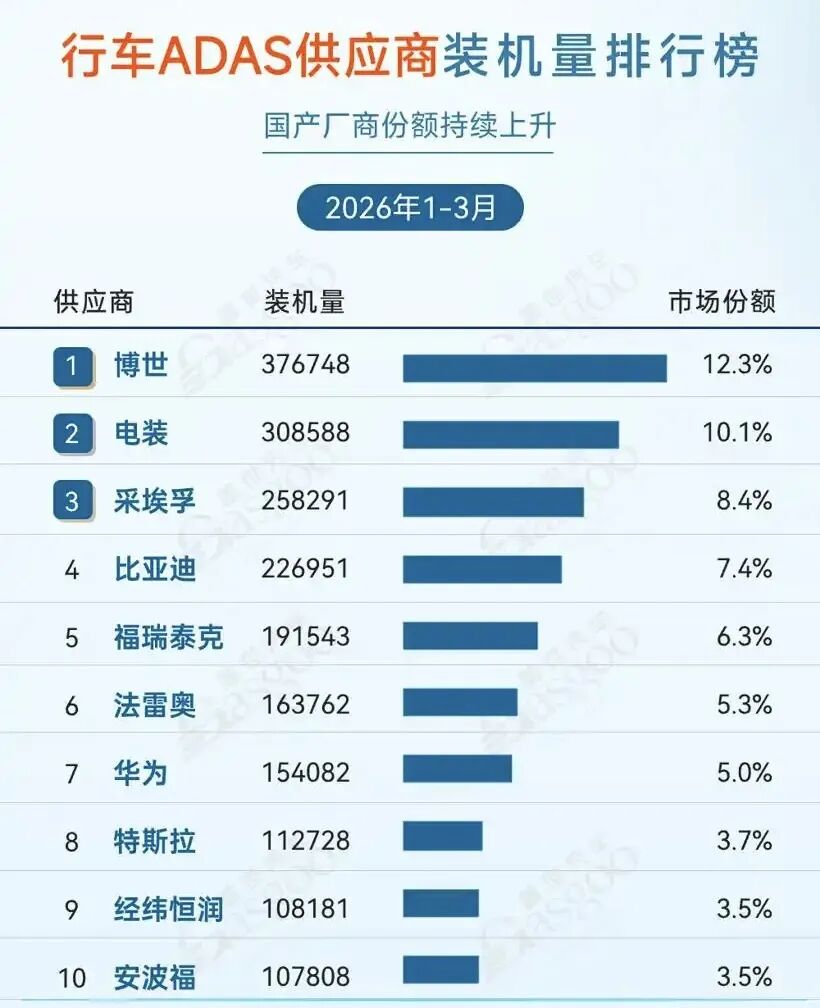
Bosch market share is shrinking significantly
Why It Matters
The decline of legacy suppliers creates opportunities for new, software-defined vehicle (SDV) focused entrants. AI practitioners should monitor how autonomous driving and AI integration shift supplier power dynamics.
What To Do Next
Analyze the software-to-hardware ratio of your current automotive partners to identify potential supply chain risks.
Key Points
- •Bosch market share is shrinking significantly
- •Multiple legacy component manufacturers are filing for bankruptcy
- •Global automotive supply chain is at a critical inflection point
🧠 Deep Insight
AI-generated analysis for this event — not the original article.
🔑 Enhanced Key Takeaways
- •The decline is largely driven by the 'software-defined vehicle' (SDV) transition, where traditional mechanical hardware expertise is being devalued in favor of integrated software stacks.
- •Chinese domestic suppliers, such as CATL and Horizon Robotics, are aggressively capturing market share by offering vertically integrated solutions that legacy European suppliers struggle to match in speed and cost.
- •Rising raw material costs and the high capital expenditure required for EV battery production have severely compressed profit margins for Tier 1 suppliers reliant on internal combustion engine (ICE) components.
- •Major automakers are increasingly adopting 'in-house' strategies for critical components like power electronics and infotainment systems, bypassing traditional Tier 1 suppliers to control the vehicle architecture.
- •Labor union pressures and legacy pension obligations in Germany and the US are creating structural cost disadvantages for established giants compared to agile, tech-focused entrants.
📊 Competitor Analysis▸ Show
| Feature | Bosch (Legacy) | CATL (Battery/Tech) | Horizon Robotics (AI/Compute) |
|---|---|---|---|
| Core Competency | Mechanical/Hydraulic Systems | Battery Tech/Energy Storage | Autonomous Driving Chips/AI |
| Market Position | Declining (ICE-heavy) | Dominant (EV-centric) | Rapid Growth (Software-centric) |
| Pricing Strategy | Premium/High-Margin | Competitive/Scale-based | Aggressive/Ecosystem-based |
🛠️ Technical Deep Dive
- Shift from distributed Electronic Control Units (ECUs) to Zonal Architecture, reducing wiring harness complexity and weight.
- Integration of Silicon Carbide (SiC) power modules in traction inverters to improve EV range and thermal efficiency.
- Transition to Service-Oriented Architecture (SOA) allowing for Over-the-Air (OTA) updates, a capability where legacy suppliers often lack proprietary middleware.
- Adoption of high-performance computing (HPC) platforms to centralize vehicle control, replacing legacy CAN-bus communication with high-speed Ethernet backbones.
🔮 Future ImplicationsAI analysis grounded in cited sources
⏳ Timeline
Weekly AI Recap
Read this week's curated digest of top AI events →
👉Related Updates

AI-curated news aggregator. All content rights belong to original publishers.
Original source: 钛媒体 ↗
This is a summary, not the original. Read the source, or get the weekly briefing.
Weekly AI briefing
One email a week. Unsubscribe anytime.